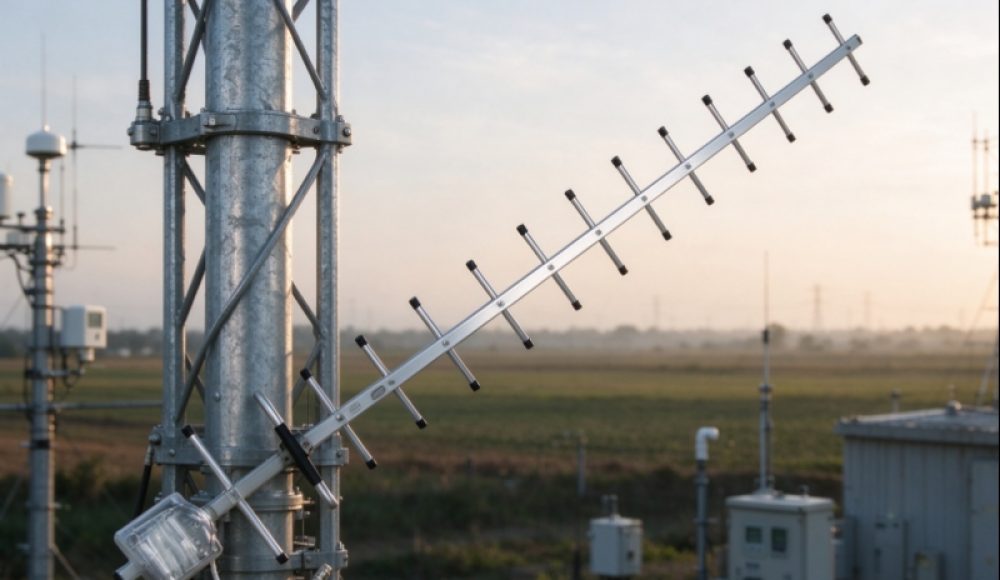
Renfeng’s 900MHz Yagi Directional Antenna is an outdoor directional antenna for point-to-point wireless links. It covers 824–960MHz, provides 12dBi gain, and uses an N-type female connector with 100W power handling. Its stainless steel and aluminum alloy construction supports fixed outdoor communication installations.
What Is a 900MHz Yagi Directional Antenna?
A 900MHz Yagi Directional Antenna is a directional RF antenna designed to focus radio energy toward a selected direction within a compatible sub-GHz frequency range. It is commonly considered for point-to-point communication, where two wireless stations need to exchange signals along a defined path.
A Yagi antenna typically uses a driven element together with parasitic elements, including a reflector and directors. These components shape the radiation pattern and concentrate energy toward the intended direction. Unlike an omnidirectional antenna, a Yagi requires alignment with the receiving or transmitting station.
Renfeng’s model has the following specifications:
| Parameter | Specification |
|---|---|
| Product name | 900MHz 12dBi Outdoor Directional Yagi Antenna |
| Frequency range | 824–960MHz |
| Gain | 12dBi |
| Connector | N Female |
| Power handling | 100W |
| Main materials | Stainless steel and aluminum alloy |
| Antenna type | Directional Yagi antenna |
These specifications provide a starting point for evaluating frequency compatibility, RF connection, and installation requirements. The supplied product information does not specify antenna dimensions, beamwidth, polarization, VSWR, or wind-load rating.
How Does a Yagi Antenna Support Point-to-Point Communication?
A Yagi antenna supports point-to-point communication by concentrating radio-frequency energy toward a selected direction, which can improve the link budget when both endpoints are properly aligned.
The transmitting antenna directs energy toward the receiving station. At the other end, a compatible receiving antenna captures the signal. For a stable connection, both antennas should operate within the supported frequency range and use suitable polarization and alignment.
The main advantages include:
- Directional coverage: Focuses RF energy toward a selected communication path.
- Higher gain: The 12dBi rating provides a reference for link-budget planning.
- Reduced unwanted reception: Directional characteristics can help limit signals arriving from other directions, depending on the actual radiation pattern.
- Fixed-link suitability: Works well for installations where the communication endpoints have relatively stable positions.
However, antenna gain does not independently determine communication distance. Transmitter power, receiver sensitivity, cable loss, interference, terrain, and Fresnel zone clearance all affect the final link performance.
When Is a Directional Antenna Better Than an Omnidirectional Antenna?
A directional antenna is generally more suitable when communication takes place between fixed locations in a known direction, while an omnidirectional antenna is more appropriate when devices are distributed around a central station.
For example, a LoRa gateway communicating with sensors across several directions may benefit from an omnidirectional antenna. In contrast, a monitoring station sending data to another fixed station may use a Yagi antenna to focus coverage along the required path.
Compared with traditional solutions based on broad horizontal coverage, directional designs provide more control over where RF energy is concentrated. Nevertheless, they require more careful installation and alignment.
Where Can a 900MHz Yagi Antenna Be Used?
A Yagi antenna can be used in outdoor wireless systems that need directional communication between fixed or semi-fixed locations.
Typical applications include:
- Point-to-point LoRa links: Connecting two compatible wireless stations across a defined route.
- Remote data collection: Transmitting sensor data from isolated monitoring locations to a central station.
- Industrial monitoring: Supporting communication between remote equipment and control facilities.
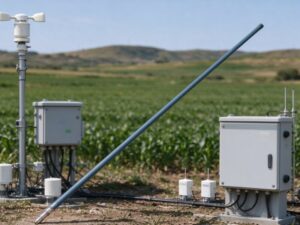
- Smart agriculture: Linking field monitoring stations with gateways or collection points.
- Outdoor wireless infrastructure: Supporting compatible sub-GHz communication equipment.
The 824–960MHz range covers a broad frequency span, but it does not automatically establish compatibility with every regional LoRa or LoRaWAN channel plan. Engineers must verify local regulations and radio settings before deployment.
How Should You Choose a Yagi Antenna for Long-Distance Links?
Engineers should choose a Yagi antenna by matching its frequency range, gain, polarization, connector, and radiation pattern to the requirements of the complete radio link.
Before selecting a model, consider these factors:
- Operating frequency: Confirm that the antenna covers the radio’s configured frequency and permitted regional channels.
- Gain and beamwidth: Check whether the gain and directional coverage suit the required link distance and alignment conditions.
- Polarization: Use compatible polarization at both communication endpoints to reduce polarization mismatch losses.
- Connector compatibility: The antenna uses an N-type female connector, so the RF cable must have a matching N Male interface.
- Cable loss: Select an appropriate coaxial cable and keep unnecessary cable length to a minimum.
- Installation conditions: Consider mounting height, structural support, grounding, lightning protection, and clear line of sight.
The Fresnel zone should also be considered during link planning. Physical obstructions within this area can weaken the signal even when the two antennas appear to have a direct line of sight.
How Does a Yagi Antenna Compare With Other Antenna Types?
A Yagi antenna differs from other antenna types in its radiation pattern, installation requirements, and intended coverage.
| Antenna type | Coverage characteristics | Typical application |
|---|---|---|
| Yagi directional antenna | Focused toward a selected direction | Point-to-point links |
| Omnidirectional antenna | Broad horizontal coverage | Central gateways and multi-directional devices |
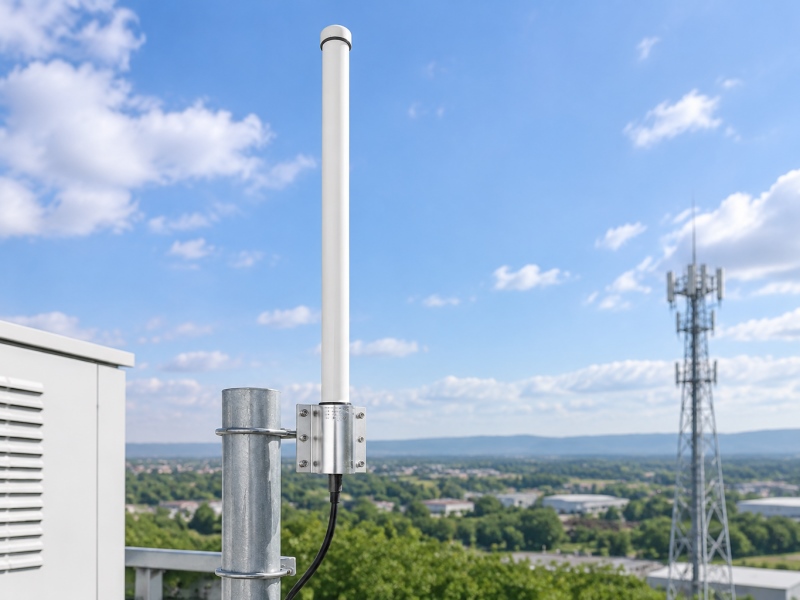
| Fiberglass antenna | Available in directional or omnidirectional designs | Outdoor fixed installations |
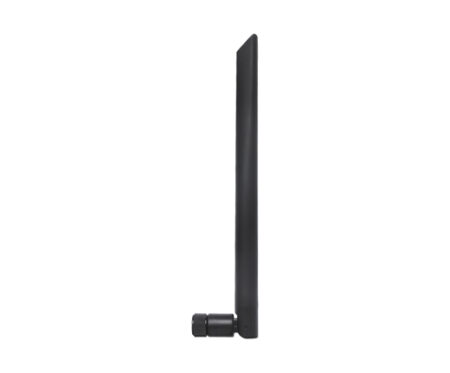
| Rubber duck antenna | Compact external antenna | Portable wireless equipment |
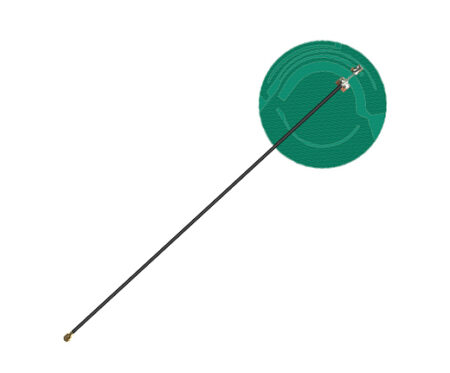
| PCB antenna | Integrated into electronic hardware | Compact IoT devices |
A Yagi is a practical option when the communication path is known and the endpoints can be aligned. An omnidirectional design may be more appropriate when devices move or communicate from multiple directions.
What Factors Affect Yagi Antenna Costs?
Yagi antenna costs depend on electrical performance, mechanical structure, materials, connector configuration, and production requirements.
Common cost factors include:
- Frequency range and gain requirements.
- Number and arrangement of antenna elements.
- Stainless steel and aluminum alloy components.
- Connector type and cable configuration.
- Mounting hardware and outdoor protection requirements.
- Custom design, testing, and production volume.
For projects requiring specific coverage or mechanical dimensions, engineers should define the link requirements before requesting a quotation. This helps determine whether an existing antenna design is suitable or requires customization.
What Tests Should Be Completed Before Installation?
Engineers should verify RF performance and mechanical suitability before deploying a directional antenna in an outdoor communication system.
Recommended validation includes:
- VSWR and return loss: Check impedance matching across the intended operating band.
- Gain measurement: Verify antenna gain using a suitable calibrated measurement setup.
- Radiation pattern: Measure the main beam direction, beamwidth, and front-to-back ratio.
- Polarization: Confirm compatibility between the transmitting and receiving antennas.
- Power handling: Validate operation under the intended RF power and test conditions.
- Environmental testing: Evaluate corrosion resistance, temperature performance, vibration, and weather exposure as required by the installation environment.
- System-level testing: Measure RSSI, SNR, packet delivery, and link stability at representative distances.
IEC 60068 provides environmental test methods that may be relevant to equipment validation. Applicable regional radio regulations and standards should also be reviewed for the complete communication system. These references do not indicate that this specific antenna has received any certification. No product certification or test report was included in the supplied information.
FAQ: What Should You Know About Yagi Directional Antennas?
What is a Yagi directional antenna used for?
A Yagi directional antenna is used to transmit and receive RF signals in a selected direction. Common applications include point-to-point wireless links, remote monitoring, and fixed outdoor communication systems.
How to choose a 900MHz Yagi antenna for LoRa communication?
Check the operating frequency, gain, beamwidth, polarization, connector, cable loss, and installation conditions. Also confirm that the antenna matches the regional LoRa frequency plan and the radio equipment.
Why choose a directional antenna instead of an omnidirectional antenna?
A directional antenna can concentrate RF energy toward a known communication endpoint, which may improve link performance in that direction. An omnidirectional antenna is generally more suitable when devices communicate from multiple horizontal directions.
How Does Renfeng Support Antenna Development?
Renfeng is a manufacturer focused on wireless communication antennas and customized antenna solutions. Established in 2012, the company provides antenna products for different frequency bands and communication applications.
Its RF engineers have an average of more than 10 years of industry experience. Renfeng supports antenna development based on communication distance, installation environment, and equipment requirements. Its project capabilities cover RF design, antenna customization, and mass production through delivery.
These services are relevant to wireless network integrators, industrial monitoring equipment manufacturers, and developers of remote data collection systems. For projects requiring specific regulatory approvals, customers should confirm the applicable standards and request supporting test documentation. No specific certification information was supplied for this product.
Source & Expertise
This article is based on the supplied specifications for Renfeng’s 900MHz 12dBi Outdoor Directional Yagi Antenna, N Female, and the company information provided for this content. Technical explanations reflect general RF antenna and point-to-point communication principles. Actual link performance depends on radio configuration, antenna alignment, installation conditions, and regional frequency regulations.
Last Updated
October 30, 2026