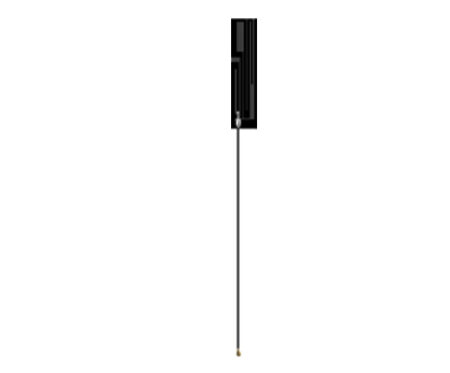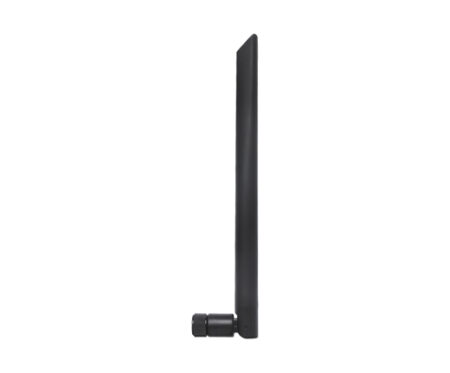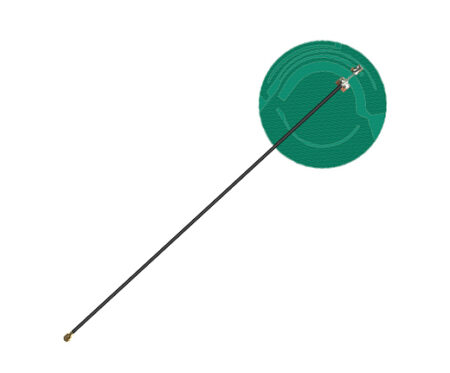

A 915MHz Flexible FPC Embedded Antenna provides internal wireless connectivity for compact devices with limited installation space. Renfeng’s 3dBi FPC antenna operates across 868–930MHz, features a 45 × 10mm flexible element, an IPEX-1 connector, and a 90mm RF1.13 cable for LoRa and IoT applications.
What Is a Flexible FPC Embedded Antenna?
A flexible FPC antenna is an internal RF component manufactured on a thin, flexible substrate that can be attached inside an electronic device. It provides wireless connectivity without requiring a conventional external antenna structure.
The main advantages include:
- Compact dimensions: A small antenna element helps conserve internal installation space.
- Flexible installation: The antenna can be attached to suitable internal surfaces.
- Direct RF connection: An IPEX connector and coaxial cable connect the antenna to the wireless module.
- Device integration: Its structure supports different enclosure layouts and compact hardware designs.
The 915MHz operating range is commonly used in regional LoRa and IoT applications. However, the permitted frequency range depends on local radio regulations and the target market.
How Does an FPC Antenna Work in Compact IoT Devices?
An FPC antenna converts electrical RF signals from a wireless module into electromagnetic waves and receives incoming signals through the same antenna structure.
The antenna element is connected to the radio module through a coaxial feed cable. When the module transmits data, RF energy travels through the cable and excites the antenna element. During reception, the antenna captures electromagnetic energy and transfers the corresponding RF signal back to the receiver.
Several installation factors affect its performance:
- Ground plane: The size and layout of the PCB ground plane can influence impedance and radiation characteristics.
- Enclosure material: Metal housings and nearby conductive components may affect antenna efficiency.
- Cable routing: Sharp bends, poor connections, and excessive cable lengths can introduce additional RF losses.
- Mounting position: The antenna should be placed away from batteries, metal brackets, and other interference sources whenever possible.
Therefore, engineers should consider antenna placement alongside the complete device structure rather than treating it as a separate component.
What Are the Main Specifications of This 915MHz FPC Antenna?
Renfeng’s FPC antenna combines a 45 × 10mm flexible element with a 3dBi gain rating and an IPEX-1 RF connection for compact wireless equipment.
| Parameter | Specification |
|---|---|
| Product Type | Flexible FPC Embedded Antenna |
| Operating Frequency | 868–930MHz |
| Nominal Frequency | 915MHz |
| Antenna Gain | 3dBi |
| FPC Element Size | 45 × 10mm |
| Connector | IPEX-1 |
| RF Cable | 90mm RF1.13 |
| Application | LoRa and IoT Devices |
| Installation | Internal Adhesive Mounting |
These specifications help engineers evaluate mechanical compatibility and RF integration requirements before selecting an antenna.
Engineers should evaluate the 3dBi gain rating alongside radiation patterns, antenna efficiency, polarization, and the installed device environment. Actual communication distance also depends on transmitter power, receiver sensitivity, obstacles, and regional regulations.
Which Applications Can Use a Flexible Internal Antenna?
This antenna structure suits compact wireless products that favor internal mounting over external antennas.
Typical applications include:
- LoRa terminals: Internal wireless connectivity for compact LoRa communication equipment.
- Smart sensors: Integration into environmental monitoring and industrial sensing devices.
- IoT controllers: Wireless communication in small electronic control units.
- Smart meters: Internal antenna installation in metering equipment with limited enclosure space.
- Remote monitoring devices: Wireless data transmission for distributed monitoring systems.
For these applications, the antenna must fit the enclosure while maintaining sufficient separation from other electronic components.
How Should Engineers Choose an FPC Antenna?
Engineers should evaluate frequency compatibility, physical dimensions, connector type, cable routing, and measured RF performance before selecting an embedded antenna.
A practical selection process includes the following considerations.
1. Confirm the operating frequency
The antenna frequency range must cover the wireless module’s intended operating band. For 915MHz applications, engineers should also verify regional frequency allocation requirements.
2. Check the available installation space
A 45 × 10mm antenna element can fit many compact enclosures, but the actual mounting area must also accommodate the cable and connector.
3. Verify connector compatibility
The IPEX-1 connector must match the RF interface on the wireless module. Connector type, cable length, and mechanical clearance should be checked before assembly.
4. Evaluate installed RF performance
Testing should take place inside the actual enclosure because nearby components can change antenna impedance and radiation characteristics.
A 915MHz Flexible FPC Embedded Antenna is particularly relevant when a device requires a small internal antenna, flexible mounting, and a direct coaxial connection.
How Does an FPC Antenna Compare with Other Antenna Types?
FPC antennas differ from external whip and PCB antennas mainly in their installation structure, mechanical flexibility, and integration requirements.
| Comparison Factor | FPC Antenna | External Whip Antenna | PCB Antenna |
|---|---|---|---|
| Installation | Internal adhesive mounting | External mounting | PCB integration |
| Space Requirement | Small flexible element | Requires external clearance | Uses PCB area |
| Flexibility | Flexible substrate | Rigid structure | Fixed PCB structure |
| RF Connection | Coaxial cable | Connector or cable | Direct PCB feed |
| Design Consideration | Mounting position | External exposure | PCB layout |
| Typical Application | Compact IoT devices | Gateways and terminals | Integrated wireless products |
Compared with traditional solutions, FPC antennas provide more flexibility in internal placement. However, they require careful cable routing and enclosure-level RF testing.
The appropriate antenna depends on the device architecture, available space, and required communication performance rather than antenna type alone.
What Factors Affect FPC Antenna Costs?
FPC antenna costs depend on electrical specifications, material selection, cable configuration, connector requirements, and production volume.
The main cost factors include:
- Operating frequency: Different frequency requirements may involve different antenna element designs and tuning processes.
- Antenna dimensions: Custom element sizes can require additional engineering and validation.
- Cable configuration: Cable length, cable type, and connector selection influence material and assembly costs.
- Customization requirements: Special adhesive materials, mounting structures, and mechanical adjustments may increase development costs.
- Production quantity: Prototype development and mass production generally have different unit-cost structures.
For customized projects, engineers should define the device enclosure, RF interface, and target operating band before requesting production quotations.
How Is FPC Antenna Performance Tested?
FPC antenna performance should be evaluated through electrical measurements and installed-device testing.
Common evaluation methods include:
- VSWR testing: Measures impedance matching across the operating frequency range.
- Return loss testing: Evaluates the amount of RF power reflected toward the source.
- Radiation pattern testing: Identifies directional characteristics and coverage distribution.
- Antenna efficiency testing: Measures how effectively input RF power is converted into radiated energy.
- Environmental testing: Evaluates performance under project-specific temperature, humidity, and mechanical conditions.
Relevant measurement methods may include IEC 61169-1 for applicable RF connector requirements and recognized antenna measurement procedures. The product specification and target application should guide the exact test plan. Teams should not assume any specific certification unless supporting documentation confirms it.
What Antenna Design Experience Does Renfeng Provide?
Renfeng is a manufacturer specializing in wireless communication terminal antennas and customized antenna solutions, established in 2012.
Its RF engineering team has an average of more than 10 years of industry experience. The company supports antenna development through several project stages:
- Product concept evaluation and requirement analysis.
- RF antenna design and frequency adaptation.
- Prototype development and performance evaluation.
- Custom cable, connector, and mechanical configurations.
- Mass production and product delivery.
Its product development activities serve wireless communication equipment manufacturers, IoT developers, and other industrial customers. Product teams should confirm certification and compliance requirements for each product and destination market through the relevant project documentation.
Frequently Asked Questions
What Is a 915MHz Flexible FPC Embedded Antenna?
A 915MHz Flexible FPC Embedded Antenna provides wireless connectivity as a thin internal RF component for compact electronic devices. It uses a flexible substrate, coaxial cable, and RF connector to integrate with a wireless communication module.
How to Choose an FPC Antenna for a Compact IoT Device?
Choose an antenna by checking its operating frequency, element dimensions, gain, connector compatibility, cable length, and installation position. Engineers should also verify RF performance inside the final enclosure.
Why Is FPC Antenna Placement Important for LoRa Devices?
FPC antenna placement affects impedance matching, radiation efficiency, and signal coverage. Nearby metal components, batteries, and PCB ground planes can influence performance, so final testing should use the assembled device.
Source & Expertise
This article is based on the supplied product specifications for the 868–930MHz, 3dBi flexible FPC antenna, together with established RF antenna integration principles.
Technical evaluation should consider the antenna datasheet, RF measurement reports, connector specifications, and the final device configuration. Product-specific performance requires laboratory measurements to confirm the results rather than relying solely on nominal gain or frequency specifications.
Manufacturer: Dongguan Renfeng Electronic Technology Co., Ltd.
Product Category: FPC Antennas and Embedded Wireless Antennas
Engineering Focus: RF Design, Antenna Integration, and Custom Development
Last Updated: November 2, 2026