







News
- Home
- Service
- Product Center
- Application
- About Us
- Videos
- News
- Contact Us

2025-11-12 16:21:47
In an era where satellite positioning and wireless communication technologies are deeply integrated, combined active gps antennas have become a key hardware pillar in fields such as the Internet of Things (IoT), intelligent transportation, and unmanned aerial vehicles (UAVs). Breaking the limitations of traditional single-function antennas, they integrate GPS positioning with multiple wireless communication technologies into one unit, enabling integrated "positioning + transmission" operations and providing more efficient, compact solutions for various terminal devices.
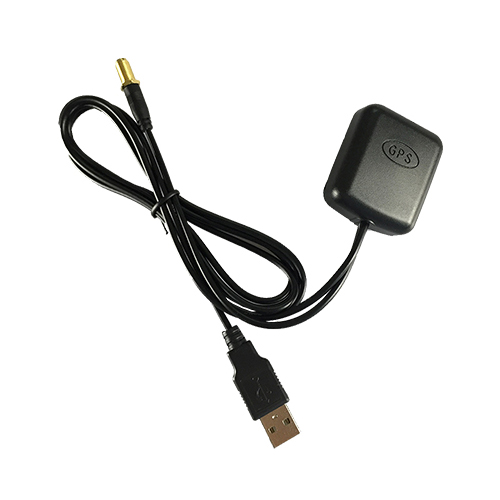
A combined Active Gps Antenna is essentially an integrated RF front-end device. Centered on gps satellite positioning technology, it integrates one or more wireless communication antenna units (such as GSM, 4G, 5G, Wi-Fi, and Bluetooth) through modular design, while incorporating active components like a Low Noise Amplifier (LNA) to form an integrated structure of "positioning module + communication module + signal amplification module."
Its design philosophy stems from market demands for device miniaturization, low cost, and multi-functionality. In traditional scenarios, positioning and communication functions relied on separate independent antennas, which not only occupied more installation space but also risked performance degradation due to signal interference between multiple antennas. Through optimized circuit layout and integrated radiating elements, combined active gps antennas reduce device size and hardware costs. Professional electromagnetic compatibility (EMC) design also minimizes internal interference, ensuring both positioning accuracy and communication stability.
The core advantage of combined active GPS antennas lies in "integration." By unifying previously discrete GPS positioning antennas and various communication antennas into a single unit, terminal devices no longer require separate multiple antennas. Instead, they can achieve both positioning and data transmission through a single interface. This design simplifies the hardware architecture and installation process of devices, while reducing space constraints associated with multi-antenna deployment. It is particularly suitable for scenarios sensitive to size and weight, such as UAVs, vehicle-mounted terminals, and portable IoT devices.
"Active" is the defining feature that distinguishes it from passive antennas. GPS satellite signals travel long distances and arrive at the ground with extremely weak strength, making them vulnerable to environmental noise interference. The built-in Low Noise Amplifier (LNA) in combined active GPS antennas amplifies weak GPS signals by 20-30dB while minimizing internal noise, significantly improving the signal-to-noise ratio (SNR). Additionally, LNAs typically use high-linearity, low-power chips to avoid introducing additional distortion during signal amplification, ensuring positioning accuracy. Some high-end products also integrate filters to further suppress clutter interference and enhance signal reception in complex environments.
To meet the requirements of different communication technologies and positioning systems, combined active GPS antennas generally support multi-band operation. For positioning, in addition to covering the core GPS bands L1 (1575.42MHz), L2 (1227.6MHz), and L5 (1176.45MHz), they can also be compatible with frequency bands of other Global Navigation Satellite Systems (GNSS) such as Beidou, GLONASS, and Galileo. This enables multi-system combined positioning, improving positioning accuracy and reliability. For communication, they can flexibly integrate communication modules of different frequency bands based on application scenarios—such as GSM (824-960MHz/1710-2170MHz) for vehicle-mounted terminals, 4G LTE (700-2700MHz) or 5G NR (Sub-6GHz) for IoT devices, and Wi-Fi (2.4GHz/5GHz) or Bluetooth for short-range communication—adapting to the communication needs of diverse scenarios.
Combined active GPS antennas are fully designed to meet the rigorous requirements of various application environments. Their radiating elements typically adopt ceramic dielectric or PCB microstrip structures, offering excellent directivity and gain characteristics. The outer casing is mostly made of weather-resistant materials such as ABS and PC, and some products feature an IP65+ waterproof and dustproof rating, making them suitable for use in complex environments like vehicle-mounted, outdoor, and marine settings. Meanwhile, indicators such as impedance matching and Voltage Standing Wave Ratio (VSWR) are strictly optimized to minimize energy loss during signal transmission, ensuring stable operation under harsh conditions such as high temperatures, low temperatures, and vibrations.
In scenarios such as fleet management, ride-hailing monitoring, and logistics vehicle scheduling, combined active GPS antennas are core components. They obtain real-time vehicle data (e.g., location, speed, and trajectory) through GPS/GNSS positioning and upload this data to management platforms via GSM/4G/5G communication modules. This enables real-time monitoring, route planning, and remote dispatching of vehicles. Some high-end vehicle-mounted antennas also integrate Wi-Fi modules to support high-speed data interaction between vehicles, mobile phones, and the cloud, providing support for autonomous driving and connected car applications.
UAVs' autonomous flight and precise operations rely on high-precision positioning and stable data transmission. Combined active GPS antennas provide UAVs with multi-system GNSS combined positioning capabilities, achieving centimeter-level positioning accuracy (with some differential positioning solutions) to ensure flight stability and operational precision. Simultaneously, by integrating 4G/5G or dedicated image transmission communication modules, they enable real-time image transmission and command issuance between UAVs and ground stations. They are widely used in agricultural plant protection, power inspection, geographic mapping, and emergency rescue.
In IoT scenarios such as smart cities, industrial monitoring, and asset tracking, combined active GPS antennas empower various terminal devices to achieve "location awareness + data reporting." For example, smart electricity and gas meters use antennas to locate themselves and report data, facilitating operation and maintenance management. Logistics containers and cold chain transportation equipment upload real-time location and environmental data through antennas to achieve full-cycle asset tracking. Industrial sensors synchronize equipment operating status and location information to monitoring platforms via antennas, supporting remote operation and maintenance and fault early warning.
Marine vehicles such as ocean-going ships and coastal fishing boats have extremely high requirements for positioning and communication reliability. Combined active GPS antennas provide ships with precise GPS positioning services to assist in route planning and collision avoidance. Meanwhile, by integrating maritime communication bands or 4G/5G modules, they enable communication between ships, shore-based facilities, and other vessels, ensuring navigation safety. Some products also feature salt-fog and moisture resistance designs to adapt to the special needs of marine environments.
In emergency scenarios such as fire fighting, medical rescue, and earthquake relief, combined active GPS antennas significantly improve rescue efficiency. Emergency vehicles and rescue equipment achieve real-time positioning through antennas, facilitating resource dispatch by command centers. At the same time, high-speed communication modules transmit on-site images and environmental data back to command centers to support decision-making. In complex terrain or weak signal areas, their active amplification technology and multi-system positioning capabilities ensure uninterrupted positioning and communication, gaining valuable time for rescue operations.
The performance of combined active GPS antennas is determined by a series of key technical parameters, detailed below with reference to typical products (e.g., JC Antenna JCB012):
Center Frequency: The core frequency of the GPS L1 band is 1575.42±3MHz. For multi-system compatibility, it covers bands such as 1176.45MHz (L5) and 1227.6MHz (L2).
Gain: Measures the antenna's signal reception capability. GPS antenna gain is typically 2-5dBic (circular polarization gain); higher gain indicates stronger signal reception.
Voltage Standing Wave Ratio (VSWR): Reflects the impedance matching between the antenna and transmission line. Generally required to be <1.5; smaller values mean less signal reflection loss.
Impedance: The standard value is 50Ω, matching the impedance of most RF devices to ensure efficient signal transmission.
Frequency Range: Determined by the integrated communication technology. For example, GSM antennas cover 824-960MHz (low band) and 1710-2170MHz (high band), while 4G antennas cover 700-2700MHz.
Gain: Communication antenna gain is typically 2-4dBi (linear polarization gain), balancing coverage range and signal penetration.
Voltage Standing Wave Ratio (VSWR): Generally required to be <2.5 to ensure stable communication signal transmission.
Low Noise Amplifier (LNA) Gain: Typically 25-30dB, optimized for specific scenarios to avoid signal saturation from excessive gain.
Noise Figure (NF): Measures the LNA's noise suppression capability. Generally required to be <1.5dB; smaller values mean better amplification of weak signals.
Supply Voltage and Current: The supply voltage is usually 2.2-5V DC, with an operating current <15mA. Low-power design adapts to battery-powered portable devices.
With the rapid development of 5G, IoT, and autonomous driving technologies, combined active GPS antennas are evolving toward greater integration, higher precision, lower power consumption, and multi-band support. In the future, their development will present three main trends: first, deep multi-system integration—integrating more indoor positioning technologies in addition to satellite positioning systems like GPS and Beidou to achieve seamless "indoor + outdoor" full-scenario positioning; second, integration with AI and edge computing—incorporating intelligent chips to enable adaptive signal optimization and automatic interference suppression, enhancing performance stability in complex environments; third, miniaturization and modularization—further reducing size and cost to adapt to more micro IoT terminals.
As a core hardware for integrated positioning and communication, combined active GPS antennas are providing solid support for the digital transformation of various industries. From intelligent transportation to IoT, from UAVs to emergency rescue, they drive terminal devices toward greater efficiency, intelligence, and reliability with their unique technical advantages, becoming an indispensable key infrastructure in the digital economy era.



Address: No.1 Sankeng Qinghutou Tangxia Dongguan Guangdong China TaiWan office: 558-2 ZhongHua,Zhubei,Xinzhu,Taiwan
Copyright © 2026 Dongguan RenFeng Electronic Technology Co.,Ltd All rights reserved.