





News
- Home
- Service
- Product Center
- Application
- About Us
- Videos
- News
- Contact Us

2025-12-18 16:07:42
As cities around the world accelerate digital transformation, communication infrastructure has become the backbone of modern urban life. From intelligent traffic systems and smart lighting to public safety networks and IoT-enabled utilities, reliable wireless connectivity is no longer optional. In this context, the comparison between a smart city antenna and traditional communication antennas is becoming a common question among system integrators, urban planners, and solution providers.
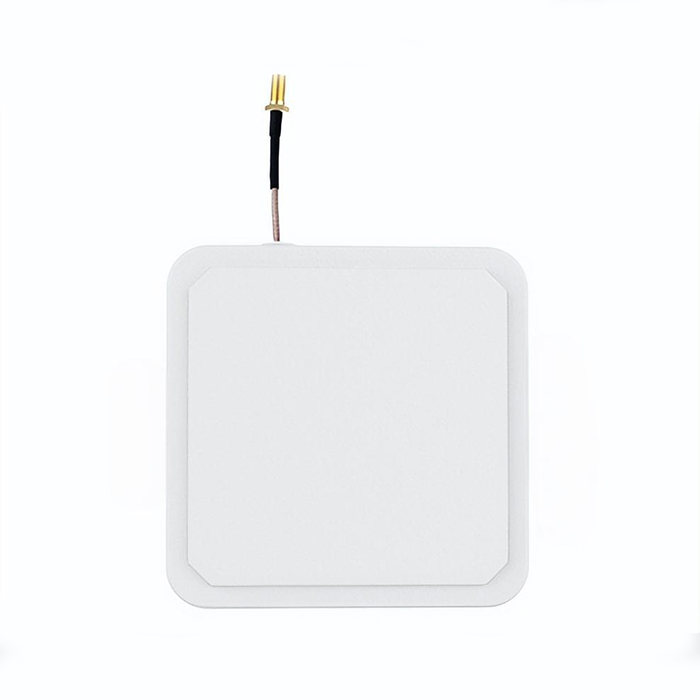
At first glance, an antenna may look like a simple piece of hardware designed to transmit and receive signals. However, when it comes to smart city deployment, the role of the antenna is far more complex. A smart city antenna is designed not just for connectivity, but for integration, scalability, and long-term urban operation.
Traditional communication antennas were typically built for single-purpose networks. They were used in fixed telecom base stations, radio communication systems, or point-to-point wireless links. These antennas usually operate within a limited frequency band and serve a relatively stable number of users or devices. Their design focuses on basic parameters such as gain, polarization, and coverage area, which worked well in conventional communication scenarios.
In contrast, a smart city antenna is developed to support a highly dynamic and multi-layered environment. Modern cities rely on multiple wireless technologies operating simultaneously, including 4G, 5G, Wi-Fi, LPWAN, NB-IoT, and private networks. A single antenna for smart city applications often needs to handle multiple frequency bands, support different communication protocols, and maintain stable performance in dense urban areas.

One of the most significant differences lies in network complexity. Traditional antennas usually serve a single network or operator. Smart city antennas, on the other hand, are often deployed as shared infrastructure. They may support traffic sensors, environmental monitoring devices, surveillance cameras, smart parking systems, and emergency communication networks at the same time. This requires advanced design to reduce interference and ensure consistent signal quality across multiple services.
Another key distinction is environmental adaptability. Traditional antennas are commonly installed in controlled or semi-controlled environments, such as telecom towers or indoor facilities. Smart city antennas are mostly installed outdoors, on lamp posts, buildings, traffic lights, or smart poles. They must withstand harsh weather conditions, pollution, vibration, and long-term exposure without frequent maintenance. As a result, durability, waterproofing, and material selection are far more critical for smart city antennas.
Scalability is also an area where smart city antennas clearly outperform traditional designs. Cities evolve continuously, adding new devices and services over time. A traditional antenna system often requires hardware replacement or significant modification when network demands change. Smart city antennas are designed with future expansion in mind, allowing additional frequency bands or services to be integrated without redesigning the entire infrastructure. This future-proof approach significantly reduces long-term deployment costs.
From a data perspective, smart city antennas play a vital role in supporting real-time data transmission. Smart city applications depend on low latency and high reliability, especially in areas such as traffic control and public safety. Traditional communication antennas may not be optimized for these requirements, as they were not originally designed for large-scale IoT or mission-critical data flows.
Installation and aesthetics are another factor worth considering. Urban environments require infrastructure that blends into the city landscape. A smart city antenna is often designed to be compact and visually discreet, integrating seamlessly into smart poles or street furniture. Traditional antennas are typically larger and more visible, making them less suitable for modern city planning requirements.
When it comes to maintenance and operation, smart city antennas are designed for long service life with minimal intervention. Many support remote monitoring and diagnostics, allowing operators to detect issues before they affect network performance. Traditional antennas usually lack this level of intelligent management, leading to higher operational costs over time.
In summary, while traditional communication antennas still serve important roles in specific scenarios, they are no longer sufficient for the demands of modern urban infrastructure. Smart city antennas are purpose-built to support diverse networks, complex environments, and future expansion. For any city-level digital project, choosing a dedicated antenna for smart city deployment is not just a technical upgrade, but a strategic investment in long-term urban intelligence.



Address: No.1 Sankeng Qinghutou Tangxia Dongguan Guangdong China TaiWan office: 558-2 ZhongHua,Zhubei,Xinzhu,Taiwan
Copyright © 2026 Dongguan RenFeng Electronic Technology Co.,Ltd All rights reserved.