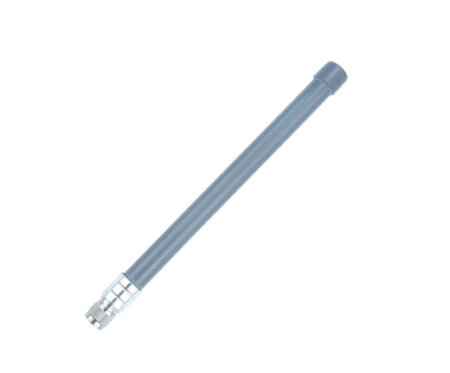

LoRaWAN technology supports long-range, low-power wireless communication for applications such as smart metering, environmental monitoring, and industrial IoT. However, stable connectivity depends not only on the communication protocol but also on the antenna’s frequency compatibility, radiation pattern, and installation environment. A 915MHz omnidirectional rubber duck antenna is designed to support devices operating around the 915MHz frequency band, making it suitable for many LoRaWAN deployments in regions where this band is used. With a frequency range of 895–935MHz and a gain of 3.5dBi, this antenna provides a practical option for wireless nodes that require coverage in multiple directions. Therefore, selecting an antenna that matches the network’s operating frequency and mounting requirements helps support consistent wireless communication.
How Omnidirectional Coverage Supports LoRaWAN Connectivity
Unlike a directional antenna, which concentrates radio energy toward a particular direction, an omnidirectional antenna provides coverage around the antenna’s vertical axis. This characteristic is useful when LoRaWAN devices communicate with gateways located in different directions or when the device’s final orientation may vary. As a result, an omnidirectional antenna can simplify deployment for smart meters, sensor nodes, and other connected equipment that does not require a narrowly focused signal path. However, actual coverage still depends on factors such as antenna placement, surrounding obstacles, gateway location, and local radio conditions. For this reason, an appropriate omnidirectional antenna can help make network planning more flexible, but it cannot eliminate the effects of interference or physical obstructions.
Key Features of a Rubber Duck Antenna for IoT Devices
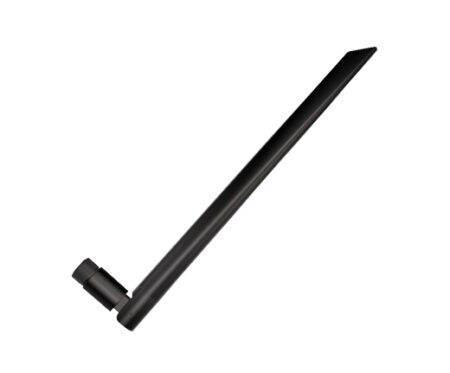
A rubber duck antenna combines a compact form with a flexible mounting approach, making it useful for equipment with limited installation space. This 915MHz model features a 200mm TPEE body, an SMA male connector, 3.5dBi gain, and a power-handling capacity of 20W. Its operating range of 895–935MHz supports applications designed for compatible 915MHz-band communication. In addition, the compact structure allows it to be mounted externally on suitable devices or enclosures, depending on connector access and installation design. When evaluating a rubber duck antenna, engineers should consider not only gain and frequency range but also connector compatibility, mounting clearance, enclosure materials, and exposure to the operating environment.
How This Antenna Supports Smart Meter Applications
Smart meters rely on wireless communication to transmit readings, status updates, and other operational data to a monitoring system. In these applications, a suitable smart meter antenna helps establish the radio link between the meter and the wider network. The 915MHz omnidirectional rubber duck antenna can be considered for compatible smart metering devices that operate within its supported frequency range. Furthermore, its SMA male connector can simplify integration when the device provides a matching SMA female interface. Before deployment, however, installers should verify the local frequency regulations, antenna port requirements, and equipment specifications to ensure that the complete radio system operates as intended.
Factors to Consider When Choosing a LoRa Antenna
Choosing a LoRa antenna involves balancing electrical performance with practical installation needs. Although antenna gain is important, a higher gain value alone does not guarantee better connectivity in every environment. Instead, the antenna should match the radio module’s frequency band and be installed where nearby metal surfaces, walls, and other obstructions have a manageable effect on the signal. The following points can help guide the selection process:
-
Frequency compatibility: Confirm that the antenna’s 895–935MHz range covers the intended operating frequency and complies with local regulations.
-
Radiation pattern: Choose omnidirectional coverage when devices may communicate with gateways in different directions.
-
Connector type: Check whether the equipment supports an SMA female interface for the antenna’s SMA male connector.
-
Gain and placement: Consider the 3.5dBi gain alongside antenna orientation, mounting height, and surrounding obstacles.
-
Power handling: Ensure the antenna’s 20W rating is suitable for the radio equipment and intended operating conditions.
-
Physical integration: Check the 200mm body length and available mounting space before finalizing the enclosure design.
Technical Specifications at a Glance
The table below summarizes the main specifications of this 915MHz antenna and explains their practical relevance for compatible wireless devices.
| Specification | Details | Application relevance |
|---|---|---|
| Antenna type | Rubber duck antenna | Compact external mounting |
| Frequency range | 895–935MHz | Supports compatible 915MHz-band devices |
| Gain | 3.5dBi | Helps define antenna performance within the system |
| Radiation pattern | Omnidirectional | Coverage around the vertical axis |
| Connector | SMA male | Requires a compatible antenna interface |
| Body material | TPEE | Flexible antenna body construction |
| Body length | 200mm | Affects mounting clearance |
| Power handling | 20W | Must match the radio system’s operating requirements |
Improving Deployment Reliability with the Right Antenna
Even a well-matched antenna needs proper installation to deliver consistent results. For example, mounting the antenna too close to large metal structures may alter its radiation characteristics, while placing it inside an enclosure can affect signal performance depending on the enclosure material. Therefore, field testing under realistic operating conditions is valuable when deploying LoRaWAN gateways, smart meters, and distributed IoT nodes. Engineers should also verify connector security and ensure that the radio equipment, antenna, and network configuration are compatible. By checking these factors together, organizations can make more informed decisions about wireless coverage and device integration.
Conclusion
Reliable LoRaWAN connectivity depends on a combination of compatible radio equipment, suitable antenna performance, and thoughtful installation. With a frequency range of 895–935MHz, 3.5dBi gain, omnidirectional coverage, and an SMA male connector, the 915MHz omnidirectional rubber duck antenna offers a compact option for compatible LoRaWAN nodes and smart meter applications. Its 200mm TPEE body and 20W power-handling rating also provide useful specifications for system designers evaluating external antenna mounting. Renfeng supports antenna selection for wireless communication applications by helping customers consider frequency requirements, connector interfaces, and deployment conditions. Ultimately, matching the antenna to the intended device and installation environment is an important step toward building a dependable IoT communication network.