In modern wireless networks, engineers often ask how much coverage a high-gain sector antenna can really achieve in real deployment. In datasheets, performance values usually look ideal and stable. However, real-world conditions are more complex. Terrain, interference, and mounting height all directly affect actual coverage. Therefore, real deployment performance is often different from laboratory results. In addition, urban and rural environments behave very differently. For example, dense urban areas create more signal reflection and interference, which can reduce effective range. Meanwhile, open rural areas allow better line-of-sight and longer transmission distance. As a result, the same high-gain sector antenna can deliver very different coverage depending on the installation environment.
Key Factors That Define Coverage
To evaluate a high-gain sector antenna, we must look beyond gain alone. First, antenna height strongly affects line-of-sight distance. Higher placement usually improves range. However, nearby buildings can reduce signal strength. Moreover, frequency also matters. Higher frequencies travel shorter distances. In addition, system power and receiver sensitivity also affect coverage. As a result, real performance depends on multiple factors together.
Typical Coverage in Real Deployment
In real LTE and 5G networks, a high-gain sector antenna with 15dBi gain usually covers 1–5 km in dense cities. This happens due to strong interference and obstacles. In suburban areas, coverage is better. It often reaches 5–10 km. Furthermore, in rural environments with clear line-of-sight, it may exceed 15 km. However, this depends on tower height and network design. Therefore, engineers must plan carefully to avoid overlap and weak zones.
Technical Design and Frequency Advantage
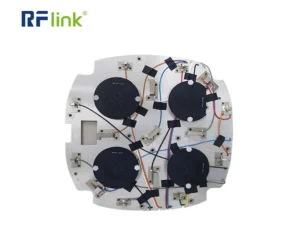
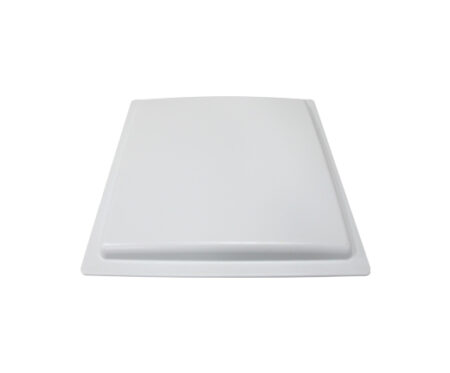
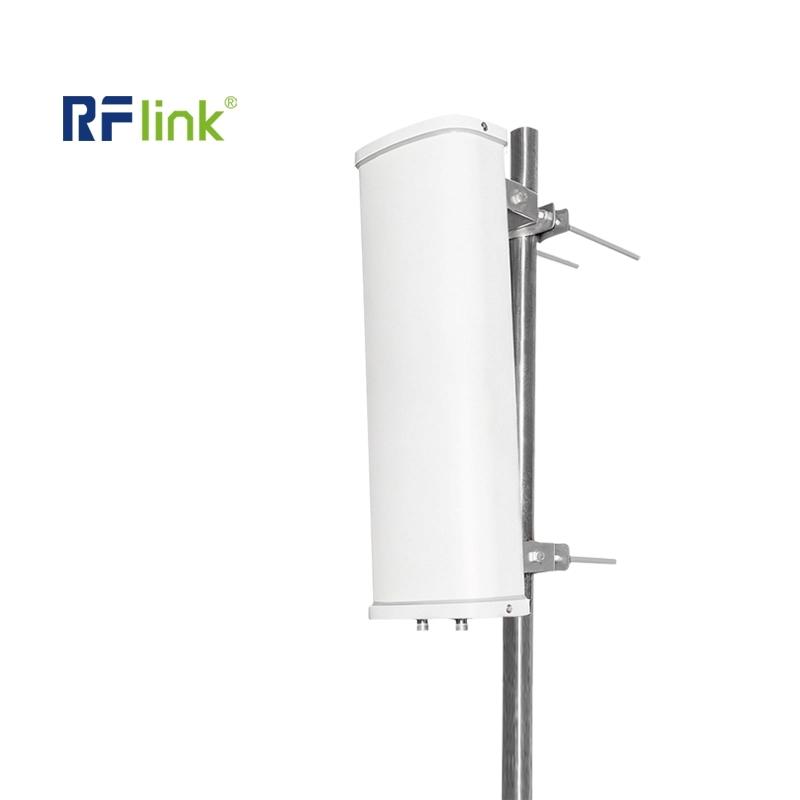
The Renfeng high-gain sector antenna operates from 1710–2700MHz. It supports 4G/LTE, 5G, PCS base stations, and backhaul links. This frequency range is widely used in modern networks. In addition, the antenna provides 15dBi gain. It also uses a directional sector design. This improves signal focus and reduces interference. Moreover, the strong front-to-back ratio enhances overall stability in complex environments. As a result, network quality becomes more consistent.
Installation and Deployment Optimization
Proper installation has a major impact on performance. For example, tilt angle adjustment can control coverage direction. Slight downtilt reduces signal overshooting in cities. Meanwhile, higher mounting positions increase coverage distance. In addition, environmental protection is important. This model uses IP65 protection. It works in rain, dust, and extreme temperatures. The operating range is -40℃ to 60℃. Therefore, it remains stable in harsh conditions.
Customization and Engineering Flexibility
Renfeng provides flexible customization for different projects. Customers can choose gain levels and connector types. N-female connectors are commonly used. In addition, mounting kits and radome colors are adjustable. Electrical downtilt options are also available. As a result, system integrators can match different deployment needs. This includes urban cells, rural towers, and industrial networks. Therefore, optimization becomes easier and more precise.
Final Performance Insight
In conclusion, the real coverage of a high-gain sector antenna depends on the environment and system design. In most cases, it ranges from 1 km to over 15 km, but no single value applies to all scenarios. Therefore, proper planning is essential to achieve stable performance. In addition, Renfeng antenna solutions improve stability and efficiency through direction control, gain optimization, and flexible configuration. As a result, they are well-suited for modern LTE and 5G networks.