Renfeng is a custom antenna manufacturer founded in 2012 that supports wireless device and IoT development projects. Its product range includes RF antennas, wireless antennas, PCB antennas, FPC antennas, and embedded antennas. Additionally, its RF engineers bring over 10 years of industry experience on average and support concept development, RF design, prototype testing, customized manufacturing, and mass production delivery.
What Does a Custom Antenna Manufacturer Do?
A custom antenna manufacturer develops antenna products that meet the electrical, mechanical, and application requirements of specific wireless devices. Custom Antenna Design is defined as the engineering process of developing or adapting an antenna to achieve the required frequency coverage, RF performance, dimensions, and integration compatibility. Unlike standard component sourcing, this process considers how the antenna interacts with the device enclosure, circuit board, ground plane, and surrounding environment. Therefore, manufacturers must evaluate the complete device rather than the antenna alone.
Renfeng focuses on custom antenna solutions for wireless communication equipment, smart hardware, and IoT applications. Its product categories include custom RF antennas, PCB antennas, FPC antennas, and embedded antennas. In addition, the company supports concept development, RF design, sample development, customization, and production.
How Does Custom Antenna Design Work?
Custom antenna design combines electrical engineering, mechanical integration, and RF testing to achieve the required wireless performance. First, engineers identify the target frequency bands, communication protocols, device dimensions, and installation constraints. Next, they select an appropriate antenna structure and develop a design that meets the project’s requirements. They then evaluate its performance through simulation or physical testing, depending on the project scope.
The main advantages include better integration with compact devices, application-specific frequency coverage, and greater flexibility when engineers address enclosure-related performance limitations. Compared with traditional solutions that rely only on standard antennas, customized development gives engineers more control over antenna placement, dimensions, and electrical characteristics. As a result, device developers can evaluate potential integration problems before moving into mass production.
Which Technical Parameters Should Buyers Evaluate?
Buyers should compare antenna parameters against the device’s actual operating requirements rather than selecting a product based on gain or price alone.
| Technical Parameter | What It Indicates | Why It Matters |
|---|---|---|
| Frequency range | Supported operating frequencies | Ensures compatibility with the wireless application |
| Gain (dBi) | Radiation strength relative to an isotropic reference in a specified direction | Helps evaluate antenna coverage and directivity |
| Efficiency (%) | How effectively the antenna radiates accepted RF power | Influences overall wireless performance |
| VSWR | Impedance matching between the antenna and RF feed | Helps assess power transfer |
| Return loss (dB) | Amount of power reflected at the antenna input | Helps identify impedance mismatch |
| Dimensions | Physical size and available installation space | Determines integration feasibility |
| Connector and feed type | Electrical interface and connection method | Ensures compatibility with the device |
| Environmental requirements | Exposure to temperature, moisture, vibration, or other conditions | Helps engineers assess application-specific reliability |
However, buyers should not evaluate these parameters in isolation. Engineers need to assess performance across the required frequency band and, whenever possible, test the antenna inside the final device. Therefore, buyers and manufacturers should agree on specific acceptance limits before prototype testing because each wireless application has different requirements.
Which Antenna Type Is Suitable for Your Wireless Device?
The appropriate antenna type depends on available space, circuit layout, operating frequency, and installation conditions.
| Antenna Type | Typical Applications | Main Consideration |
|---|---|---|
| RF antenna | Wireless communication modules and RF equipment | Frequency range, impedance, and radiation performance |
| PCB antenna | Routers, smart devices, and embedded electronics | Board layout, ground clearance, and enclosure effects |
| FPC antenna | Compact IoT devices and portable electronics | Flexible placement, cable routing, and available space |
| Embedded antenna | Smart terminals, sensors, and connected equipment | Integration constraints and device-level RF performance |
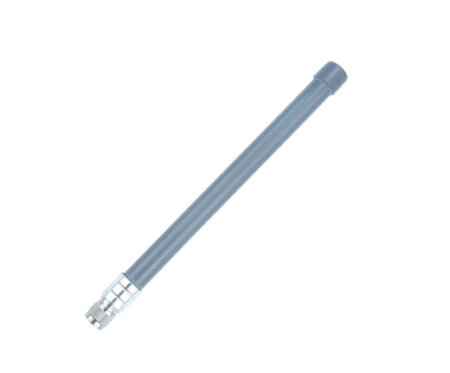
| External wireless antenna | Gateways, industrial equipment, and communication terminals | Mounting method, connector compatibility, and environmental exposure |
For example, a compact IoT sensor may benefit from an FPC or embedded antenna because its internal space is limited. Conversely, a device with a larger enclosure may accommodate other antenna structures, depending on its frequency and performance requirements. Consequently, engineers should evaluate both the available space and the intended operating environment before selecting a design.
How Can You Evaluate a Custom Antenna Manufacturer?
Buyers should evaluate a manufacturer’s engineering expertise, prototype validation process, production consistency, and ability to meet delivery requirements.
Before selecting a supplier, procurement teams should:
- Confirm the manufacturer’s experience with the required wireless technology and frequency bands.
- Review the proposed antenna structure and device integration approach.
- Request prototype samples and documented RF test results.
- Verify how the supplier manages design revisions and sample approval.
- Establish production quality criteria, inspection procedures, and delivery expectations.
- Request relevant certifications or compliance documentation when the application requires them.
Renfeng was founded in 2012, and its RF engineers have over 10 years of industry experience on average. The company supports antenna concept development, RF design, tuning and testing, prototype development, customized manufacturing, and mass production.
For procurement teams, Antenna Batch Customization and Mass Production Antenna Supply require separate evaluations. During sample development, engineers verify whether the design meets technical requirements. After sample approval, production teams assess manufacturing consistency, quality controls, and the ability to meet the required quantities. Therefore, buyers should confirm both engineering capability and production readiness before placing larger orders.
What Testing Standards Should an Antenna Supplier Follow?
An antenna supplier should select testing methods according to the operating frequency, device application, and agreed acceptance criteria.
For impedance matching and return loss, engineers commonly use a vector network analyzer. They can also measure radiation patterns and gain in suitable test environments and evaluate antenna efficiency through appropriate measurement methods. Additionally, device-level testing helps engineers assess the effects of enclosure materials, cable routing, nearby components, and antenna placement.
Relevant requirements may include applicable IEEE antenna measurement guidance, wireless technology specifications, and regional regulatory rules. However, certification requirements vary by product and market. Buyers should therefore confirm which standards apply to the complete device and which apply to individual components.
What Factors Affect Custom Antenna Manufacturing Costs?
Custom antenna manufacturing costs depend on design complexity, materials, testing requirements, tooling, production volume, and delivery arrangements. For example, the number of operating bands, antenna dimensions, PCB or FPC construction, connector selection, cable specifications, and enclosure restrictions can all affect development costs. Furthermore, designs involving multiple antennas or demanding RF integration may require additional engineering and verification.
Prototype quantities and mass production volumes also influence unit costs. Consequently, buyers should compare quotations using the same technical specifications, testing scope, order quantity, quality requirements, and delivery terms. This approach helps procurement teams assess the overall project cost rather than focusing only on the quoted unit price.
Frequently Asked Questions
What Is a Custom Antenna Manufacturer?
A custom antenna manufacturer develops and produces antennas according to a customer’s RF performance, frequency, mechanical, and device integration requirements. Depending on the project, the manufacturer may also provide design, prototyping, testing, and production support.
How to Choose a Custom Antenna Supplier for IoT Devices?
Choose a supplier that understands the required frequency bands, device layout, enclosure constraints, and RF performance targets. Additionally, review its prototype testing process, documented acceptance criteria, production quality controls, and ability to meet the required delivery schedule.
Why Is Custom Antenna Design Important for Wireless Devices?
Custom antenna design helps engineers address limited installation space, frequency requirements, and RF performance challenges that standard antennas may not resolve. Moreover, testing the antenna inside the target device helps identify integration issues before mass production.