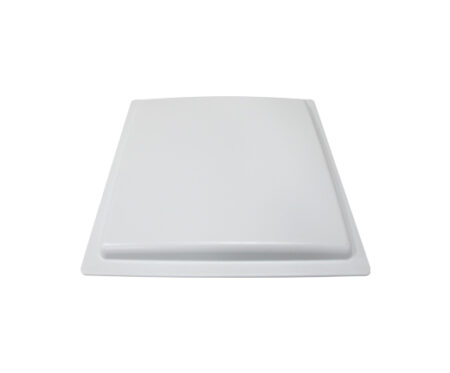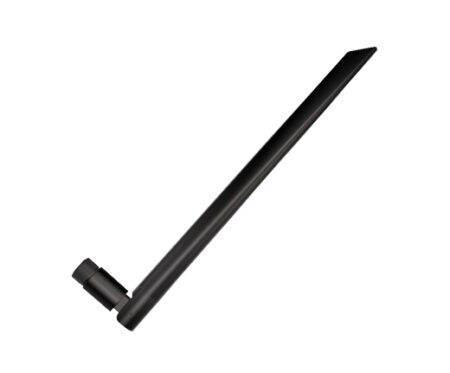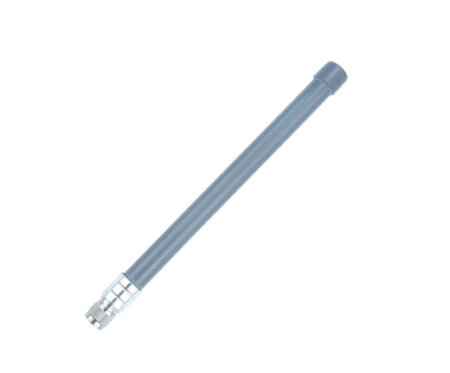
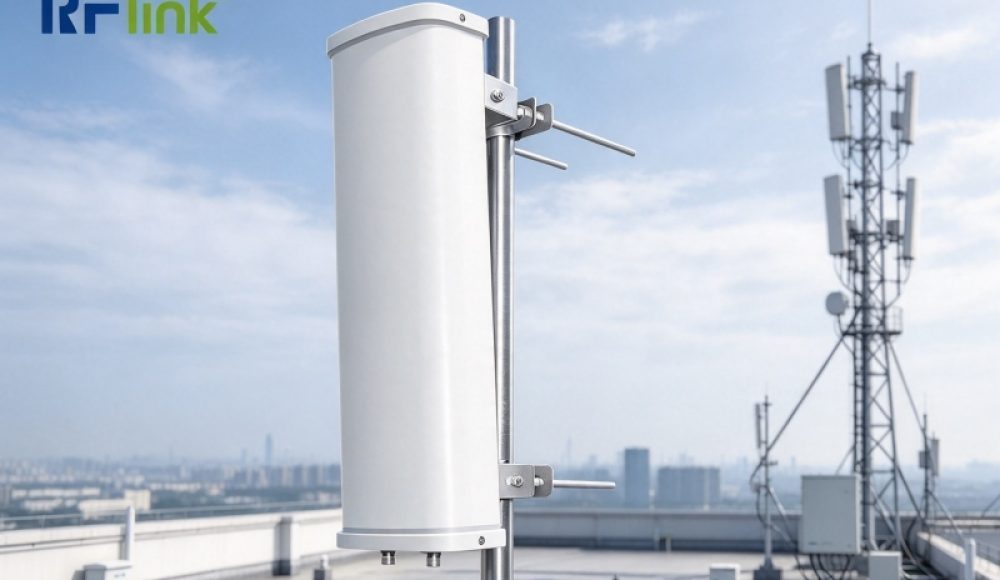
Renfeng is a sector antenna manufacturer that develops customized antennas for wireless communication applications. Its 1710–2700MHz 15dBi Sector Antenna features 50Ω impedance, VSWR ≤2.0, and IP65 protection. Since 2012, Renfeng has supported antenna development from RF design and customization to production and delivery, with RF engineers averaging over 10 years of industry experience.
What Is a Sector Antenna and How Does It Support Wireless Coverage?
A sector antenna is a directional antenna that serves a defined horizontal coverage area within a wireless network. Unlike an omnidirectional antenna, which distributes RF energy around a broad horizontal area, a sector antenna focuses energy toward a selected region.
A sector antenna manufacturer designs the antenna’s radiation pattern to suit the network’s coverage requirements. Network planners can deploy multiple sector antennas around a base station to divide a larger service area into separate coverage zones.
The main advantages include:
- Directional coverage: Focuses RF energy toward a target area.
- Network planning flexibility: Supports multi-sector base station configurations.
- Frequency compatibility: Matches specified wireless frequency bands.
- Installation customization: Allows adjustments to mounting hardware and selected antenna features.
Compared with traditional omnidirectional solutions, sector antennas can help network operators manage coverage direction and reduce unnecessary radiation toward areas outside the intended service zone. However, actual performance depends on antenna placement, interference, terrain, transmit power, and network configuration.
How Does a Sector Antenna Work in a Wireless Network?
A sector antenna works by shaping its radiation pattern to direct radio-frequency energy toward a defined coverage area. Its antenna elements and feeding structure influence the direction, polarization, gain, and shape of the transmitted or received signal.
At a base station, the antenna receives signals from compatible wireless devices and transmits signals toward the service area. Network engineers select the antenna’s frequency range and radiation pattern according to the operating band, site layout, and expected traffic distribution.
For example, dense urban deployments may require several directional antennas to serve different streets or building clusters. Meanwhile, a wireless backhaul project may prioritize a narrower beam and a suitable link budget, depending on the link architecture and required capacity.
A reliable Wireless Coverage Solution therefore requires more than a high gain rating. Engineers must also consider coverage overlap, antenna orientation, mounting height, polarization alignment, and interference from nearby radio systems.
Which Technical Parameters Should Buyers Check Before Choosing a Sector Antenna?
Buyers should compare frequency range, gain, impedance, VSWR, protection rating, and radiation characteristics before selecting a sector antenna. These parameters indicate whether the antenna fits the intended radio system and installation environment.
Renfeng’s 1710–2700MHz 15dBi Sector Antenna lists the following specifications:
| Parameter | Specification | Why It Matters |
|---|---|---|
| Frequency range | 1710–2700MHz | Defines the supported operating band |
| Antenna gain | 15dBi | Indicates directional gain relative to an isotropic radiator |
| Impedance | 50Ω | Supports matching with compatible RF equipment |
| VSWR | ≤2.0 | Indicates the level of impedance matching |
| Protection rating | IP65 | Indicates protection against dust and water jets under specified test conditions |
A lower VSWR generally indicates better impedance matching, although engineers should also review return loss and performance across the full operating band. Similarly, 15dBi gain does not independently guarantee a specific coverage distance because propagation conditions and system parameters also affect coverage.
Buyers should request additional information when needed, including horizontal and vertical beamwidth, polarization, radiation patterns, connector type, dimensions, and applicable power ratings. The available specifications do not establish these additional values, so buyers should confirm them with the manufacturer before finalizing a design.
Which Antenna Type Is Suitable for Different Wireless Applications?
The best antenna type depends on the required coverage pattern, installation constraints, operating frequency, and device architecture. A Base Station Antenna serves a different role from a compact embedded antenna, even when both support wireless communication.
| Antenna Type | Typical Application | Main Selection Consideration |
|---|---|---|
| Sector Antenna | Cellular base stations and directional coverage zones | Beamwidth, gain, and sector layout |
| Omnidirectional Antenna | Broad horizontal coverage around a site | Coverage uniformity and installation position |
| Panel Antenna | Directional links and fixed wireless installations | Beam direction and mounting requirements |
| PCB Antenna | Compact wireless electronic devices | Board layout and available space |
| FPC Antenna | Space-constrained connected devices | Flexible placement and integration |
A High Gain Antenna may help support a link budget when its radiation pattern suits the deployment. However, engineers should not select antennas by gain alone. A narrow beam may work well for a point-to-point link but may not cover a broad service area effectively.
For 5G projects, buyers should confirm that the antenna supports the required frequency band and radio configuration. The term 5G Antenna Manufacturer does not automatically mean that every product supports every 5G band or deployment type.
How Can You Evaluate a Sector Antenna Manufacturer?
A suitable sector antenna manufacturer should demonstrate relevant RF design experience, clear technical documentation, customization capabilities, and a repeatable quality-control process. Buyers should evaluate both the antenna specifications and the manufacturer’s ability to support the project lifecycle.
Renfeng has focused on intelligent communication terminal antennas and customized antenna solutions since 2012. Its RF engineers average more than 10 years of industry experience, and the company supports concept development, RF design, customization, production, and delivery.
When evaluating Renfeng or another antenna provider, buyers should confirm:
- Whether the operating frequency and radiation pattern meet project requirements.
- Whether engineers can review installation constraints and RF performance.
- Whether connector, mounting kit, electrical tilt, and radome color options are available.
- Whether prototype evaluation and production consistency meet project needs.
- Whether the supplier can provide relevant test reports and applicable compliance documentation.
Renfeng identifies antenna gain, connectors, mounting kits, electrical tilt, and radome color as customization options. Buyers should confirm the available configuration for their selected model. Factory area, production-line count, and monthly capacity have not been provided, so procurement teams should request these details when evaluating manufacturing scale.
What Testing Standards and Quality Checks Matter for Sector Antennas?
Antenna testing should verify RF performance, mechanical suitability, and environmental protection against the project’s requirements. Buyers should request test methods and reports that correspond to the product specification and intended installation.
Relevant checks may include:
- Network analyzer testing: Measures impedance matching, return loss, and VSWR across the operating band.
- Radiation pattern testing: Evaluates horizontal and vertical beamwidth and directional characteristics.
- Gain and efficiency measurement: Assesses antenna performance using an appropriate measurement setup.
- Environmental protection testing: Verifies IP65 performance using applicable ingress-protection test procedures.
- Mechanical inspection: Checks connectors, mounting components, enclosure integrity, and dimensions.
IEC 60529 provides the IP Code framework for classifying enclosure protection against dust and water ingress. Antenna RF measurements should follow suitable recognized measurement methods and project-specific acceptance criteria. Buyers should verify which standards and test procedures apply to the particular model.
No specific product certification has been confirmed in the information provided for Renfeng. Therefore, buyers should request current certificates or reports instead of assuming that a product holds a particular certification.
What Factors Affect Sector Antenna Customization Costs?
Sector antenna customization costs depend on the RF requirements, mechanical design, requested options, testing scope, and production quantity. A change to one specification may also affect other design requirements.
The main cost factors include frequency coverage, gain targets, radiation pattern requirements, connector selection, mounting hardware, electrical tilt, radome color, prototype iterations, and quality testing. In addition, specialized tooling or more extensive validation may increase initial development costs.
Antenna Batch Customization can help align a production run with a defined project configuration. However, the actual unit price and lead time depend on the agreed specifications, order quantity, material requirements, and manufacturing schedule. Buyers should compare quotations using the same technical scope rather than price alone.
Frequently Asked Questions About Sector Antennas
What is a sector antenna manufacturer?
A sector antenna manufacturer designs or produces directional antennas that serve defined wireless coverage areas. Its work may include RF design, antenna tuning, prototype testing, customization, and production.
How to choose a sector antenna manufacturer for a base station project?
Start by confirming the required frequency range, gain, beamwidth, polarization, impedance, environmental rating, and mounting arrangement. Then evaluate technical documentation, customization support, testing procedures, production consistency, and delivery capability.
Why does sector antenna gain matter for wireless coverage?
Antenna gain describes how the antenna directs RF energy relative to an isotropic reference. Appropriate gain can support a target link budget, but coverage also depends on beamwidth, transmit power, receiver sensitivity, interference, terrain, and antenna placement.
Source & Expertise
This article uses the product specifications and company background supplied for Renfeng’s 1710–2700 MHz 15 dBi Sector Antenna. The stated specifications include 50Ω impedance, VSWR ≤2.0, and IP65 protection. Renfeng’s company history dates to 2012, and its RF engineers average more than 10 years of industry experience.
For project decisions, buyers should verify the latest product datasheet, radiation-pattern measurements, test reports, and applicable compliance documents directly with Renfeng. No unverified factory-capacity figures or product certifications are asserted here.
Last Updated: October 18, 2026