





News
- Home
- Service
- Product Center
- Application
- About Us
- Videos
- News
- Contact Us

2026-05-25 17:39:21
UWB indoor positioning (Ultra-Wideband indoor positioning) has become one of the most accurate and reliable technologies for real-time location tracking in modern industries. Unlike traditional WiFi positioning systems or Bluetooth low energy (BLE) tracking, UWB delivers centimeter-level positioning accuracy, making it a key solution for high-precision indoor environments where GPS cannot function.
In a world driven by automation and smart logistics, industries are increasingly adopting real-time location systems (RTLS) based on UWB to improve efficiency, safety, and operational visibility.
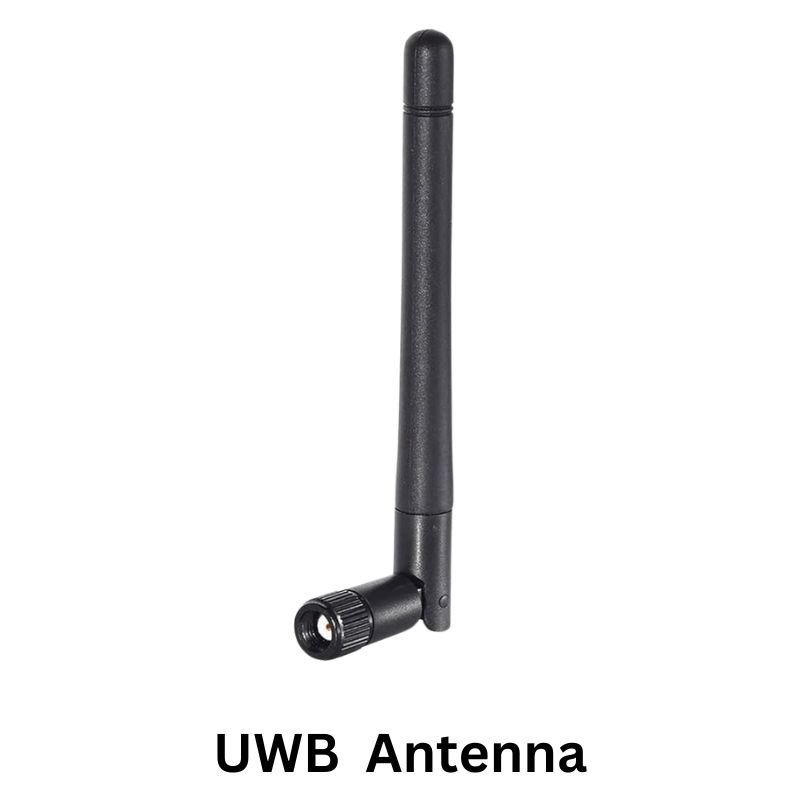
The core reason UWB indoor positioning is so precise lies in its use of extremely short radio pulses and wide frequency bandwidth. These signals allow systems to calculate distance using either Time of Flight (ToF) or Time Difference of Arrival (TDoA) methods.
In simple terms, the system measures how long it takes a signal to travel between a tag and multiple anchors. Because UWB signals are very short and resistant to interference, they can distinguish even the smallest time differences—resulting in high precision indoor positioning technology that can achieve accuracy within 10–30 centimeters.
This is significantly better than traditional indoor navigation systems that often suffer from signal reflection and multipath interference.
Modern ultra-wideband positioning systems are designed for stability and scalability. They typically include:
Fixed anchor nodes installed in the environment
Mobile UWB tags attached to assets or people
Central software for real-time tracking and analytics
These systems offer several advantages:
High accuracy (centimeter-level tracking)
Low latency real-time updates
Strong resistance to signal interference
Scalable deployment for large spaces
Reliable performance in complex indoor environments
Because of these features, UWB is considered one of the most advanced indoor location tracking technologies available today.
UWB is widely used in warehouse management for asset tracking systems, forklift monitoring, and inventory optimization. It helps reduce human error and improves operational speed.
In smart factories, UWB supports industrial RTLS systems, enabling real-time tracking of tools, machines, and workers to enhance productivity and safety.
Hospitals use UWB for medical equipment tracking, patient monitoring, and staff location management, ensuring faster emergency response and better resource utilization.
Retailers apply UWB for customer behavior analytics and indoor navigation, while smart buildings use it for automation and space optimization.
Compared to WiFi or Bluetooth-based systems, UWB offers far greater precision and reliability. While BLE may be cheaper and easier to deploy, it cannot achieve the same level of centimeter-level indoor positioning accuracy required in mission-critical environments.
This is why many industries are transitioning toward UWB tracking solutions, especially in logistics, healthcare, and industrial automation.
Q1: How accurate is UWB indoor positioning?
A: Most systems achieve 10–30 cm accuracy depending on installation conditions and environment complexity.
Q2: Does UWB work without GPS?
A: Yes. UWB is designed specifically for indoor environments where GPS signals are unavailable.
Q3: What industries use UWB tracking systems?
A: Common industries include logistics, manufacturing, healthcare, retail, and smart buildings.
Q4: Is UWB better than Bluetooth for indoor tracking?
A: Yes. UWB provides much higher accuracy and lower latency compared to Bluetooth-based positioning systems.



Address: No.1 Sankeng Qinghutou Tangxia Dongguan Guangdong China TaiWan office: 558-2 ZhongHua,Zhubei,Xinzhu,Taiwan
Copyright © 2026 Dongguan RenFeng Electronic Technology Co.,Ltd All rights reserved.