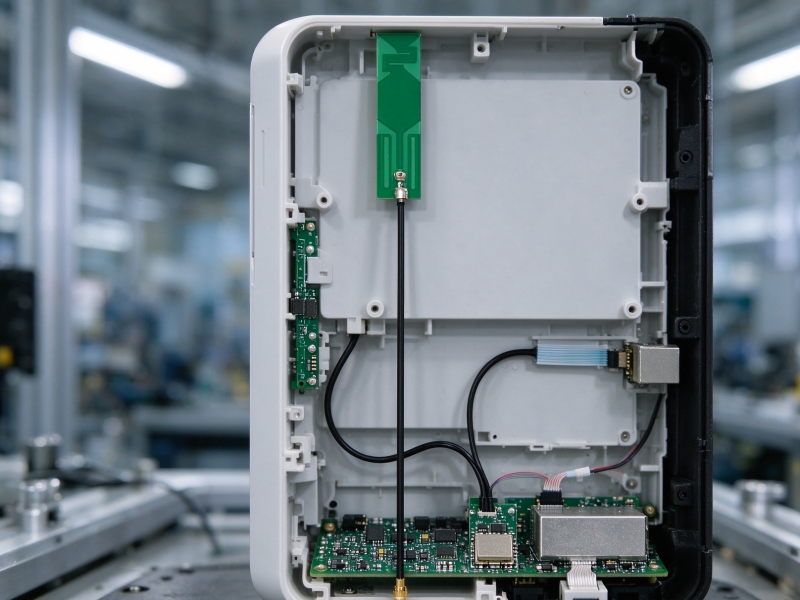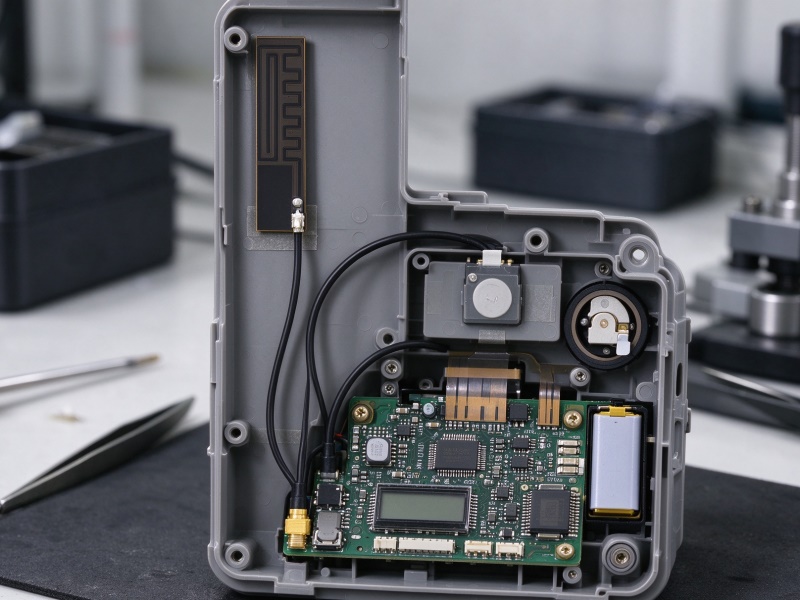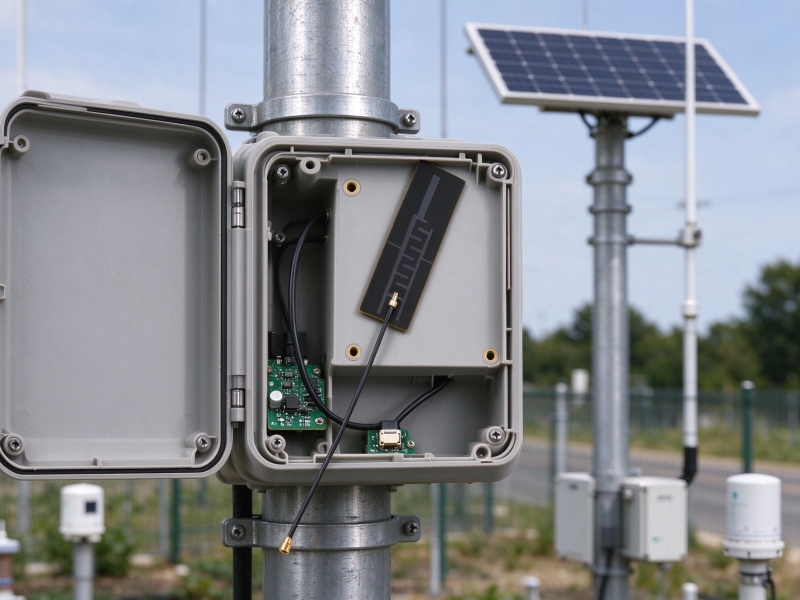
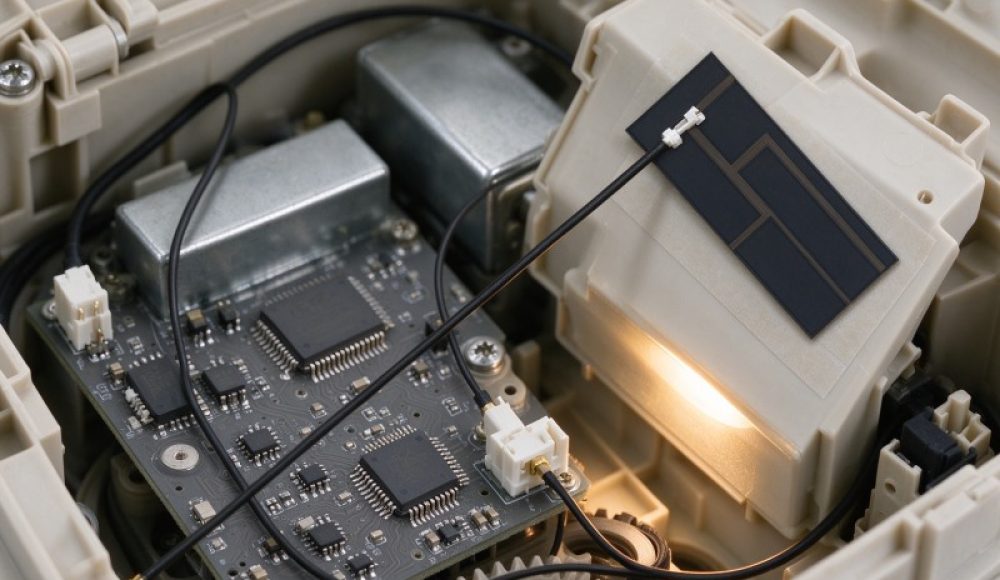
Smart meters rely on wireless communication to transmit consumption data, report operating conditions, and maintain connections with remote monitoring systems. However, their compact internal structures leave limited room for antenna installation. Metal enclosures, circuit boards, batteries, and other electronic components may also influence RF signal propagation. Therefore, selecting a suitable dual-band flexible FPC embedded antenna and installing it correctly are important steps toward maintaining reliable wireless communication.
Adhesive mounting offers a practical way to install antennas inside compact smart meter housings without requiring additional mechanical brackets or complicated mounting structures. By securing the flexible antenna element to an appropriate internal surface, equipment designers can reduce unwanted movement during assembly and daily operation. Moreover, a properly positioned antenna can help maintain a more consistent relationship with nearby components, supporting stable RF performance.
How Dual-Band Design Supports Flexible Wireless Connectivity
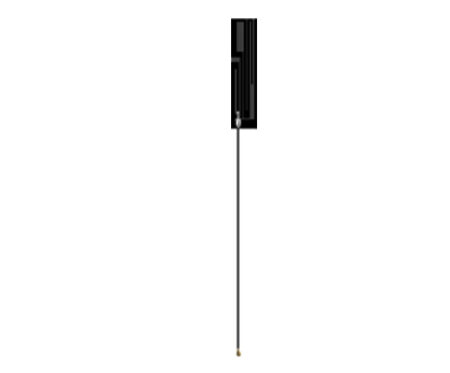
Smart meters and IoT devices may operate across different wireless communication bands depending on their network requirements and deployment environments. A dual-band antenna provides frequency coverage across two designated operating bands, allowing one antenna structure to support compatible communication requirements. In this case, the 868/915MHz FPC antenna covers 860–940MHz, making it suitable for compatible LoRa devices and smart meter applications.
The main advantages of dual-band antenna integration include:
-
Frequency Flexibility: Supports wireless applications operating within the specified 860–940MHz range.
-
Compact Integration: Combines antenna functionality within a flexible element measuring 44 × 20mm.
-
Installation Convenience: Allows the antenna to fit into device housings with limited internal space.
-
Cable Configuration: Uses a 150mm RF1.13 cable with an IPEX-1 connector for RF connection.
-
Application Versatility: Supports compatible LoRa devices, smart meters, and other wireless terminals.
However, frequency compatibility alone does not guarantee reliable communication. Engineers should also consider the antenna’s position, enclosure materials, RF connection, and surrounding electronic components during device development.
Why Adhesive Mounting Helps Improve Installation Stability
Unlike rigid antennas that require fixed mounting points, flexible FPC antennas can adapt to different internal housing surfaces. Adhesive backing helps secure the antenna element in its intended position, reducing the possibility of displacement caused by assembly operations or equipment vibration. Consequently, manufacturers can simplify the mechanical installation process while making more efficient use of available space.
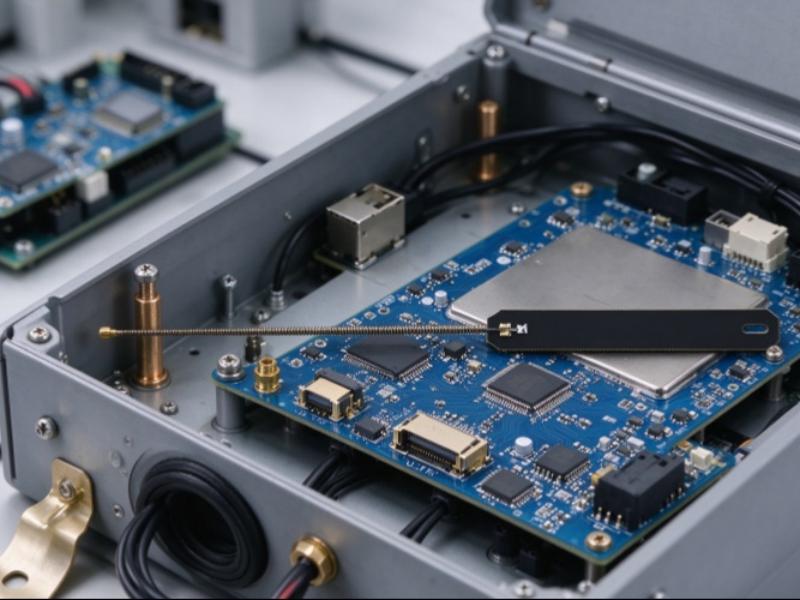
A properly installed dual-band flexible FPC embedded antenna can also help maintain consistent antenna positioning relative to the device enclosure. This matters because changes in antenna orientation or distance from nearby conductive materials may affect impedance matching and radiation characteristics. Therefore, engineers should select an appropriate mounting surface and follow the antenna’s installation recommendations rather than placing the element randomly inside the housing.
Several installation considerations deserve attention:
-
Mounting Surface: Choose a clean, flat surface that is compatible with the adhesive material.
-
Antenna Position: Keep the antenna away from large metal structures and other potential sources of RF interference where possible.
-
Cable Routing: Avoid sharp bends, excessive tension, and unnecessary compression of the RF cable.
-
Connector Security: Ensure that the IPEX-1 connection is properly seated during assembly.
-
Enclosure Design: Evaluate the influence of housing materials and internal components on antenna performance.
Key Specifications for Smart Meter Antenna Selection
Choosing an embedded antenna requires balancing electrical characteristics with mechanical installation requirements. For smart meter manufacturers, dimensions, frequency coverage, gain, cable length, and connector type all influence compatibility with the device architecture. The following table summarizes the key specifications of the 868/915MHz flexible FPC antenna.
| Specification | Product Details | Application Significance |
|---|---|---|
| Operating frequency | 860–940MHz | Supports compatible 868/915MHz applications |
| Antenna gain | 3dBi | Provides all-around radiation performance |
| Antenna type | Flexible FPC antenna | Supports compact internal installation |
| Element dimensions | 44 × 20mm | Fits space-constrained device housings |
| Connector | IPEX-1 | Connects to compatible RF interfaces |
| RF cable | RF1.13 | Provides the antenna connection |
| Standard cable length | 150mm | Supports device-level integration |
| Customization | Cable length can be customized | Helps accommodate different internal layouts |
Furthermore, engineers should test the antenna after installing it inside the actual device enclosure. Nearby batteries, circuit boards, metal components, and housing materials can change the antenna’s operating characteristics. Therefore, evaluating the complete assembly is more reliable than relying exclusively on standalone antenna specifications.
Applications in Smart Meters and IoT Devices
Smart meters require compact wireless components that can fit inside limited enclosures while supporting dependable data communication. A flexible internal antenna can simplify integration because its thin structure adapts to available mounting areas more easily than many rigid antenna designs. In addition, adhesive mounting can reduce the need for separate mechanical fixtures, helping streamline device assembly.
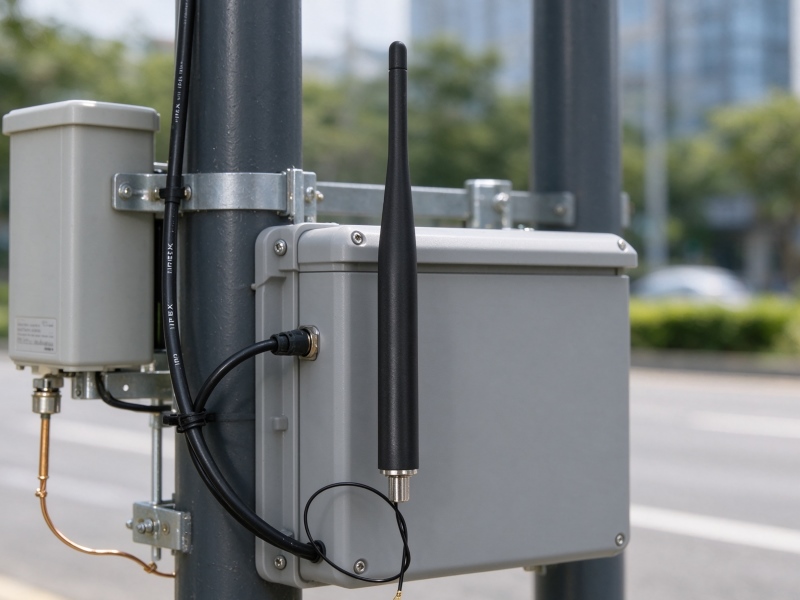
Beyond smart meters, this type of FPC antenna can support compatible LoRa terminals, remote monitoring equipment, and other IoT devices operating within the specified frequency range. For example, utility monitoring systems may use wireless connections to transmit measurement information to centralized platforms. Similarly, distributed sensing devices can use embedded antennas to communicate with gateways across different installation locations.
Renfeng provides antenna products and integration support for wireless communication applications. When selecting an internal antenna, equipment developers should evaluate frequency requirements, enclosure structure, connector compatibility, and cable routing together to achieve a suitable installation.
When Should Cable Length Customization Be Considered?
Standard antenna cable configurations may not fit every smart meter enclosure. Some devices have different PCB positions, connector locations, or internal mounting surfaces, which can make the standard cable length inconvenient. In these cases, adjusting the cable length can help simplify routing and accommodate specific device layouts.
For the 868/915MHz FPC antenna, the standard RF1.13 cable measures 150mm, while the cable length can be customized for device-level integration. However, engineers should avoid unnecessary cable extensions because cable length and routing can influence RF performance. Instead, they should determine the required connection distance during the early design stage and verify the completed assembly through RF testing.
Conclusion
Adhesive mounting provides a practical installation method for flexible embedded antennas in compact smart meters. By securing the antenna element in a suitable position, equipment designers can simplify assembly, reduce unwanted movement, and make better use of limited internal space. Meanwhile, dual-band frequency coverage supports compatible wireless communication requirements across the specified operating range.
The 868/915MHz flexible FPC antenna combines a 44 × 20mm element, 3dBi gain, an IPEX-1 connector, and a standard 150mm RF1.13 cable. With customizable cable length and flexible installation, it offers a practical option for smart meters, LoRa devices, and other compatible IoT equipment.