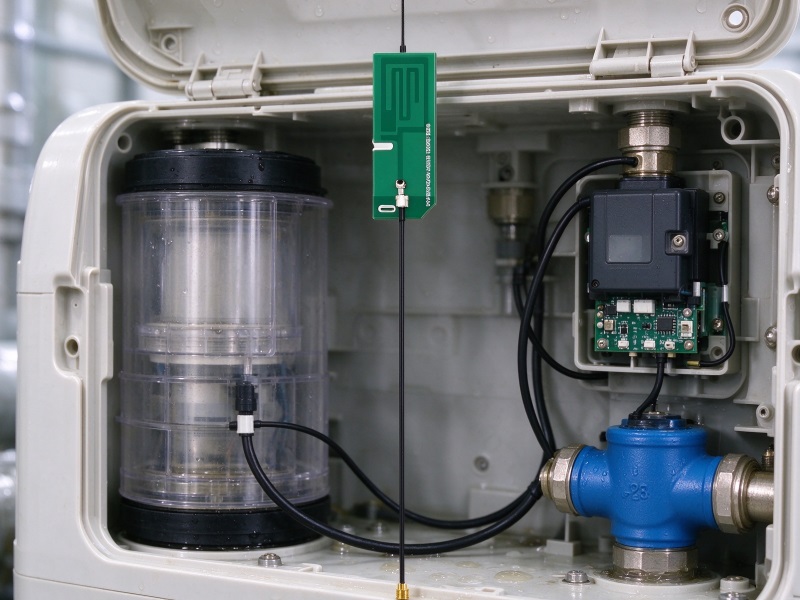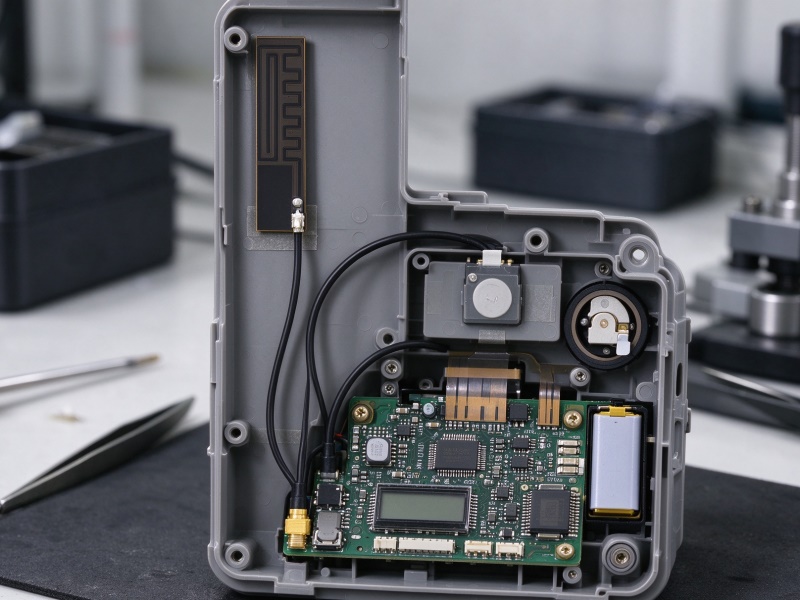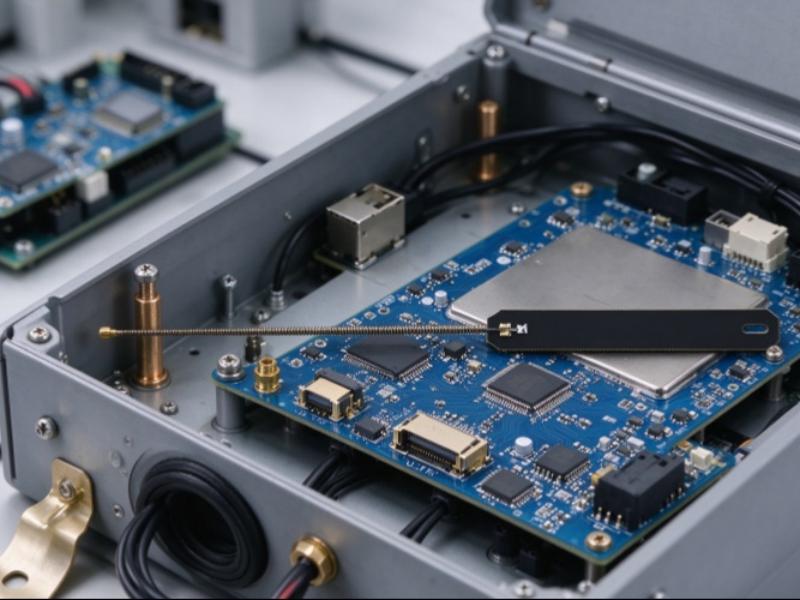
Renfeng is an NB-IoT PCB Antenna Manufacturer developing embedded antennas for multi-band cellular devices. Its NB-IoT/GSM/3G 3dBi Compact PCB Embedded Antenna supports 824–960MHz and 1710–2170MHz, with a 35 × 8mm PCB, IPEX-1 connector, and 145mm RF1.13 cable.
What Is an NB-IoT PCB Embedded Antenna?
An NB-IoT PCB embedded antenna is a compact RF component designed to support cellular communication in devices with limited internal installation space.
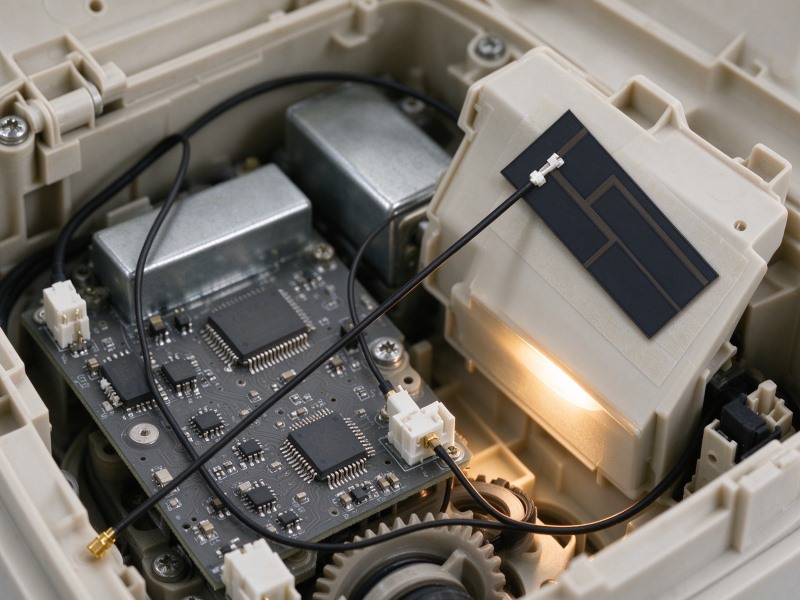
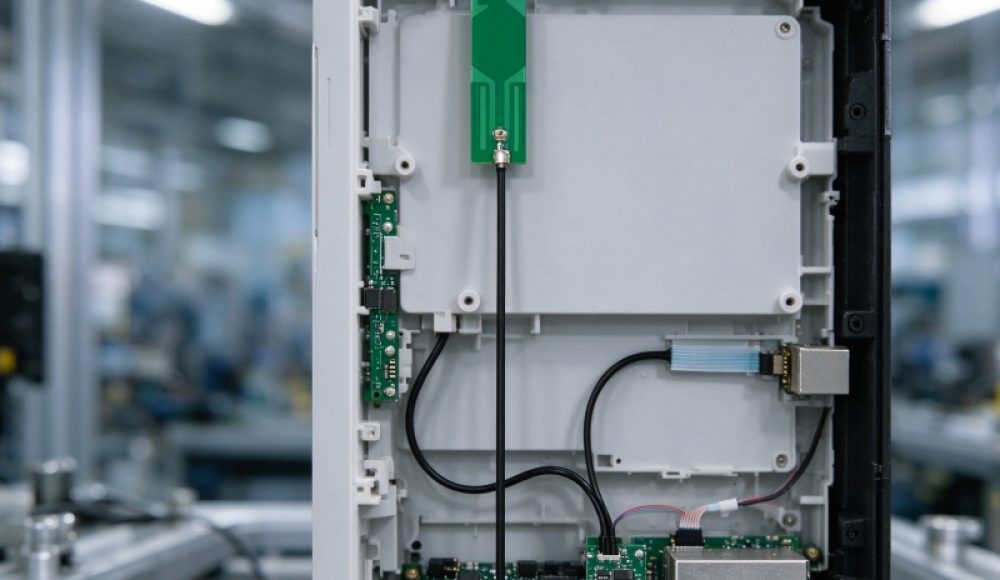
A PCB antenna is defined as an antenna implemented on or supported by a printed circuit board. In an embedded design, the antenna connects to the device’s wireless module through an RF cable and connector. This arrangement allows manufacturers to integrate wireless connectivity without relying on a large external antenna structure.
The Renfeng NB-IoT/GSM/3G 3dBi Compact PCB Embedded Antenna supports two frequency ranges: 824–960MHz and 1710–2170MHz. This makes it relevant to equipment designed for compatible low-band and high-band cellular services.
Its main specifications include:
- Frequency range 1: 824–960MHz
- Frequency range 2: 1710–2170MHz
- Gain: 3dBi
- PCB dimensions: 35 × 8mm
- Connector: IPEX-1
- Cable: 145mm RF1.13
These specifications help hardware developers assess frequency compatibility and physical integration before selecting an antenna.
How Does a Multi-Band PCB Antenna Support Cellular Connectivity?
A multi-band PCB antenna supports wireless communication by operating across more than one designated frequency range.
The antenna receives RF signals from a cellular module through its cable and connector, then converts electrical energy into electromagnetic radiation. During reception, it captures incoming radio signals and transfers them to the module.
For this product, the two specified operating ranges are 824–960MHz and 1710–2170MHz. These ranges cover portions of frequency bands used by cellular technologies, but they do not by themselves confirm support for every NB-IoT, GSM, or 3G band in every country.
Engineers should verify the module’s supported bands and the network frequencies used in the target market. They should also evaluate antenna performance after installation because the enclosure, ground plane, battery, and nearby components can affect RF behavior.
Which Specifications Matter for Compact Multi-Band Integration?
Frequency coverage, antenna dimensions, gain, connector type, and cable length are the primary specifications to check.
| Parameter | Product Specification | Integration Relevance |
|---|---|---|
| Low frequency range | 824–960MHz | Supports compatible lower cellular bands |
| High frequency range | 1710–2170MHz | Supports compatible higher cellular bands |
| Gain | 3dBi | Reference value for RF evaluation |
| PCB size | 35 × 8mm | Defines the antenna board footprint |
| Connector | IPEX-1 | Must match the device RF interface |
| Cable | 145mm RF1.13 | Determines connection reach and routing |
| Antenna type | Compact PCB embedded antenna | Designed for internal installation |
The 35 × 8mm PCB footprint can help developers plan antenna placement in compact devices. Meanwhile, the 145mm RF1.13 cable provides flexibility when the antenna element and wireless module cannot sit next to each other.
However, nominal specifications do not establish actual performance in a finished product. Engineers should request or measure parameters such as impedance, VSWR, efficiency, and radiation patterns when these values are necessary for design validation.
Where Can This Multi-Band Embedded Antenna Be Used?
This antenna is suitable for compact cellular devices whose operating frequencies fall within its specified ranges.
Typical application scenarios include:
- Smart meters: Cellular connectivity for remote meter reading and utility data transmission.
- NB-IoT devices: Embedded antenna integration in compatible low-power cellular terminals.
- GSM communication terminals: Wireless connectivity for equipment using supported GSM frequency ranges.
- Cellular IoT hardware: Internal antenna installation in monitoring and data collection devices.
- Remote communication equipment: Multi-band antenna integration where space and cable routing are important.
Actual compatibility depends on the cellular module, regional frequency allocation, network technology, and antenna performance inside the device. A frequency-range match alone does not guarantee network compatibility.
How Should Buyers Choose an NB-IoT PCB Antenna Manufacturer?
Buyers should evaluate frequency coverage, RF test capability, physical integration support, and customization experience.
When assessing an NB-IoT PCB Antenna Manufacturer, consider the following points:
- Check cellular band requirements. Compare the antenna’s two frequency ranges with the module bands and target network frequencies.
- Confirm the PCB footprint. Make sure the 35 × 8mm antenna board fits the available internal space.
- Verify the RF connector. Confirm compatibility between the IPEX-1 connector and the wireless module.
- Review cable routing. Check whether the 145mm RF1.13 cable reaches the connection point without excessive bending.
- Request RF test data. Review relevant measurements and validate performance in the final enclosure.
- Discuss design adaptation. Confirm whether the manufacturer can adjust dimensions, cable length, or connector arrangements for the project.
Compared with traditional external antenna solutions, an embedded PCB antenna can reduce exposed components and support a compact enclosure design. However, external antennas may provide more flexibility in placement and replacement. The best option depends on device size, installation conditions, and required RF performance.
What Affects the Cost of a Custom Multi-Band PCB Antenna?
Project cost depends on antenna specifications, engineering changes, testing requirements, materials, and production volume.
The main advantages include compact integration, support for two specified frequency ranges, and a defined cable-and-connector arrangement. However, adapting the antenna to a particular device may require additional design and validation work.
Common cost factors include:
- Frequency requirements: Additional band coverage or specific performance targets may require further RF development.
- PCB dimensions: Changes to the 35 × 8mm footprint may involve design adjustments and prototype evaluation.
- Cable and connector configuration: Different cable lengths or connector types affect materials and assembly.
- RF testing: Matching, efficiency, and radiation testing can add development costs.
- Production quantity: Material sourcing and manufacturing arrangements influence unit pricing.
Buyers can improve quotation accuracy by providing the cellular module model, target frequency bands, enclosure dimensions, connector requirements, cable length, and estimated order quantity.
How Does Renfeng Support Multi-Band Antenna Development?
Renfeng focuses on wireless communication terminal antennas and customized antenna solutions, supporting projects from concept development and RF design to product development and batch production. The company’s RF engineers have an average of more than 10 years of industry experience. Their work includes evaluating device frequency requirements, internal installation space, and connection configurations to develop suitable antenna arrangements.
As an NB-IoT PCB Antenna Manufacturer, Renfeng supports embedded antenna projects for smart meters, cellular communication terminals, and IoT hardware. Its engineering support can address requirements such as antenna dimensions, frequency adaptation, cable length, and connector selection.
For product validation, manufacturers should request relevant RF test reports and confirm applicable market regulations. Depending on the device and target region, regulatory evaluation may involve applicable FCC requirements or ETSI standards. These are compliance references, not evidence that this specific antenna has obtained certification. No product-specific certification information has been provided.
FAQ: What Should Buyers Know About Multi-Band PCB Antennas?
What is a multi-band PCB antenna used for?
A multi-band PCB antenna supports wireless communication across two or more designated frequency ranges. It can be used in compatible cellular IoT devices, smart meters, and communication terminals.
How to choose a PCB antenna for NB-IoT and GSM devices?
Compare the antenna’s frequency ranges with the wireless module’s supported bands and the network frequencies in the target market. Then check the PCB dimensions, connector, cable length, and RF test results in the final enclosure.
Why does antenna integration affect multi-band performance?
The device enclosure, ground plane, battery, and nearby components can change antenna impedance and radiation behavior. Engineers should therefore test the antenna in the complete device rather than relying only on standalone specifications.
Source & Expertise
This article is based on the supplied specifications for the Renfeng NB-IoT/GSM/3G 3dBi Compact PCB Embedded Antenna and the company information provided about its RF engineering and antenna development capabilities.
The technical explanations follow general RF antenna integration principles. Values not included in the supplied specifications, such as VSWR, impedance, efficiency, and certification status, should be confirmed through product-specific documentation and testing.
Last Updated: November 17, 2026