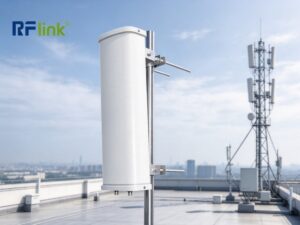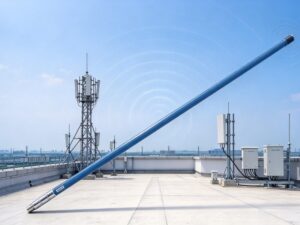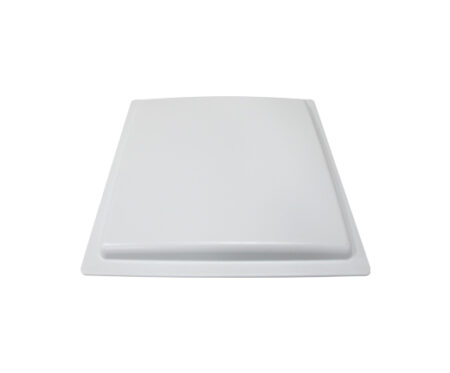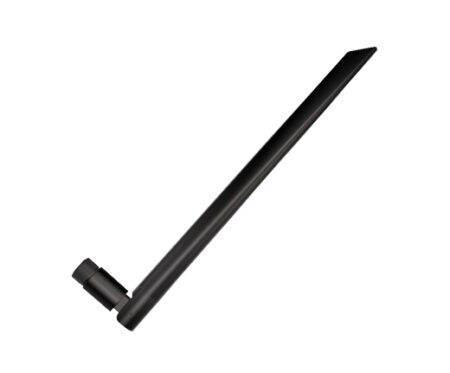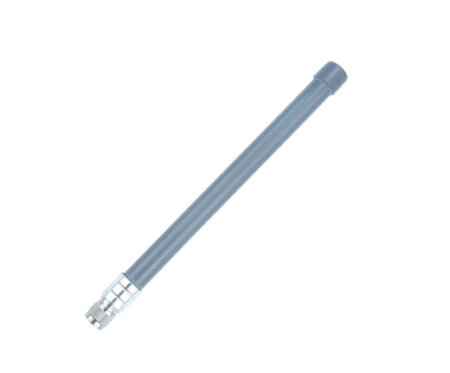

UWB Directional Antenna Applications include precision positioning, radar sensing, industrial IoT, and short-range wireless links. Renfeng offers a 6250–8250MHz 7dBi UWB directional circularly polarized antenna with 50Ω impedance, VSWR ≤2.0, and an SMA connector. Its directional radiation and circular polarization support designs that require controlled coverage and RF integration.
What Is a UWB Directional Antenna?
A UWB directional antenna is a broadband antenna designed to transmit or receive ultra-wideband signals preferentially in a particular direction. Ultra-wideband (UWB) describes radio systems that use a wide frequency bandwidth or meet applicable regulatory definitions for UWB operation.
The phrase UWB Directional Antenna Applications refers to the use cases in which this antenna structure helps meet coverage, positioning, sensing, or communication requirements. Unlike an omnidirectional antenna, a directional model concentrates radiation toward a selected region, depending on its radiation pattern.
Renfeng’s 6250–8250MHz model combines directional radiation with circular polarization. Its stated specifications include 7dBi gain, 50Ω impedance, VSWR ≤2.0, and an SMA connector. Engineers should confirm the full datasheet and radiation-pattern measurements before integrating it into a particular system.
How Does a UWB Directional Antenna Work?
A UWB directional antenna works by shaping electromagnetic radiation across its specified operating frequency range. Its element geometry, feed structure, and polarization determine how it transmits and receives radio signals.
UWB systems can support precise ranging by measuring signal timing and processing signal information. However, positioning accuracy depends on more than the antenna. Radio hardware, synchronization, signal processing, multipath, obstruction, and installation geometry all influence the result.
Circular polarization describes an electromagnetic wave whose electric-field direction rotates as the wave propagates. It can help reduce sensitivity to some changes in antenna orientation compared with a linearly polarized link, although performance still depends on the polarization characteristics of both antennas and the propagation environment.
The main advantages include directional coverage, a defined operating band, and the potential to support compact RF integration. Engineers should evaluate these characteristics alongside efficiency, beamwidth, polarization performance, and system requirements rather than relying on gain alone.
What Are the Main Applications of UWB Directional Antennas?
The main applications include precision positioning, radar and sensing, industrial IoT, and selected short-range wireless links. The suitability of a specific antenna depends on its frequency range, radiation pattern, and compatibility with the complete radio system.
How Can UWB Directional Antennas Support Precision Positioning?
UWB directional antennas can support positioning systems by providing controlled RF coverage for ranging and location measurements. Applications include asset tracking, equipment localization, and locating tagged objects in industrial or indoor environments.
A Precision Positioning Antenna should match the UWB transceiver’s operating band and the system’s ranging method. In addition, engineers should assess antenna placement, orientation, multipath, and line-of-sight conditions. A directional pattern may help focus coverage in a defined zone, but it does not independently guarantee a particular positioning accuracy.
How Are UWB Directional Antennas Used in Radar and Sensing?
UWB directional antennas can support radar and sensing equipment that transmits and receives RF signals to detect objects or estimate their positions. Potential applications include proximity detection, movement monitoring, and short-range sensing. The required bandwidth, antenna pattern, polarization, and isolation between transmit and receive paths depend on the radar architecture. Therefore, designers should verify that the antenna supports the system’s frequency range and measurement requirements before deployment.
Why Are UWB Antennas Useful in Industrial IoT?
UWB antennas can support Industrial IoT systems that need location awareness or short-range radio communication. Factories, warehouses, and production facilities may use UWB-enabled equipment to track tools, monitor assets, or support location-based workflows. Compared with traditional solutions that rely only on broad-area radio coverage, a properly designed UWB system can support fine-grained ranging under suitable conditions. Nevertheless, metal structures, machinery, reflections, and interference can affect RF performance, so site testing remains important.
Can UWB Directional Antennas Support Short-Range Data Links?
UWB directional antennas can be considered for short-range links when the radio platform supports the relevant frequency band and communication mode. Designers should verify throughput, link budget, regulatory requirements, and antenna compatibility for the intended application. Not every UWB positioning radio supports high-speed data transmission, and not every antenna covering a UWB-related band is suitable for every UWB protocol. Product selection must follow the complete system specification.
Which Technical Parameters Should You Compare Before Choosing an Antenna?
Engineers should compare operating frequency, gain, impedance, VSWR, polarization, radiation direction, and connector type before selecting a UWB antenna. These parameters help determine whether the antenna fits the radio platform and installation.
| Parameter | Renfeng Model Specification | Selection Consideration |
|---|---|---|
| Frequency range | 6250–8250MHz | Confirm overlap with the radio’s supported band |
| Gain | 7dBi | Evaluate with beamwidth and link budget |
| Impedance | 50Ω | Match the RF port and feed system |
| VSWR | ≤2.0 | Check matching across the required band |
| Polarization | Circular | Confirm compatibility with the other antenna |
| Radiation direction | Directional | Check coverage area and orientation |
| Connector | SMA | Verify connector gender, interface, and frequency suitability |
The 6250–8250MHz range spans 2,000MHz, but frequency coverage alone does not prove that a device meets a specific UWB protocol or regional regulatory requirement. Likewise, VSWR ≤2.0 is a stated limit; buyers should request test data across the complete operating range.
How Does a UWB Directional Antenna Compare With Other Antenna Types?
A UWB directional antenna differs from an omnidirectional antenna mainly in its radiation pattern and intended coverage. The best option depends on whether the system needs localized coverage, broad area coverage, or flexible integration.
| Antenna Type | Typical Strength | Potential Limitation |
|---|---|---|
| UWB directional antenna | Focused coverage for selected zones | Requires careful alignment and coverage planning |
| UWB omnidirectional antenna | Broad horizontal coverage | Less directional control |
| Linear-polarized antenna | Straightforward polarization arrangement | Orientation mismatch may affect link performance |
| Circularly polarized antenna | Can accommodate certain orientation differences | Polarization compatibility and axial ratio still matter |
These categories can overlap: a UWB antenna may be directional and circularly polarized at the same time. Engineers should compare measured radiation patterns and polarization data rather than treating antenna labels as complete performance specifications.
How Can You Choose a UWB Antenna for a Specific Project?
Choose a UWB antenna by matching its RF specifications to the application, physical design, and operating environment. A structured review helps prevent incompatibility during integration.
- Confirm the radio module’s operating frequency and supported protocol.
- Define the required coverage area, range, and positioning or sensing performance.
- Compare gain, beamwidth, polarization, and impedance.
- Check connector compatibility, cable routing, mounting space, and enclosure materials.
- Request relevant RF test reports and validate the assembled device.
- Test the antenna in the intended environment, especially around metal surfaces and machinery.
Renfeng supports antenna customization discussions involving dimensions, connectors, enclosure materials, and mounting methods. These options should be confirmed against the specific model and project requirements before production.
What Factors Affect UWB Antenna Customization Costs?
UWB antenna customization costs depend on RF requirements, mechanical constraints, selected materials, validation work, and production quantity. Design changes can also affect tuning and testing requirements.
Typical cost factors include operating bandwidth, gain and radiation-pattern targets, connector choice, enclosure design, mounting hardware, prototype revisions, and measurement requirements. In addition, a project that requires specialized fixtures or extensive environmental validation may need more development work.
Before requesting a quotation, buyers should provide the radio specifications, target frequency range, installation drawings, expected quantity, and applicable compliance requirements. These details help the antenna team define the design scope and avoid comparing quotations based on different technical assumptions.
Frequently Asked Questions About UWB Directional Antennas
What is a UWB directional antenna used for?
A UWB directional antenna is used in systems that need focused RF coverage, including precision positioning, radar sensing, industrial asset tracking, and selected short-range wireless links.
How to choose a UWB directional antenna for precision positioning?
Check frequency compatibility, gain, beamwidth, polarization, connector type, and measured RF performance. Then evaluate the antenna within the complete positioning system and test it under representative installation conditions.
Why choose a circularly polarized UWB antenna?
Circular polarization can help a link accommodate certain antenna-orientation differences. However, the benefit depends on the counterpart antenna, polarization characteristics, installation, and propagation environment.
Source & Expertise
This article uses the supplied specifications for Renfeng’s 6250–8250MHz 7dBi UWB Directional Circularly Polarized Antenna and the provided description of Renfeng’s RF design and customization capabilities. No unverified factory capacity or product certification is claimed.
For engineering evaluation, request the current datasheet and supporting measurements, including radiation patterns, polarization performance, gain, and VSWR across the operating band. IEEE 802.15.4z may be relevant to UWB ranging system design, while applicable regulatory requirements depend on the deployment region and equipment. Protocol or regulatory compliance should be confirmed for the complete device rather than inferred from the antenna’s frequency range alone.
Last Updated: October 18, 2026