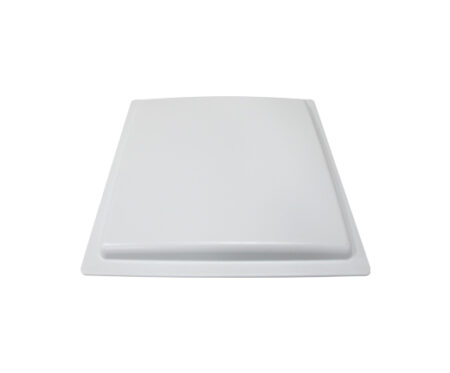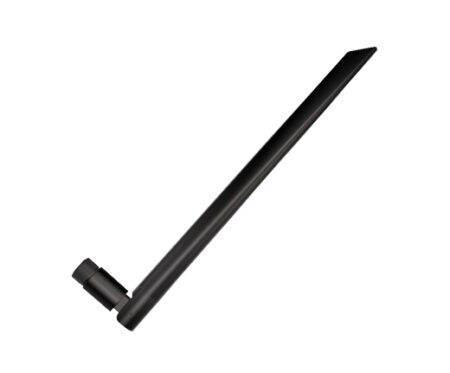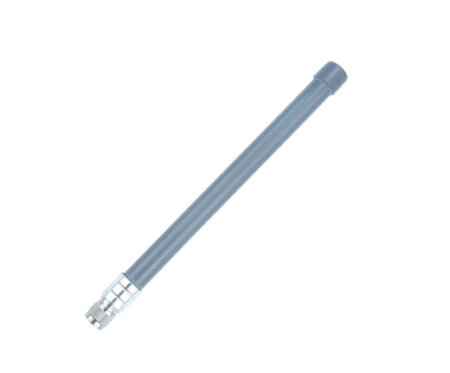

An 868MHz Fiberglass LoRa Antenna supports outdoor IoT by transmitting and receiving sub-GHz radio signals across LoRa-based sensor networks. Renfeng’s 868MHz 8dBi High-Gain Omnidirectional Fiberglass Antenna covers 860–940MHz, uses an N-type male connector, and handles up to 100W of power. In addition, its waterproof structure supports outdoor installation.
What Is an 868MHz Fiberglass LoRa Antenna?
An 868MHz Fiberglass LoRa Antenna supports wireless communication in the 868MHz frequency region for compatible LoRa and IoT devices. It combines a fiberglass radome with an internal antenna element to protect the antenna structure during outdoor use. More specifically, engineers define this antenna type as a fiberglass-enclosed radio antenna designed for sub-GHz wireless links. Its compatibility depends on the operating frequency range and the radio system that uses it.
Renfeng offers an 868MHz 8dBi High-Gain Omnidirectional Fiberglass Antenna with the following specifications:
| Parameter | Product specification |
|---|---|
| Nominal frequency | 868MHz |
| Described frequency coverage | 860–940MHz |
| Gain | 8dBi |
| Radiation pattern | Omnidirectional |
| Connector | N-type male |
| Power handling | 100W |
| Radome length | 550mm |
| Outdoor protection | Waterproof structure, as described |
These specifications help engineers evaluate compatibility with LoRa gateways, base stations, and outdoor monitoring devices. However, actual performance also depends on radio configuration, installation height, surrounding structures, cable loss, and local radio regulations.
How Does an 868MHz LoRa Antenna Work?
An 868MHz LoRa Antenna converts electrical radio-frequency signals into electromagnetic waves during transmission. During reception, it performs the reverse process by converting incoming electromagnetic waves into electrical signals. LoRa systems use chirp spread spectrum modulation to maintain communication under suitable link conditions. The antenna does not generate this modulation; instead, it provides the radio-frequency interface between the transceiver and the surrounding environment.
Meanwhile, an omnidirectional antenna distributes radio energy around its vertical axis rather than focusing all radiation in one narrow horizontal direction. Therefore, it suits networks in which sensors and wireless devices sit in different directions around a gateway. The main advantages include broad horizontal coverage, an outdoor-oriented protective structure, and compatibility with appropriately configured 868MHz-class radio equipment. Nevertheless, an omnidirectional radiation pattern does not guarantee equal signal strength in every direction or at every elevation angle.
Where Can an 868MHz Fiberglass Antenna Be Used?
An 868MHz Fiberglass LoRa Antenna supports outdoor IoT applications when its frequency range, the regional regulations, and the connected radio equipment meet the project requirements.
Typical applications include:
- LoRaWAN gateways: The antenna connects gateways with distributed wireless sensors across farms, industrial sites, and outdoor facilities.
- Smart agriculture: Agricultural teams can use compatible sensor networks to monitor soil conditions, irrigation equipment, and environmental measurements.
- Environmental monitoring: Remote sensing systems can use the antenna to support wireless links for weather, water, and site-condition monitoring.
- Industrial IoT: Operators can connect compatible monitoring devices across outdoor equipment areas, storage facilities, and distributed industrial sites.
- Remote infrastructure monitoring: The antenna provides a radio interface for compatible low-power wireless devices located away from buildings.
For these applications, gain alone cannot determine whether the antenna will meet coverage requirements. Instead, system designers should assess the coverage area, gateway sensitivity, sensor transmit power, mounting position, and potential obstructions.
How Should Engineers Choose an Outdoor LoRa Antenna?
Engineers should match the antenna’s frequency coverage, radiation pattern, gain, connector, environmental protection, and mounting requirements to the complete wireless system.
Several checks can help teams make a suitable choice:
- Frequency compatibility: First, confirm that the intended operating channels fall within the antenna’s specified range. For this model, engineers should compare the stated 860–940MHz coverage with the regional LoRa configuration.
- Gain and coverage: An 8dBi gain rating can contribute to the link budget. However, higher gain does not automatically provide better coverage in every direction.
- Connector compatibility: Check whether the N-type male connector matches the cable or equipment interface.
- Outdoor protection: Review the available waterproofing details. Then, confirm that the antenna meets the installation site’s enclosure and weather-exposure requirements.
- Mounting and cable routing: Consider mast placement, antenna clearance, cable length, connector sealing, grounding, and lightning protection where applicable.
- Regulatory compliance: Finally, verify the permitted frequency channels, transmit power, antenna gain limits, and other applicable regional requirements.
For smart agriculture projects, installation height and location also matter. For example, terrain, crops, buildings, and metal structures can obstruct radio signals, so engineers should assess these obstacles before selecting the final mounting position.
How Does a Fiberglass Antenna Compare with Other Antenna Types?
A fiberglass omnidirectional antenna differs from compact device antennas and directional antennas in its enclosure, installation method, and radiation pattern.
| Antenna type | Typical characteristics | Common consideration |
|---|---|---|
| Fiberglass omnidirectional antenna | Outdoor radome and broad horizontal coverage | Requires suitable mounting space and height |
| Compact PCB antenna | Integrated into electronic equipment | Device design strongly affects performance |
| Whip antenna | Compact and often externally mounted | Gain and environmental suitability vary by design |
| Directional antenna | Focuses radiation toward a selected direction | Requires alignment with the target area |
Compared with traditional solutions that place a compact antenna inside a device, an externally mounted Fiberglass Antenna gives installers more flexibility in positioning and separating the antenna from electronic components. As a result, system designers can choose a mounting location that better suits their coverage objectives.
However, antenna construction alone does not determine the best option. Engineers must also consider the link budget, physical constraints, installation environment, and communication requirements.
What Affects the Cost of an Outdoor IoT Antenna?
The antenna’s electrical design, materials, mechanical construction, connector configuration, testing requirements, and order quantity all influence its cost.
For an 868MHz-class fiberglass antenna, buyers should compare the specified frequency coverage, 8dBi gain target, radome length, connector type, waterproofing requirements, mounting hardware, and customization needs. In addition, cable assemblies, surge protection, packaging, and project-specific validation can increase the overall deployment cost.
When comparing quotations, buyers should check that each product offers equivalent frequency coverage, gain definitions, connector configurations, and environmental specifications. Otherwise, a lower unit price may not translate into lower project costs if the installation requires additional accessories or labor.
How Does Renfeng Support Antenna Development and Customization?
Renfeng focuses on communication terminal antennas and customized antenna solutions. Its RF engineers average more than 10 years of industry experience, and the company states that it supports antenna development, RF design, mass production, and delivery.
These capabilities may help IoT developers adapt antenna specifications to device structures, installation conditions, and project requirements. To start a customization project, buyers should define the operating band, connector, mounting method, target gain, enclosure requirements, and validation criteria.
However, the supplied product information does not identify specific certifications or provide formal test reports. Therefore, buyers should request the relevant compliance documents and test results rather than assume that the product holds a particular certification.
What Should Engineers Test Before Outdoor Deployment?
Engineers should validate the antenna with the intended radio system and installation environment before deploying it at scale.
Recommended checks include:
- Frequency response: Measure return loss or VSWR across the required operating band.
- Impedance matching: Confirm that the antenna matches the radio system’s impedance requirements, commonly 50Ω when the equipment specifies that interface.
- Radiation pattern and gain: Use an appropriate antenna measurement setup to verify the actual radiation pattern and gain.
- Environmental protection: Review waterproofing evidence and conduct suitable environmental tests for the expected exposure.
- End-to-end link performance: Measure packet delivery, received signal strength, and link quality under representative operating conditions.
- Regulatory requirements: Check that the complete radio system complies with local frequency and transmit-power rules.
Project teams should define specific acceptance limits before testing. At present, the supplied product information does not include measured VSWR, return-loss results, radiation-pattern plots, or a named environmental test standard.
FAQ: What Do Buyers Need to Know?
What Is an 868MHz Fiberglass LoRa Antenna?
An 868MHz Fiberglass LoRa Antenna is a fiberglass-enclosed antenna designed for compatible sub-GHz LoRa communication. Renfeng’s described model covers 860–940MHz, provides 8dBi gain, and uses an N-type male connector.
How to Choose an Outdoor IoT Antenna for Smart Agriculture?
Choose an antenna by checking regional frequency rules, gateway compatibility, required coverage, gain, connector, mounting height, environmental exposure, and sensor locations. In addition, test the complete radio link before deploying the network.
Why Use an Omnidirectional Fiberglass Antenna for Outdoor LoRa Networks?
An omnidirectional design can connect devices distributed around a gateway without requiring installers to point the antenna toward each device. Furthermore, a fiberglass radome provides a protective enclosure for outdoor installation when its environmental performance meets the site’s requirements.
Source & Expertise
This article uses the supplied specifications for Renfeng’s 868MHz 8dBi High-Gain Omnidirectional Fiberglass Antenna and the provided company information about its antenna development and RF design capabilities. The application examples and validation recommendations reflect general engineering guidance; they do not claim measured product performance or formal certification.
Last Updated
October 18, 2026