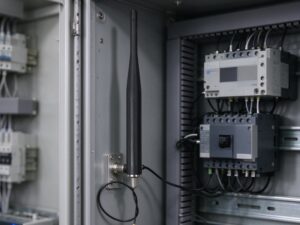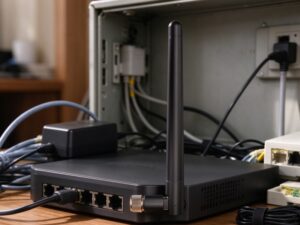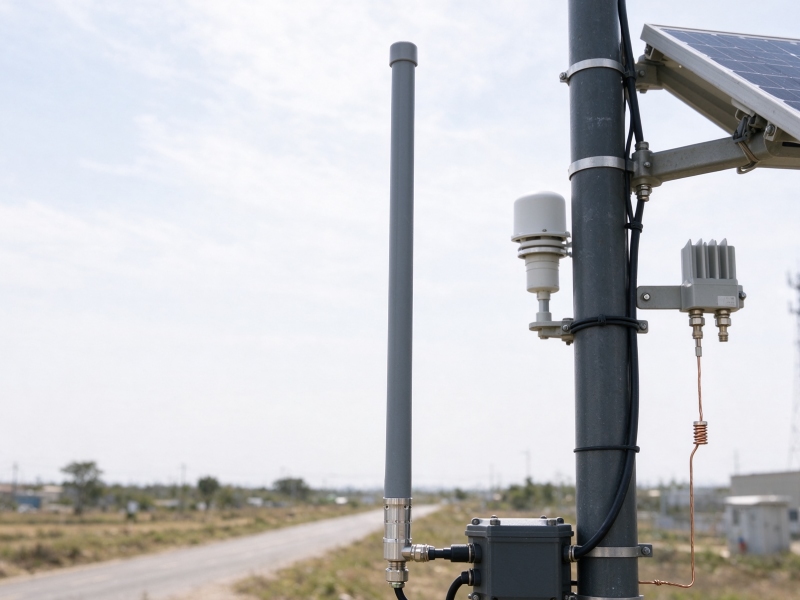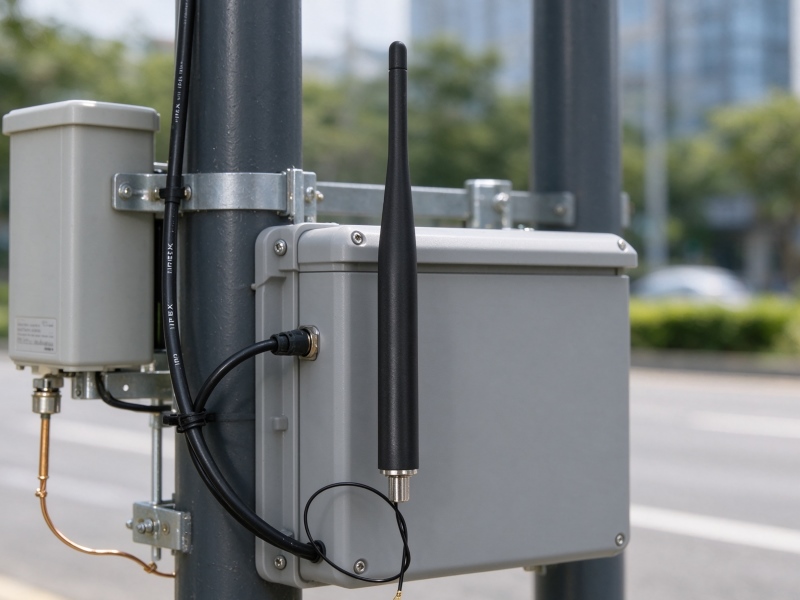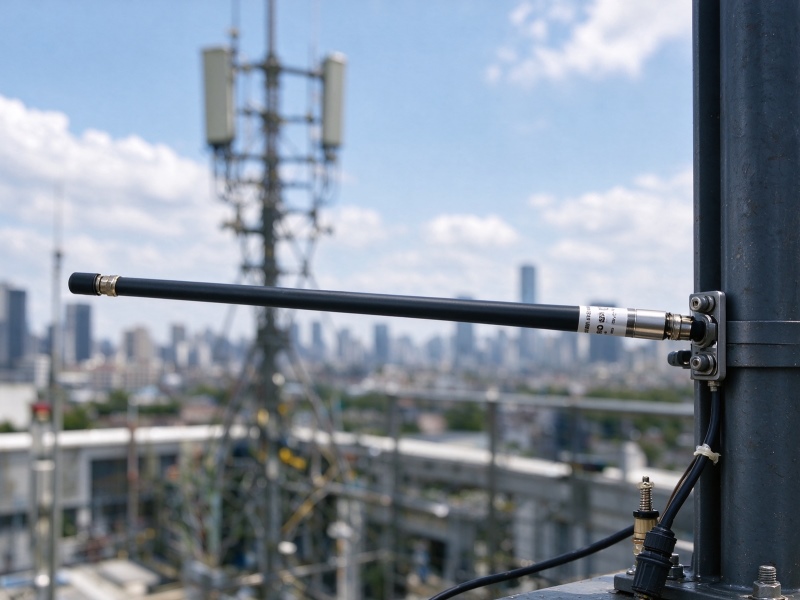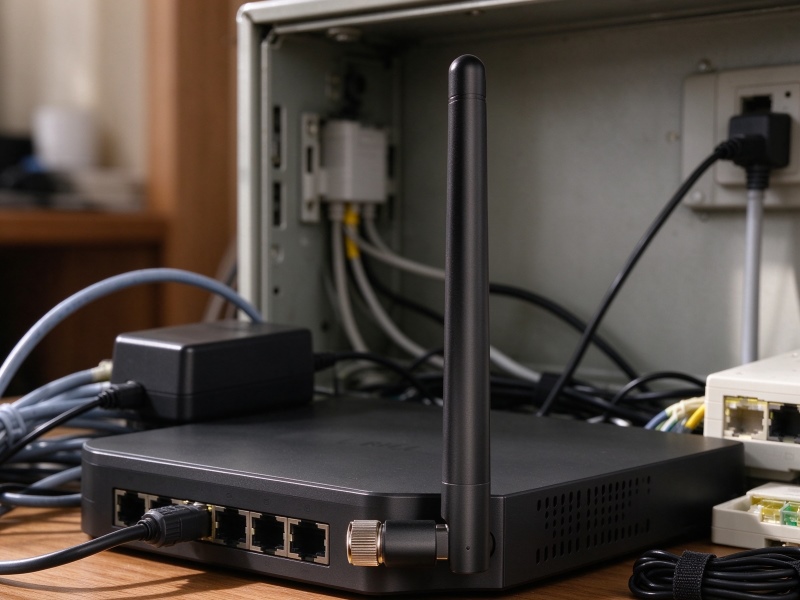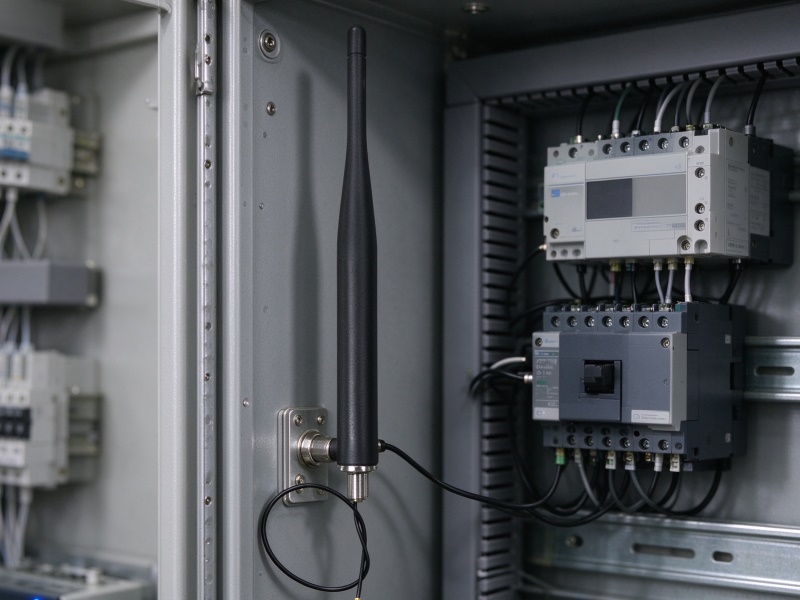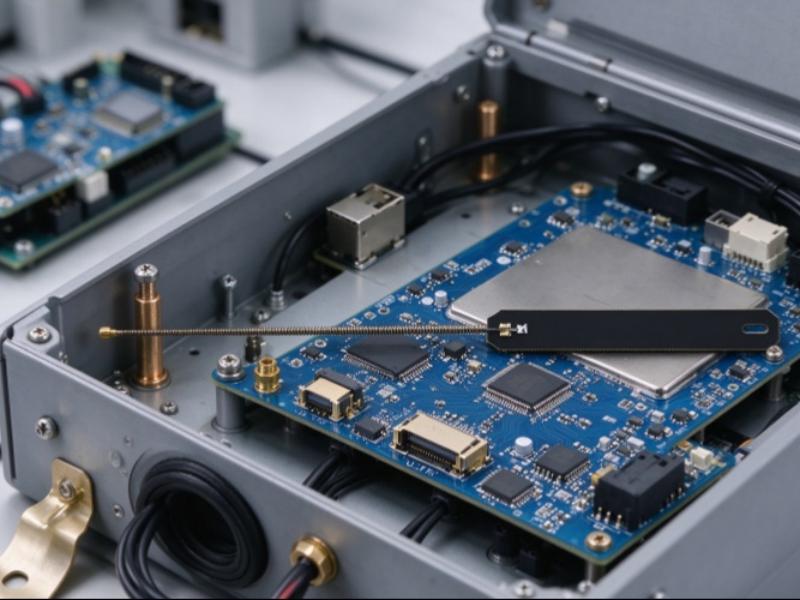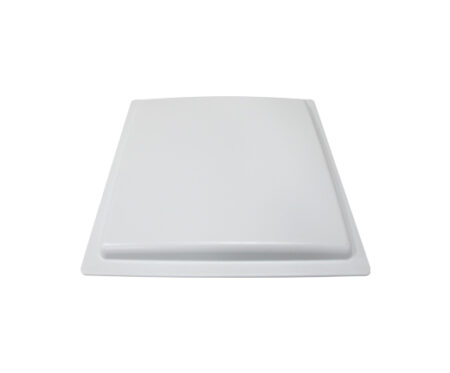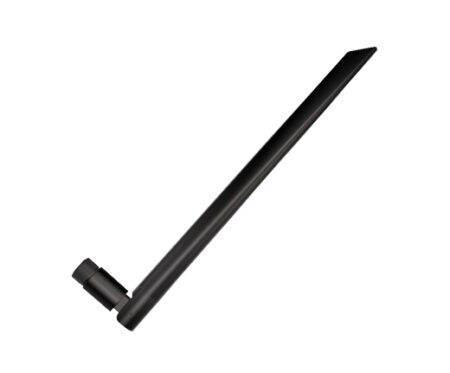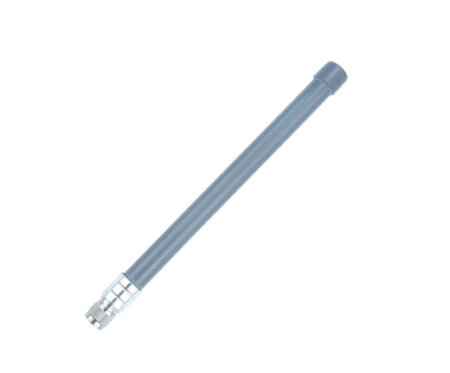

Renfeng provides a 915 MHz 3 dBi Outdoor Omnidirectional Fiberglass Antenna with an N-Male connector for compatible LoRaWAN gateways and outdoor IoT networks. These outdoor fiberglass antenna solutions support wireless communication across different horizontal directions, while frequency compatibility, antenna placement, connector matching, and environmental conditions determine their suitability.
What Is an Outdoor Fiberglass Antenna?
An outdoor fiberglass antenna uses a fiberglass protective radome to house and protect its internal radiating elements. More specifically, a fiberglass antenna is defined as an antenna with a protective fiberglass structure designed to support outdoor installation. The radome helps protect internal components from direct environmental exposure while allowing RF signals to pass through.
For wireless communication systems, this structure can be used with omnidirectional or directional antenna designs. In particular, omnidirectional models distribute RF energy around the antenna’s vertical axis, making them suitable for applications where connected devices operate in different horizontal directions. Renfeng’s 915MHz 3dBi Outdoor Omnidirectional Fiberglass Antenna, N Male, is designed for compatible outdoor wireless communication equipment.
How Does an Omnidirectional Fiberglass Antenna Work?
An omnidirectional fiberglass antenna transmits and receives RF signals around its vertical axis rather than focusing energy in one horizontal direction.
During transmission, the gateway’s RF module sends an electrical signal to the antenna through its coaxial connection. The antenna then converts the signal into electromagnetic waves. During reception, the process works in reverse as the antenna captures incoming signals and transfers them to the connected RF module.
However, omnidirectional coverage does not mean that the antenna provides equal signal strength in every direction. Its vertical radiation pattern, installation height, nearby structures, and surrounding interference can influence actual coverage.
Therefore, engineers should consider the complete installation environment when evaluating an outdoor antenna for LoRaWAN communication.
What Are the Main Specifications of the Renfeng 915MHz Antenna?
The Renfeng model features a 915MHz operating configuration, 3dBi gain, an omnidirectional design, and an N Male connector.
| Parameter | Specification |
|---|---|
| Product name | 915MHz 3dBi Outdoor Omnidirectional Fiberglass Antenna |
| Frequency | 915MHz |
| Gain | 3dBi |
| Antenna type | Omnidirectional fiberglass antenna |
| Connector | N Male |
| Installation environment | Outdoor wireless applications |
The main advantages include a fiberglass protective structure, omnidirectional coverage, and an N Male connection for compatible RF equipment.
Nevertheless, these specifications do not independently establish the antenna’s effective communication distance or environmental resistance. For example, actual coverage also depends on transmitter power, receiver sensitivity, terrain, antenna height, and interference.
In addition, the exact frequency range around 915MHz, power handling capacity, VSWR, dimensions, and environmental protection rating should be confirmed through the product datasheet or engineering documentation before deployment.
Where Are Outdoor Fiberglass Antennas Commonly Used?
Outdoor fiberglass antennas are commonly used in wireless systems that require weather-exposed installation and communication with devices located in different horizontal directions.
Typical applications include:
- LoRaWAN gateways: Supporting communication between gateways and distributed sensor nodes.
- Industrial IoT networks: Connecting outdoor monitoring equipment and wireless controllers.
- Smart agriculture: Supporting wireless data collection from field sensors and environmental monitoring devices.
- Remote monitoring systems: Providing RF connectivity for equipment deployed across large or distributed sites.
- Outdoor wireless terminals: Supporting compatible communication devices installed on poles, buildings, or equipment enclosures.
For 915MHz deployments, businesses should also confirm that the selected frequency configuration complies with the radio regulations in the target market. Frequency allocation and permitted transmission conditions can vary by region.
How Should Businesses Choose an Outdoor Fiberglass Antenna?
Businesses should select an antenna according to frequency compatibility, gain, radiation pattern, connector type, power requirements, and installation conditions.
When evaluating a suitable configuration, consider the following factors:
- Operating frequency: Confirm that the antenna supports the gateway’s required frequency band rather than relying only on a nominal frequency label.
- Antenna gain: Evaluate whether 3dBi gain meets the expected coverage requirements and installation height.
- Radiation pattern: Choose an omnidirectional model when devices operate in multiple horizontal directions.
- Connector compatibility: Check whether the N Male connector matches the gateway, coaxial cable, or RF interface.
- Power handling: Confirm that the antenna’s rated input power exceeds the system’s maximum RF output under the intended operating conditions.
- Environmental suitability: Review radome materials, mounting hardware, sealing structure, and relevant environmental test documentation.
In addition, outdoor fiberglass antenna solutions should be evaluated as part of the complete RF system. Engineers should consider cable loss, mounting position, nearby metal structures, and the gateway’s transmission characteristics before finalizing the design.
How Do Fiberglass Antennas Compare with Other Outdoor Antenna Types?
Fiberglass antennas, metal whip antennas, and directional antennas serve different installation and coverage requirements.
| Antenna type | Main structure | Coverage characteristics | Typical application |
|---|---|---|---|
| Fiberglass omnidirectional | Protective fiberglass radome | Horizontal omnidirectional coverage | Outdoor gateways and IoT networks |
| Metal whip | Exposed or compact metal element | Depends on antenna design | Wireless terminals and compact equipment |
| Yagi directional | Multiple conductive elements | Concentrated directional coverage | Point-to-point wireless links |
| Panel directional | Flat antenna structure | Focused coverage within a defined sector | Fixed outdoor wireless connections |
Compared with traditional exposed whip antennas, fiberglass models provide a protective housing around their internal antenna elements. Meanwhile, directional antennas can concentrate RF energy toward a specific area, making them more suitable for certain long-distance point-to-point links.
However, a directional antenna requires more careful alignment. By contrast, an omnidirectional model can support communication with devices distributed around the installation point. Consequently, the choice should reflect the network layout rather than gain figures alone.
What Tests Should Be Considered Before Outdoor Installation?
RF and environmental testing help determine whether an antenna is suitable for its intended outdoor application.
Recommended validation procedures include:
- S11 and return loss testing: Evaluate impedance matching across the required operating frequency range.
- VSWR measurement: Check the relationship between the antenna and its RF transmission line.
- Gain and radiation pattern testing: Verify antenna performance and horizontal coverage characteristics.
- Power handling evaluation: Confirm that the antenna can operate within the required RF power range.
- Environmental testing: Assess relevant resistance to moisture, temperature changes, UV exposure, and other site conditions.
Depending on the target market, businesses may also need to review applicable radio equipment and electromagnetic compatibility (EMC) requirements. However, no specific certification or outdoor test results have been supplied for this product. Therefore, customers should request the relevant reports and confirm compliance for the intended application.
What Factors Influence Outdoor Fiberglass Antenna Costs?
Antenna costs depend on frequency requirements, gain targets, materials, connector configuration, mechanical design, testing, and production volume.
For example, a project requiring a different frequency range or mounting structure may involve additional RF design and mechanical adaptation. Similarly, connector selection, cable assembly, and installation accessories can influence the final configuration.
Furthermore, prototype testing and batch production have different cost structures. Businesses should provide their target frequency, expected RF power, installation drawings, connector requirements, and order quantity when evaluating project costs.
This information allows engineers to assess the technical scope before confirming the antenna configuration.
How Does Renfeng Support Outdoor Antenna Projects?
Renfeng is a communication antenna company established in 2012, specializing in RF antenna design and customized antenna solutions.
Its RF engineers have an average of more than 10 years of industry experience. In addition, the company supports antenna projects from product concept development and RF design to sample production and batch manufacturing.
For projects involving outdoor fiberglass antenna solutions, Renfeng can evaluate operating frequency, antenna gain, connector configuration, installation structure, and application environment. As a result, equipment developers can discuss antenna adaptations according to their wireless communication requirements.
Renfeng serves customers developing LoRaWAN equipment, industrial IoT devices, wireless communication terminals, and outdoor monitoring systems. Its engineering support covers antenna design and product adaptation for different device structures and deployment conditions.
Regarding compliance, customers should identify the applicable radio frequency, EMC, and environmental requirements in their target markets. They should also request product-specific test reports and certification documents where required. No specific certification details, outdoor test standards, production-line figures, or monthly manufacturing capacity have been provided and should be confirmed directly during project evaluation.
Frequently Asked Questions
What Is a Fiberglass Antenna Used For?
A fiberglass antenna is used to transmit and receive wireless signals while protecting its internal radiating elements with a fiberglass radome. Common applications include outdoor LoRaWAN gateways, industrial IoT networks, remote monitoring systems, and wireless communication equipment.
How to Choose a 915MHz Outdoor Antenna?
Check the operating frequency range, gain, radiation pattern, connector, power handling capacity, and environmental requirements. In addition, verify the antenna’s RF test results and compatibility with the gateway before installation.
Why Do Outdoor IoT Gateways Use Omnidirectional Antennas?
Outdoor IoT gateways often use omnidirectional antennas because connected devices may be distributed in different horizontal directions. As a result, one gateway antenna can communicate with nodes around its installation point without requiring precise directional alignment for every connection.
Source & Expertise
This article draws on the supplied Renfeng company information and product specifications, along with general RF antenna engineering principles. Its technical discussion covers fiberglass antenna structures, omnidirectional radiation, RF matching, outdoor installation, and recommended validation procedures.
Product-specific performance and environmental suitability should be confirmed through manufacturer documentation and testing under the intended operating conditions.
Last Updated
November 11, 2026