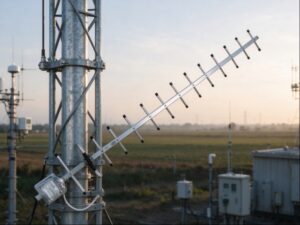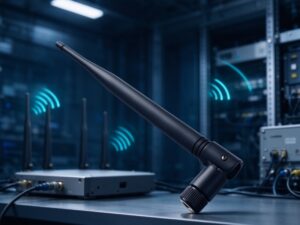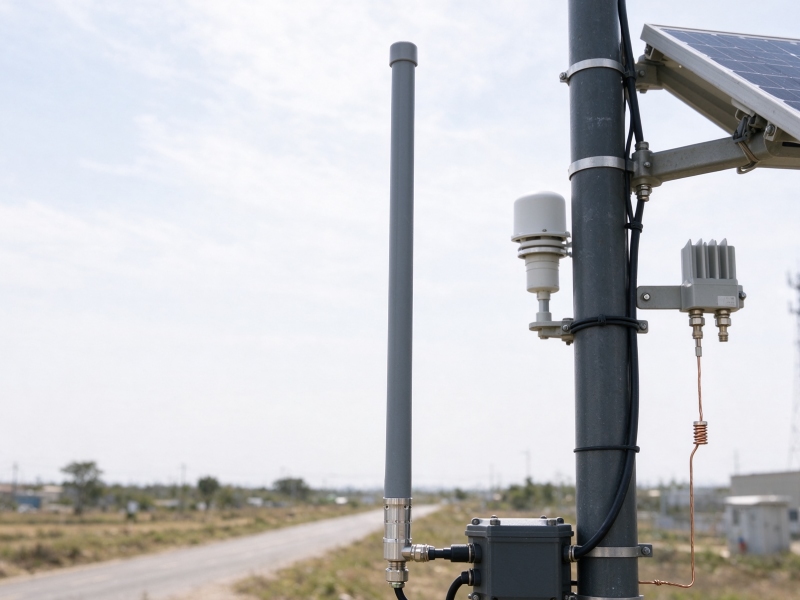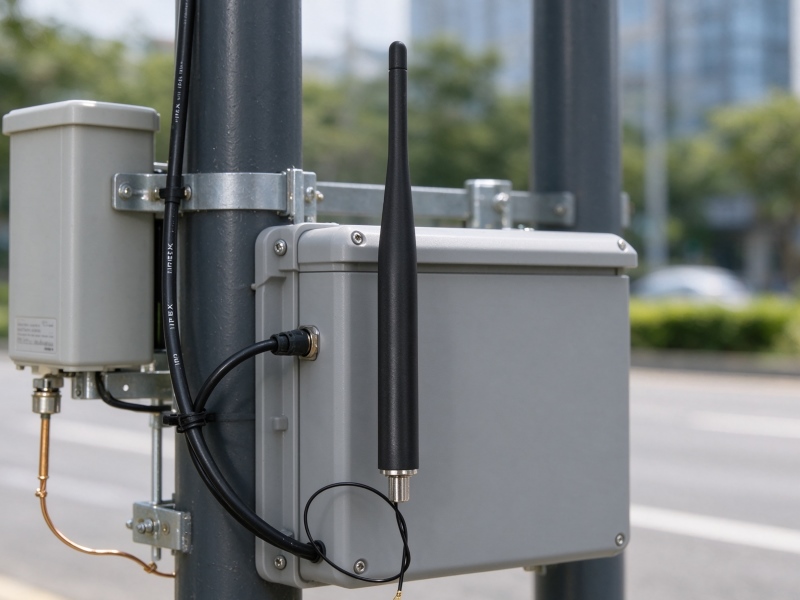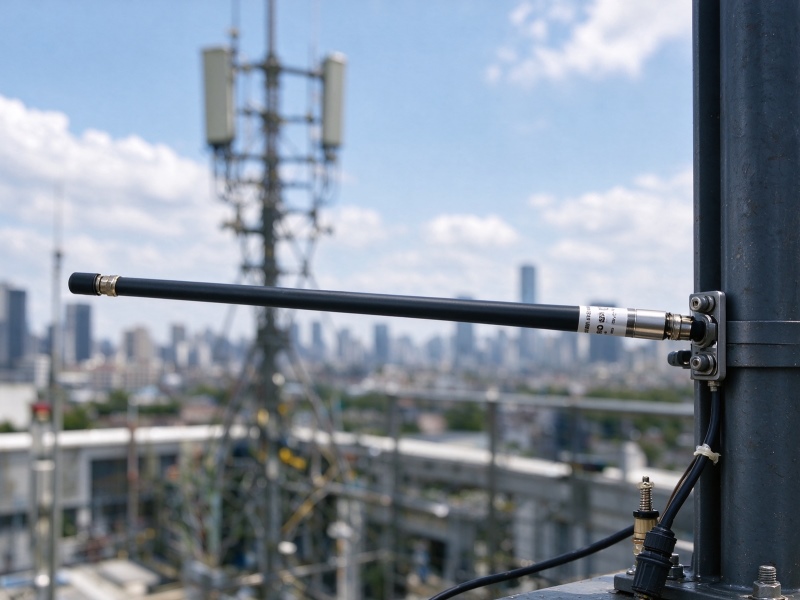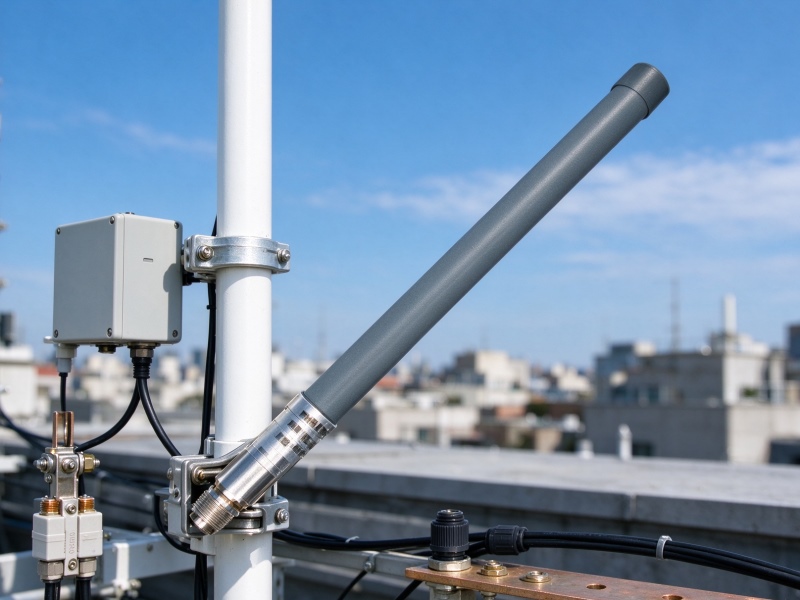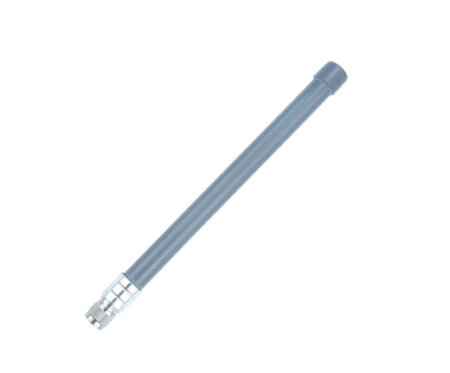

Renfeng’s 900MHz Long Range Fiberglass Antenna is an outdoor omnidirectional antenna for LoRa and sub-GHz wireless systems. It covers 855–945MHz, provides 11dBi gain, and features an N Male connector, 50W power handling, and a 1750mm antenna body with a weather-resistant structure for outdoor installations.
What Is a Long-Range Fiberglass Antenna?
A long-range fiberglass antenna is an external RF antenna designed to support wireless communication over a compatible frequency band. It typically uses a radiating element protected by a fiberglass radome, which helps shield the internal antenna structure from outdoor environmental exposure. The 900MHz Long Range Fiberglass Antenna from Renfeng is designed for sub-GHz communication applications. Its 855–945MHz operating range covers the nominal 900MHz region, while its 11dBi gain provides a reference for wireless link planning. The N Male connector connects to compatible RF cables, and the antenna supports up to 50W power handling.
Its main specifications are:
| Parameter | Specification |
|---|---|
| Product name | 900MHz 11dBi Long-Range Omnidirectional Fiberglass Antenna |
| Frequency range | 855–945MHz |
| Gain | 11dBi |
| Connector | N Male |
| Power handling | 50W |
| Antenna length | 1750mm |
| Structure | Weather-resistant fiberglass antenna |
These specifications help engineers evaluate frequency compatibility, installation space, and RF connection requirements. The supplied information does not include VSWR, radiation pattern, polarization, IP rating, or specific environmental test results.
How Does a Fiberglass Antenna Improve Outdoor LoRa Coverage?
A fiberglass antenna can support outdoor LoRa coverage by providing an external radiating structure with gain suited to the communication system. Its performance depends on antenna placement, radio settings, cable loss, and the surrounding environment.
An omnidirectional antenna generally distributes RF energy around its vertical axis. As a result, it is useful when wireless devices are located in different horizontal directions. Meanwhile, the 11dBi gain rating indicates that this antenna concentrates energy more strongly in certain directions than lower-gain models. However, higher gain often produces a narrower vertical radiation pattern. Therefore, engineers should carefully consider installation height and device elevation to achieve suitable coverage.
The main advantages include:
- Broad horizontal coverage: An omnidirectional design can serve devices distributed around a central gateway.
- External installation: The 1750mm structure provides a dedicated antenna position outside compatible equipment.
- Defined frequency range: The 855–945MHz range supports system designs operating within the antenna’s specified band.
- Outdoor-oriented construction: Its weather-resistant structure is intended for outdoor deployment.
However, gain alone does not determine communication distance. Transmitter power, receiver sensitivity, cable loss, terrain, buildings, vegetation, and radio interference all affect the actual link budget.
Where Can This Antenna Be Used?
This antenna can be considered for outdoor LoRa networks, industrial IoT installations, energy monitoring systems, and remote data collection sites that require compatible sub-GHz communication.
Typical applications include:
- LoRa gateways: Connecting a central gateway with distributed wireless sensors.
- Energy monitoring: Supporting communication between remote meters and data collection equipment.
- Industrial IoT: Connecting monitoring devices across outdoor facilities.
- Remote monitoring stations: Supporting wireless data collection in agricultural, environmental, or infrastructure projects.
- Outdoor wireless networks: Providing an external antenna option for compatible sub-GHz equipment.
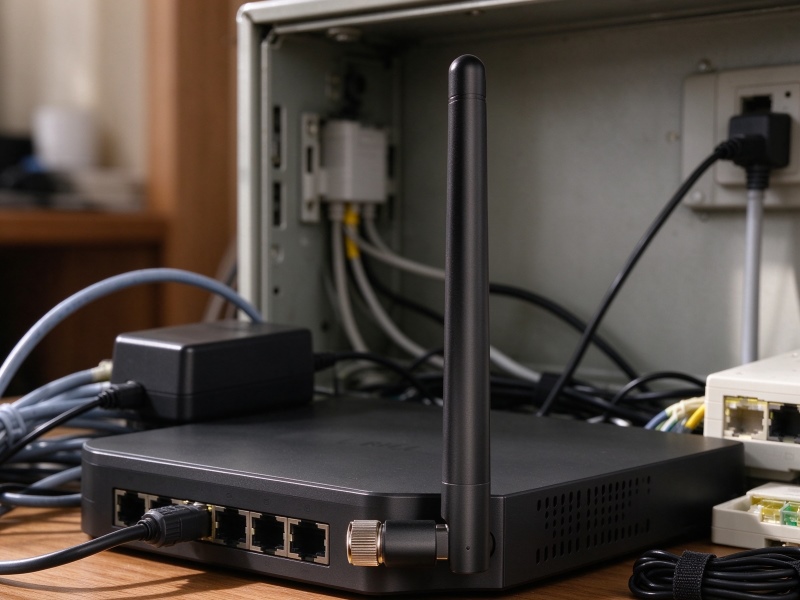
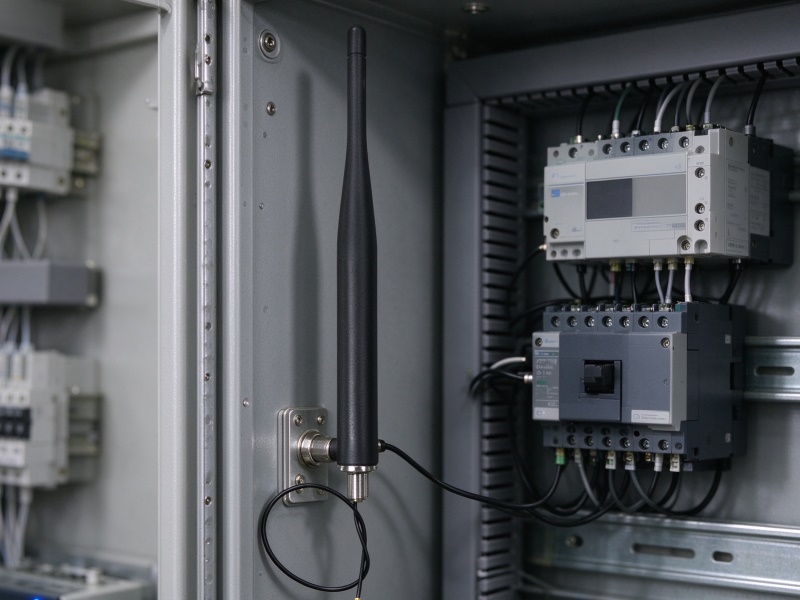
Compared with traditional compact antennas installed inside equipment enclosures, an external fiberglass antenna allows more flexibility in mounting height and positioning. Nevertheless, the installation must account for structural support, cable routing, and nearby obstructions.
How Should You Choose an Outdoor LoRa Antenna?
Engineers should choose an outdoor antenna by matching its frequency range, gain, radiation pattern, connector, power rating, and mechanical structure to the complete wireless system.
When evaluating a 900MHz Long Range Fiberglass Antenna, consider the following points:
- Frequency compatibility: Confirm that the antenna covers the radio’s configured channels and complies with regional frequency regulations.
- Gain and coverage: Check whether the antenna’s radiation pattern suits the locations and elevations of remote devices.
- Connector matching: The N Male connector must match the RF cable or equipment interface.
- Power handling: Confirm that the 50W rating is appropriate for the intended system. The radio and cable must also meet the operating requirements.
- Installation height: Evaluate mounting location, mast strength, and clearance from surrounding structures.
- Cable selection: Consider feedline loss, cable length, connector quality, and outdoor sealing.
The 855–945MHz range is broader than some regional LoRa frequency allocations. Therefore, engineers should check the applicable regional channel plan and radio configuration before deployment.
How Does a Fiberglass Antenna Compare With Other Antenna Types?
Different antenna types provide different combinations of coverage, installation flexibility, and physical size.
| Antenna type | Coverage characteristics | Common application |
|---|---|---|
| High-gain fiberglass antenna | Broad horizontal coverage with a narrower vertical pattern | Fixed outdoor gateways |
| Low-gain omnidirectional antenna | Wider vertical coverage in many designs | Shorter-range multi-directional links |
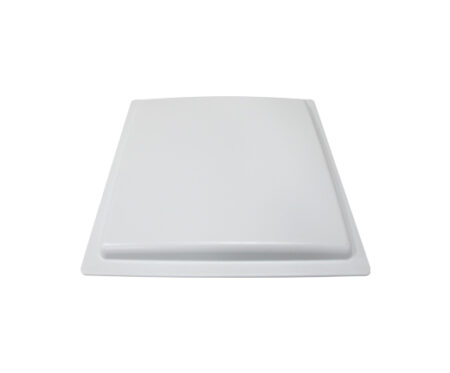
| Yagi directional antenna | Focused coverage toward a selected direction | Point-to-point communication |
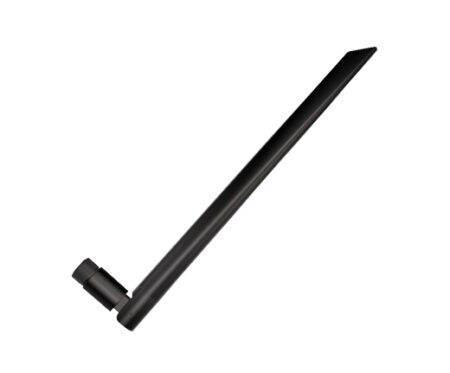
| Rubber duck antenna | Compact external antenna | Portable wireless devices |
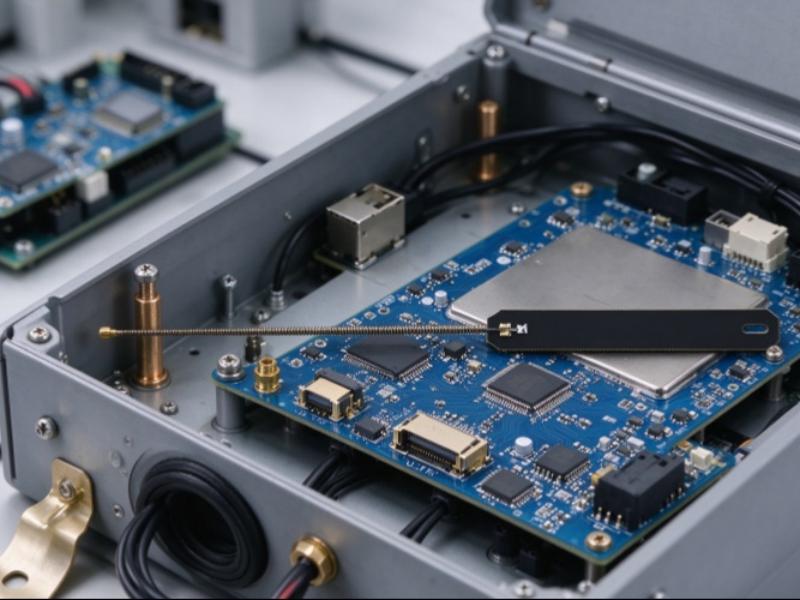
| PCB antenna | Integrated into electronic hardware | Compact IoT equipment |
A fiberglass omnidirectional antenna is suitable for consideration when a fixed station needs to communicate with devices distributed around it. A directional antenna may be more appropriate when the remote endpoint is located in a known direction. The final choice should follow the actual coverage layout rather than gain figures alone.
What Factors Affect Fiberglass Antenna Costs?
Fiberglass antenna costs depend on electrical specifications, mechanical construction, materials, connector configuration, and production requirements.
Common cost factors include:
- Frequency range and gain targets.
- Antenna length and internal radiating structure.
- Fiberglass radome construction and weather-resistance requirements.
- Connector type and mounting accessories.
- Testing requirements and production quantity.
- Customization for specific installation environments.
For OEM and ODM projects, defining the operating frequency, mounting arrangement, and environmental conditions early can help manufacturers assess the required design and production process.
What Tests Should Be Completed Before Outdoor Deployment?
Engineers should validate RF performance and mechanical suitability under conditions that represent the intended installation environment.
Recommended checks include:
- VSWR and return loss: Measure impedance matching across the 855–945MHz operating range.
- Gain and radiation pattern: Verify antenna gain and horizontal and vertical radiation characteristics.
- Power handling: Confirm performance under the intended RF power and test conditions.
- Environmental resistance: Evaluate temperature, humidity, UV exposure, and water resistance according to the deployment requirements.
- Mechanical stability: Check mounting strength and resistance to expected wind and vibration conditions.
- System-level performance: Measure RSSI, SNR, packet delivery, and communication stability at representative distances.
IEC 60068 provides environmental test methods that may be relevant to equipment validation. Applicable regional radio regulations should also be reviewed for the complete wireless system. These references do not establish that this antenna has passed a particular test or holds a certification. No specific IP rating or product certification was included in the supplied information.
FAQ: What Should You Know About Outdoor Fiberglass Antennas?
What is a fiberglass antenna used for?
A fiberglass antenna is used to transmit and receive radio signals while protecting its radiating structure with an external radome. It is commonly considered for outdoor wireless networks, LoRa gateways, industrial monitoring, and remote communication systems.
How to choose an antenna for long-range LoRa coverage?
Compare frequency range, gain, radiation pattern, connector, cable loss, installation height, and environmental requirements. Confirm regional frequency compatibility and test the complete radio link under representative field conditions.
Why does antenna height affect outdoor LoRa coverage?
Antenna height can improve signal propagation by reducing nearby obstructions and providing better clearance along the radio path. However, terrain, Fresnel zone clearance, antenna radiation pattern, and device elevation also influence the result.
How Does Renfeng Support Antenna Development?
Renfeng focuses on intelligent communication terminal antennas and customized antenna solutions. Since its establishment in 2012, the company has continued to support antenna projects for wireless communication and IoT applications.
In addition, its RF engineers have an average of more than 10 years of industry experience. With this technical background, the company supports the entire development process, from antenna concept development and RF design to batch production and product delivery. As a result, equipment developers can receive support when evaluating frequency requirements, antenna structures, and installation conditions for different wireless applications.
Furthermore, Renfeng serves customers developing communication terminals, industrial IoT equipment, and remote monitoring systems. For projects that require regulatory compliance or specific environmental performance, customers should first identify the applicable standards and then request the relevant test documentation. However, no specific certification details were provided for this product.
Source & Expertise
This article is based on the supplied specifications for Renfeng’s 900MHz 11dBi Long-Range Omnidirectional Fiberglass Antenna and the company information provided for this content. Technical explanations reflect general RF antenna and LoRa deployment principles. Actual coverage depends on the complete radio system, antenna placement, environmental conditions, and regional frequency regulations.
Last Updated
October 30, 2026