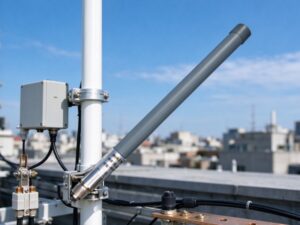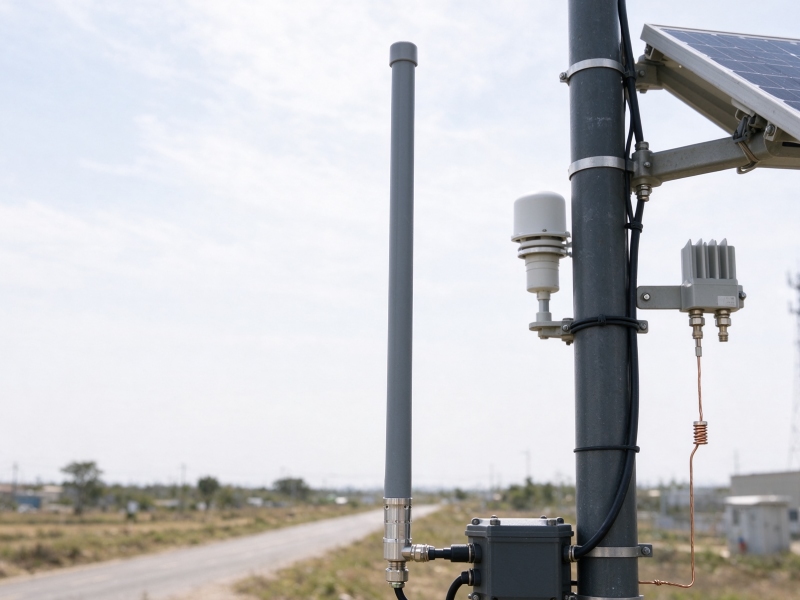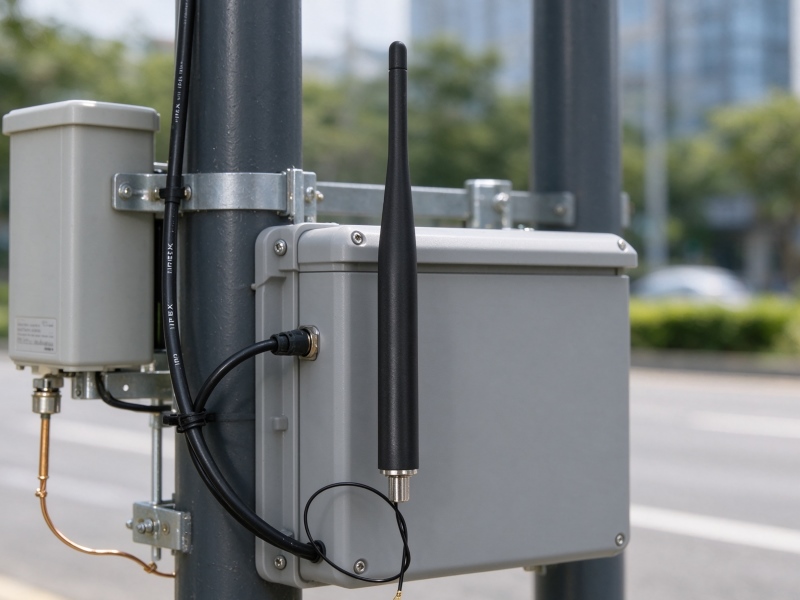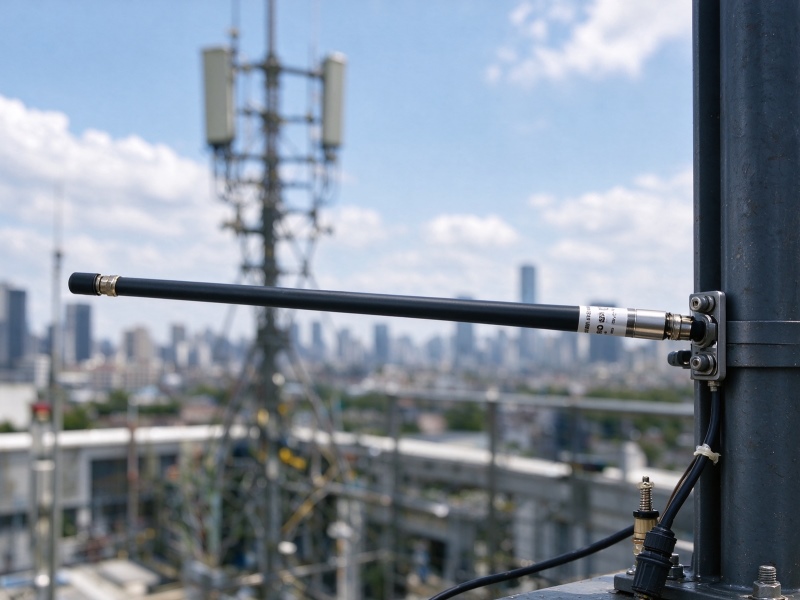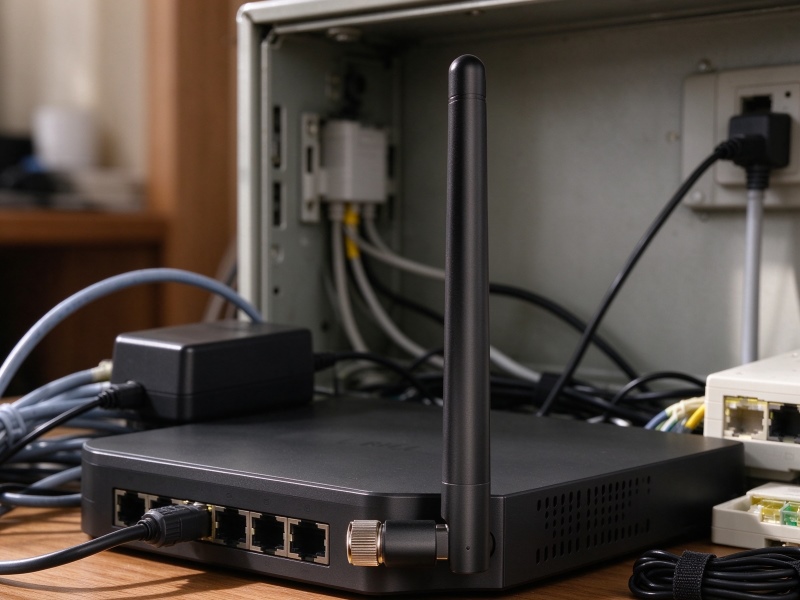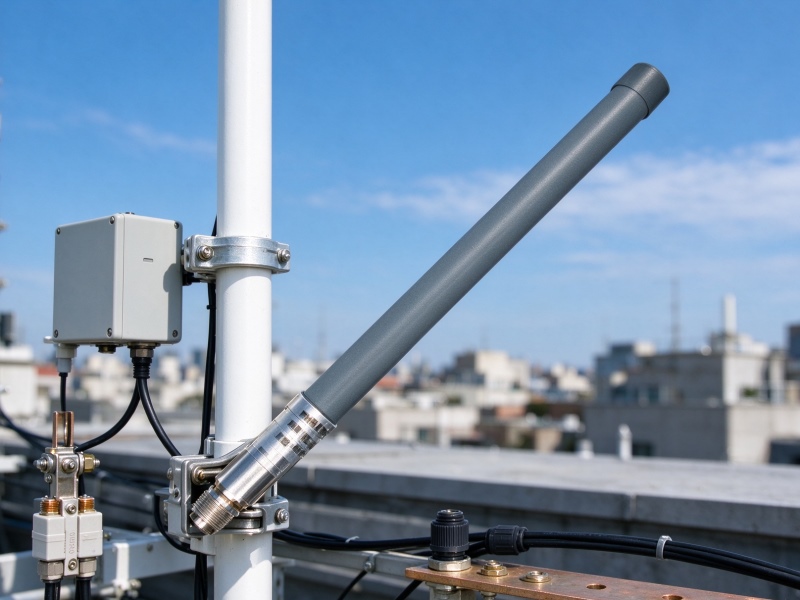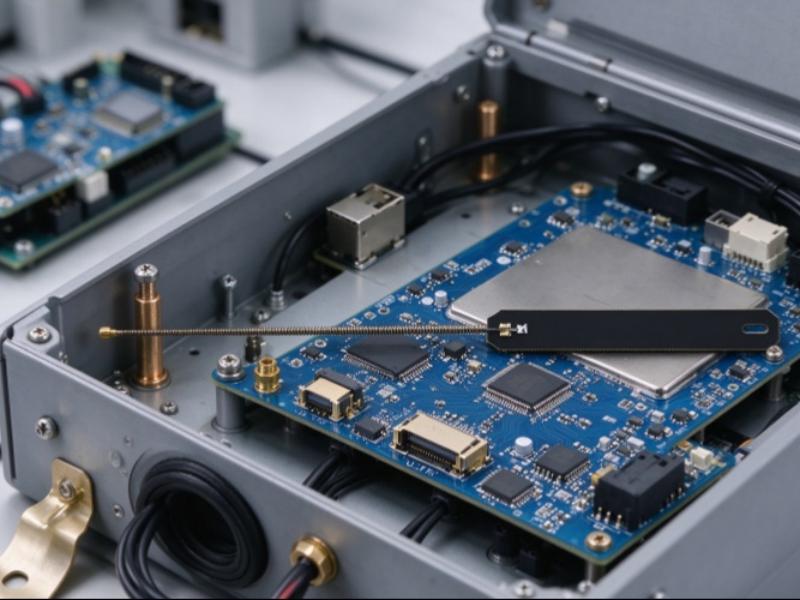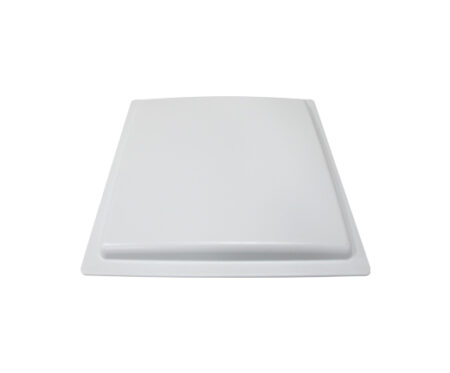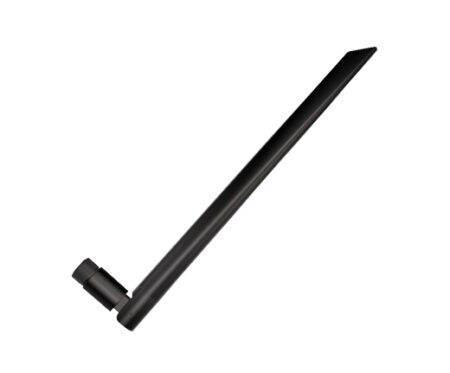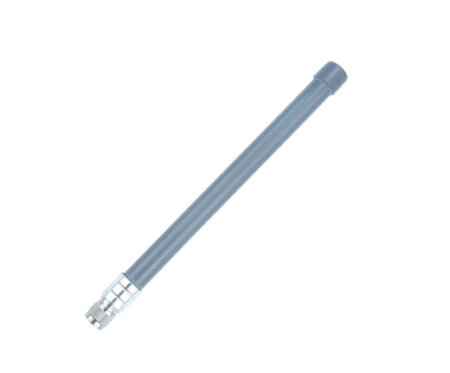

Renfeng provides a 915MHz 3dBi Cabinet Whip Antenna with an IPEX connector for compatible LoRaWAN gateways and IoT devices. This product supports cabinet whip antenna integration by connecting internal RF modules through a suitable cable assembly. Therefore, engineers should evaluate frequency compatibility, antenna placement, connector matching, and cable routing together to support stable wireless communication.
What Is a Cabinet Whip Antenna?
A cabinet whip antenna is designed to provide wireless signal transmission and reception for communication equipment installed in cabinets or electronic enclosures.
More specifically, a cabinet whip antenna is defined as a whip-style antenna configuration that connects to an RF module through a suitable connector and feed cable. Depending on the device structure, engineers can install it inside an enclosure or position its radiating element through a designated mounting point.
For LoRaWAN gateways, this configuration helps connect the internal wireless module to an antenna without requiring a large external antenna structure. In addition, its cable-based connection gives hardware engineers more flexibility when arranging internal components.
Renfeng’s 915MHz 3dBi Cabinet Whip Antenna with IPEX Connector is intended for compatible wireless devices that require a 915MHz antenna configuration and an IPEX interface.
How Does a Cabinet Whip Antenna Support LoRaWAN Connectivity?
A cabinet whip antenna converts electrical RF signals into electromagnetic waves during transmission and captures incoming radio signals during reception.
First, the LoRaWAN gateway’s RF module generates or processes the radio signal. Next, the antenna cable assembly carries the signal between the module and the antenna element. Finally, the antenna radiates or receives the signal through its conductive structure.
However, the antenna itself is only one part of the complete RF system. Several installation factors can also affect communication performance:
- Frequency compatibility: The antenna must match the gateway’s intended operating frequency.
- Antenna placement: Nearby metal surfaces and electronic components may influence RF performance.
- Cable routing: Sharp bends, compression, and unsuitable cable paths may affect signal transmission.
- Connector compatibility: The IPEX interface must match the gateway’s RF connection.
- Ground structure: The PCB layout and surrounding enclosure can influence antenna behavior.
As a result, engineers should evaluate the antenna together with the gateway’s PCB, enclosure, and RF module rather than treating it as an independent component.
What Are the Main Specifications of a 915MHz 3dBi Cabinet Whip Antenna?
The Renfeng model combines a nominal 915MHz operating frequency, 3dBi gain, and an IPEX connector for compatible wireless equipment.
| Parameter | Specification |
|---|---|
| Product name | 915MHz 3dBi Cabinet Whip Antenna |
| Antenna type | Cabinet whip antenna |
| Operating frequency | 915MHz |
| Gain | 3dBi |
| Connector | IPEX |
| Typical application | LoRaWAN gateways and compatible IoT devices |
The main advantages include a defined operating frequency, a 3dBi gain rating, and an IPEX connection for integration with compatible RF modules.
Nevertheless, gain alone cannot determine the actual communication distance. Gateway output power, receiver sensitivity, antenna placement, environmental interference, and surrounding obstacles all influence wireless coverage.
For example, a gateway installed inside a metal cabinet may experience different RF conditions from one installed in a non-metallic enclosure. Therefore, engineers should validate the antenna in the final device structure before confirming its suitability.
Where Can Cabinet Whip Antennas Be Used?
Cabinet whip antennas can support wireless communication in compact equipment that requires an antenna connection within a cabinet or enclosure.
Common applications include:
- LoRaWAN gateways: They support wireless communication between gateways and distributed LoRaWAN nodes.
- Industrial IoT cabinets: They provide antenna connectivity for monitoring and control equipment.
- Smart metering systems: They can connect compatible meter concentrators and wireless data collection devices.
- Remote monitoring terminals: They support communication between distributed sensors and monitoring systems.
- Wireless controllers: They can be integrated into compact control devices that require RF connectivity.
In particular, 915MHz antenna configurations may suit LoRaWAN deployments in regions where this frequency range is permitted. However, frequency allocation differs between markets. Consequently, engineers should confirm local radio regulations and gateway compatibility before selecting an antenna.
How Should Engineers Evaluate Cabinet Whip Antenna Integration?
Engineers should evaluate cabinet whip antenna integration by considering frequency compatibility, RF performance, mechanical clearance, connector matching, and cable routing as part of the complete integration process. In addition, they should confirm that the antenna works properly with the gateway’s PCB, enclosure, and RF module.
A practical evaluation usually includes the following steps:
- Confirm the operating frequency: Check whether the antenna supports the gateway’s intended 915MHz configuration and regional requirements.
- Evaluate antenna gain: Determine whether 3dBi gain is appropriate for the expected coverage and installation environment.
- Verify the connector: Confirm that the IPEX interface matches the gateway’s RF module or cable assembly.
- Check installation space: Review enclosure dimensions, mounting positions, and clearance from metal components.
- Inspect cable routing: Make sure the cable reaches the RF module without excessive bending or mechanical stress.
- Test the assembled device: Evaluate antenna performance after installation rather than relying only on standalone specifications.
Furthermore, engineers can use several RF measurements to validate the design:
- S11 and return loss: A vector network analyzer can evaluate the antenna’s input matching.
- VSWR: This measurement indicates how effectively the antenna matches its transmission line.
- Impedance: Engineers can check whether the antenna presents a suitable impedance across the required frequency range.
- Radiation pattern: This test helps evaluate how the antenna distributes RF energy.
- Antenna efficiency: This measurement helps determine how effectively the antenna converts input power into radiated energy.
Test limits should follow the gateway’s design requirements and applicable standards. Since product-specific test results have not been supplied, these measurements should be treated as recommended validation procedures rather than confirmed performance figures.
How Does a Cabinet Whip Antenna Compare with Other Antenna Types?
Cabinet whip, rubber duck, PCB embedded, and FPC antennas serve different mechanical and RF integration requirements.
| Antenna type | Structure | Typical installation | Main consideration |
|---|---|---|---|
| Cabinet whip antenna | Whip-style element with RF connection | Communication cabinets and enclosed equipment | Cable routing and mounting position |
| Rubber duck antenna | Compact element with protective housing | Routers, gateways, and wireless terminals | External clearance and connector type |
| PCB embedded antenna | Printed antenna structure | Internal PCB installation | Ground clearance and board layout |
| FPC antenna | Flexible printed circuit element | Narrow or curved internal spaces | Bending limits and placement |
Compared with traditional external antenna solutions, cabinet whip configurations can offer more flexibility when connecting an antenna to an internal RF module. Meanwhile, rubber duck antennas may be suitable when an external mounting position is available.
By comparison, PCB and FPC antennas can fit devices with limited installation space. However, their performance depends heavily on PCB layout, ground clearance, and enclosure design. Therefore, the most suitable option depends on the device structure, frequency requirements, and measured RF performance.
What Factors Affect Cabinet Whip Antenna Project Costs?
Project costs depend on antenna specifications, mechanical adaptation, cable assembly requirements, testing scope, and production volume.
Several factors can influence the final development and manufacturing budget:
- Frequency requirements: Different frequency bands may require different antenna designs and RF validation.
- Mechanical configuration: Changes to antenna dimensions, mounting structures, or enclosure interfaces may increase development work.
- Cable assembly: Cable type, length, connector configuration, and assembly requirements can affect component costs.
- RF testing: Prototype evaluation and final-device testing add engineering and validation expenses.
- Production quantity: Sample development and batch manufacturing have different unit-cost structures.
For this reason, customers should provide the gateway’s RF module information, enclosure drawings, connector requirements, and target frequency range before requesting a project quotation. This information helps engineers assess the technical scope and identify possible design changes earlier.
How Does Renfeng Support Cabinet Whip Antenna Projects?
Renfeng is a communication antenna company established in 2012, focusing on intelligent communication terminal antennas and customized antenna solutions.
In addition, its RF engineers have an average of more than 10 years of industry experience. The company supports antenna projects through concept development, RF design, product adaptation, sample production, and batch manufacturing.
For projects involving cabinet whip antenna integration, Renfeng can evaluate device structure, wireless communication requirements, antenna connections, and installation conditions. As a result, equipment developers can discuss antenna configurations based on their actual product requirements.
Renfeng serves customers developing LoRaWAN gateways, industrial IoT equipment, communication terminals, and other wireless products. Its antenna development services cover different product structures and integration requirements.
Regarding regulatory compliance, customers should first identify the radio frequency and product standards applicable to their target markets. Depending on the application, these may include regional radio equipment requirements and electromagnetic compatibility (EMC) standards. Furthermore, customers should request relevant test reports or certification documents for the specific product configuration.
No specific certification details, production-line figures, or monthly manufacturing capacity have been provided. Therefore, these items should be confirmed directly during project evaluation.
Frequently Asked Questions
What Is a Cabinet Whip Antenna Used For?
A cabinet whip antenna provides RF transmission and reception for wireless equipment installed in cabinets or electronic enclosures. For example, LoRaWAN gateways, industrial IoT controllers, and remote monitoring terminals may use this antenna configuration.
How to Choose a 915MHz Antenna for a LoRaWAN Gateway?
Check the operating frequency, gain, connector type, cable configuration, and available installation space. In addition, confirm compatibility with the gateway’s RF module and regional frequency requirements. Finally, test the antenna in the assembled device to evaluate actual performance.
Why Does Antenna Cable Routing Affect Gateway Connectivity?
Antenna cable routing affects the RF connection between the antenna and the gateway module. For instance, sharp bends, cable compression, and poor connector contact may influence signal transmission. Therefore, engineers should maintain suitable cable routing and inspect the connection during device assembly.
Source & Expertise
This article is based on the supplied Renfeng company profile and product specifications, together with general RF antenna engineering principles. The technical discussion covers antenna integration, RF matching, installation conditions, and commonly used validation methods.
Product-specific performance should be confirmed through measurements and testing in the intended LoRaWAN gateway configuration. In particular, engineers should review the actual test results before making coverage or compatibility claims.
Last Updated
November 11, 2026