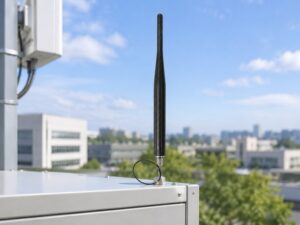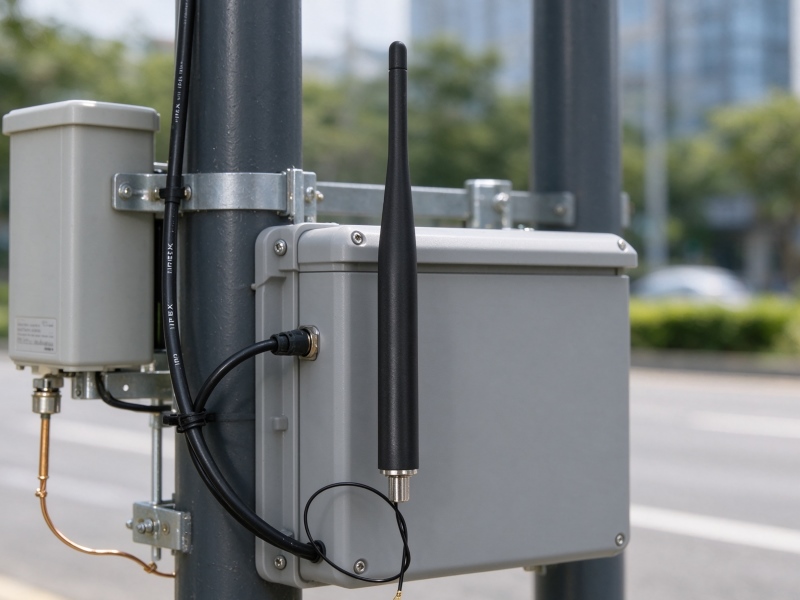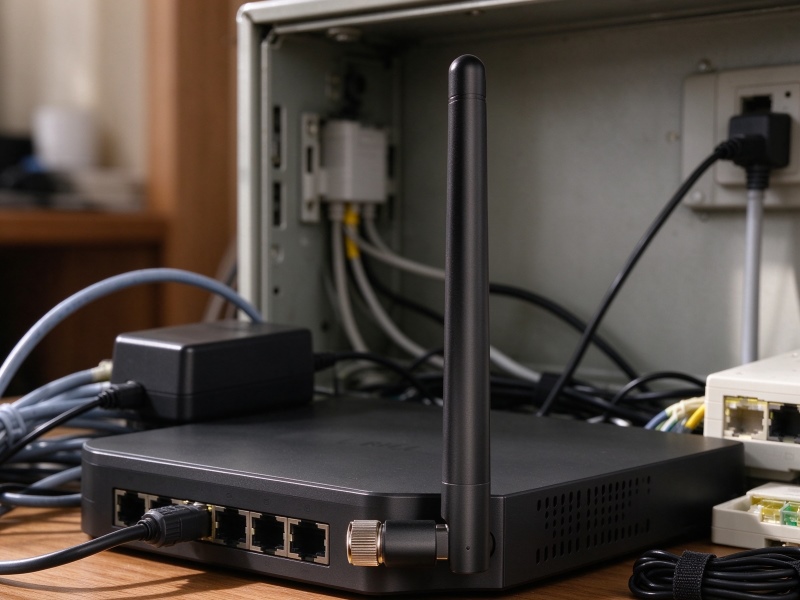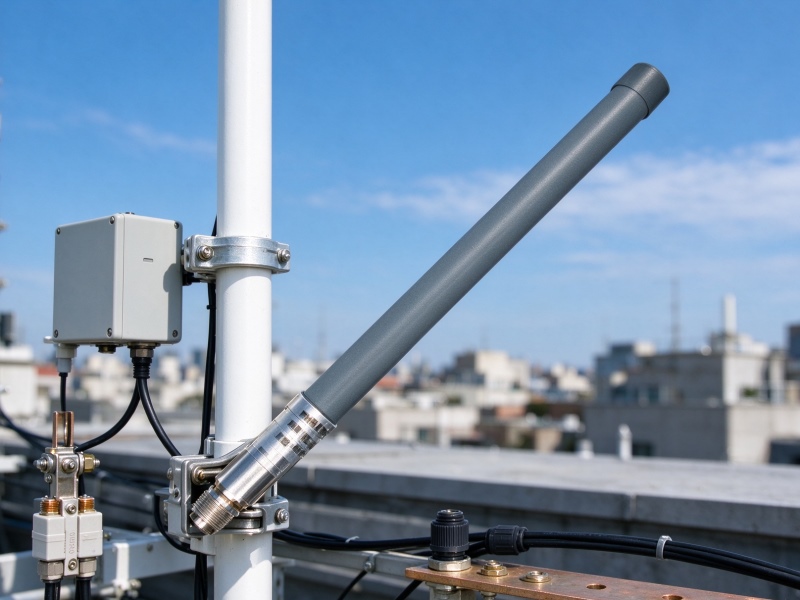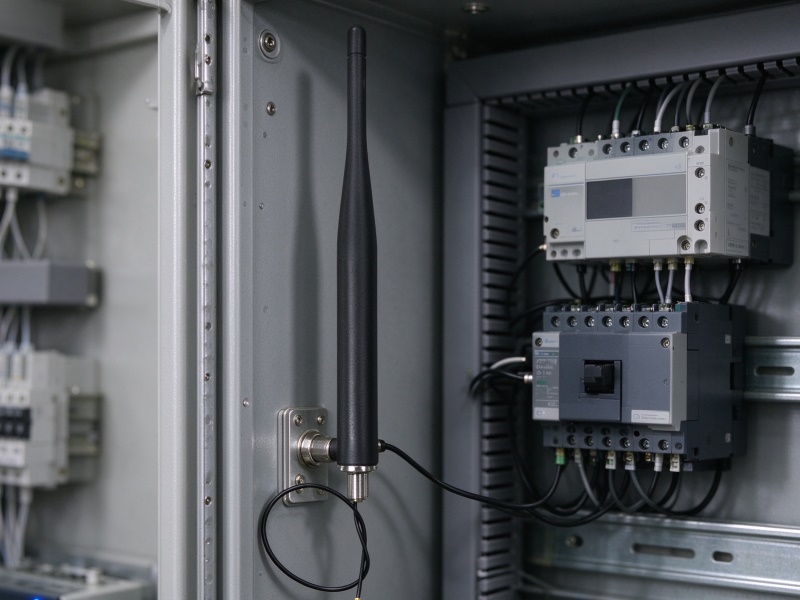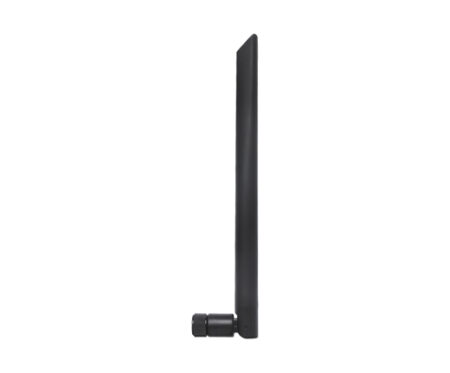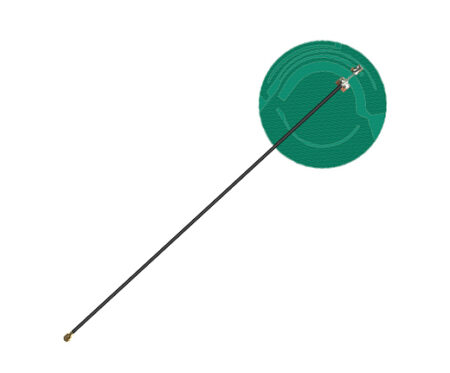
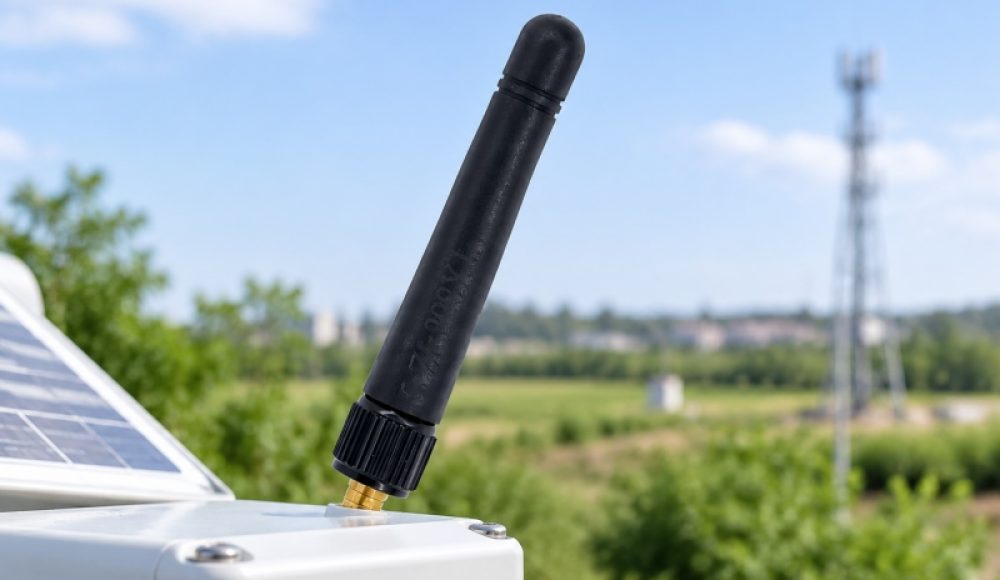
An 868MHz Rubber Duck Antenna is a compact external antenna designed for wireless devices operating around the 868MHz band. Renfeng’s 868MHz 2dBi Mini Rubber Duck Antenna features 848–888MHz coverage, 2dBi gain, an SMA Male connector, 10W power handling, and a 52mm length for compact wireless equipment.
What Is an 868MHz Rubber Duck Antenna?
An 868MHz Rubber Duck Antenna is a short external antenna designed to transmit and receive radio-frequency signals within a specified sub-GHz frequency range. Its compact structure makes it suitable for wireless terminals, LoRa sensors, and other devices that require an external antenna with limited installation space.
A Rubber Duck Antenna is defined as a compact antenna with a flexible or protective outer covering around its radiating structure. The outer material helps form the antenna’s physical enclosure, while the internal element handles RF transmission and reception.
Renfeng’s 868MHz 2dBi Mini Rubber Duck Antenna uses a TPEE outer housing and an SMA Male connector. Its main specifications include:
| Parameter | Product Specification |
|---|---|
| Product name | 868MHz 2dBi Mini Rubber Duck Antenna |
| Frequency range | 848–888MHz |
| Nominal frequency | 868MHz |
| Gain | 2dBi |
| Connector | SMA Male |
| Power handling | 10W |
| Antenna length | 52mm |
| Housing material | TPEE |
These parameters help engineers evaluate the antenna’s electrical and mechanical compatibility. In particular, the 848–888MHz range should be checked against the radio module’s configured frequencies and the regulations of the target market.
How Does a Rubber Duck Antenna Work?
A Rubber Duck Antenna converts electrical RF signals into electromagnetic waves during transmission and receives radio waves for the connected device during reception. When connected to a LoRa radio module, the antenna supports wireless communication between the device and a compatible receiver or gateway. Its performance depends on the radio frequency, antenna design, installation position, ground reference, and surrounding environment.
The main advantages include:
- Compact structure: The 52mm length helps accommodate devices with limited external mounting space.
- Simple connection: The SMA Male connector supports connection to compatible RF interfaces.
- External installation: The antenna can be positioned outside a device enclosure when the mechanical design allows it.
- Flexible application: Its 848–888MHz range can support compatible sub-GHz wireless equipment.
The 2dBi gain provides a reference for antenna selection, but it does not independently determine communication distance. Engineers must also consider transmitter power, receiver sensitivity, cable loss, antenna orientation, and environmental interference.
Where Can an 868MHz Antenna Be Used?
An 868 MHz antenna can support compact wireless equipment when its operating frequency matches the device’s regional configuration.
Typical applications include:
- LoRa sensors: Wireless environmental sensors and remote monitoring terminals.
- IoT devices: Compact connected equipment that exchanges sub-GHz data.
- Smart metering: Wireless utility monitoring devices using compatible radio modules.
- Industrial monitoring: Sensors and control terminals used in industrial environments.
- Portable wireless equipment: Handheld or compact terminals that require an external antenna.
For LoRaWAN applications, engineers should verify the regional frequency plan before selecting the antenna. The product’s 848–888MHz coverage does not automatically establish compatibility with every 868MHz LoRaWAN configuration.
How Should You Choose a Mini LoRa Antenna?
Choose a mini LoRa antenna by matching its frequency range, gain, connector, dimensions, and installation conditions to the complete wireless device.
Before selecting an external antenna, consider these factors:
- Frequency compatibility: Confirm that the radio module operates within 848–888MHz and meets local frequency regulations.
- Gain requirements: Evaluate whether 2dBi gain suits the intended coverage and installation environment.
- Connector type: Check whether the device provides an SMA Female interface for the antenna’s SMA Male connector.
- Available space: Confirm that the 52mm antenna length fits the enclosure and mounting arrangement.
- Power handling: Ensure the radio transmitter’s output remains within the stated 10W power-handling capacity.
- Installation position: Check nearby metal surfaces, cables, batteries, and electronic components that may affect RF performance.
Antenna selection should consider the complete device rather than one specification. For example, an antenna with suitable frequency coverage may still require installation adjustments if the enclosure affects its radiation characteristics.
How Does a Rubber Duck Antenna Compare With Other Antenna Types?
Compared with traditional solutions such as longer external antennas or integrated PCB antennas, a mini Rubber Duck Antenna offers a different balance between external accessibility, installation space, and device integration.
| Antenna Type | Main Characteristic | Design Consideration |
|---|---|---|
| Mini Rubber Duck Antenna | Compact external structure | Requires suitable mounting space |
| PCB Antenna | Integrated into the circuit board | Depends on PCB layout and ground plane |
| FPC Antenna | Flexible internal installation | Requires suitable adhesive surface and cable routing |
| Whip Antenna | External radiating element | May require more physical clearance |
A mini external antenna can simplify replacement or repositioning compared with some integrated designs. However, PCB and FPC antennas may suit products where the enclosure should remain fully closed without an external antenna structure.
The best option depends on enclosure dimensions, RF requirements, mechanical design, and production considerations.
What Factors Affect Rubber Duck Antenna Costs?
Rubber Duck Antenna costs depend on electrical design, housing material, connector type, antenna dimensions, production quantity, and customization requirements.
Other project considerations may include:
- RF tuning and prototype development.
- Connector and mechanical interface customization.
- Material selection and housing construction.
- Frequency and performance verification.
- Packaging and production volume.
- Quality inspection and delivery requirements.
For an accurate quotation, buyers should provide the target frequency, gain requirements, connector type, antenna dimensions, power level, and intended application.
How Does Renfeng Support Antenna Development?
Renfeng has focused on intelligent communication terminal antennas and customized antenna solutions since 2012. Its product field includes antennas for wireless communication equipment and related IoT applications. The company states that its RF engineers have an average of more than 10 years of industry experience. Its project support covers product concept development, RF design, sample preparation, mass production, and delivery.
For compact LoRa devices, this process can help engineering teams evaluate antenna dimensions, connector compatibility, frequency requirements, and installation conditions during product development. When evaluating a manufacturer, customers should also confirm relevant quality-management procedures, inspection documentation, and applicable certification requirements. No specific certification or named compliance standard was supplied for this antenna, so buyers should request supporting documents when their projects require them.
What Should Engineers Test Before Using an 868MHz Antenna?
Engineers should verify RF characteristics and wireless performance in the intended device configuration before approving the antenna for production.
A practical test plan may include:
- Frequency response across the specified 848–888MHz range.
- Return loss and VSWR measurements against project acceptance limits.
- Gain and radiation-pattern verification.
- Connector fit and mechanical compatibility.
- RF performance with the final enclosure and mounting position.
- Wireless communication testing under representative operating conditions.
- Compliance checks against applicable regional radio regulations.
Engineers can use a vector network analyzer to evaluate impedance matching and return loss. They can also use suitable RF measurement equipment to assess radiation characteristics and system-level communication performance.
No measured VSWR, return-loss value, radiation-pattern report, or certification record was provided for this product. Therefore, these results should be confirmed through product documentation or project testing rather than assumed.
What Are the Most Common Questions About Rubber Duck Antennas?
What Is an 868MHz Rubber Duck Antenna?
An 868MHz Rubber Duck Antenna is a compact external antenna designed for compatible wireless devices operating around the 868MHz band. Its frequency range, gain, connector, and physical dimensions determine whether it suits a particular application.
How to Choose a Rubber Duck Antenna for LoRa Devices?
Choose a Rubber Duck Antenna by checking the radio module’s frequency range, required gain, connector interface, antenna length, and installation environment. Also verify regional frequency regulations and test the antenna with the complete device.
Why Use a Mini Rubber Duck Antenna for Compact IoT Devices?
A mini Rubber Duck Antenna can provide an external RF connection while occupying less mounting space than many longer antenna designs. Its compact dimensions may suit portable terminals and small IoT devices, provided the installation supports the required RF performance.
What Sources and Expertise Support This Article?
This article is based on the supplied product specifications for Renfeng’s 868MHz 2dBi Mini Rubber Duck Antenna and the company’s stated background in antenna development and manufacturing. Application examples and testing recommendations reflect general RF engineering principles. No independent test reports, certification records, or third-party performance measurements were supplied.
When Was This Article Last Updated?
Last Updated: October 30, 2026.