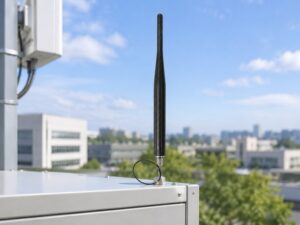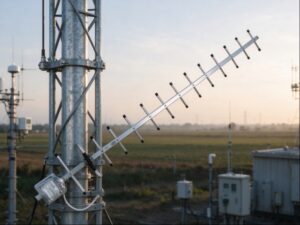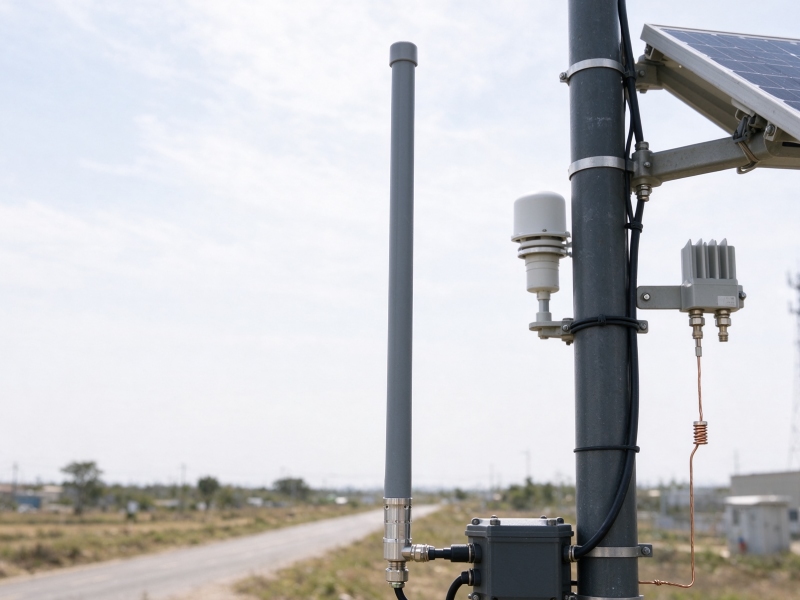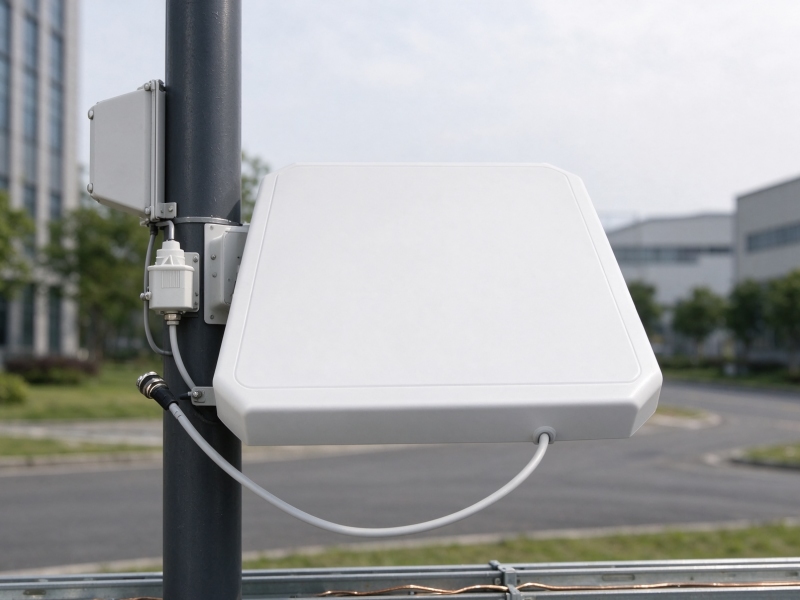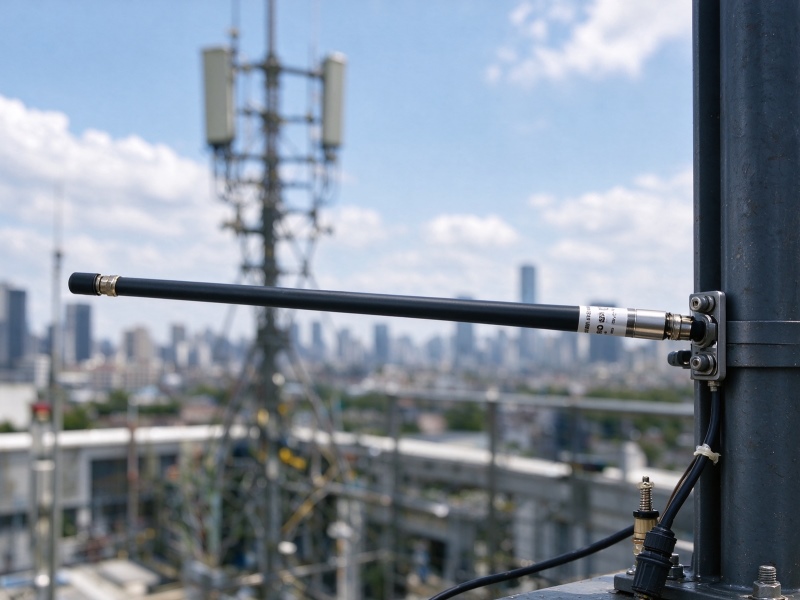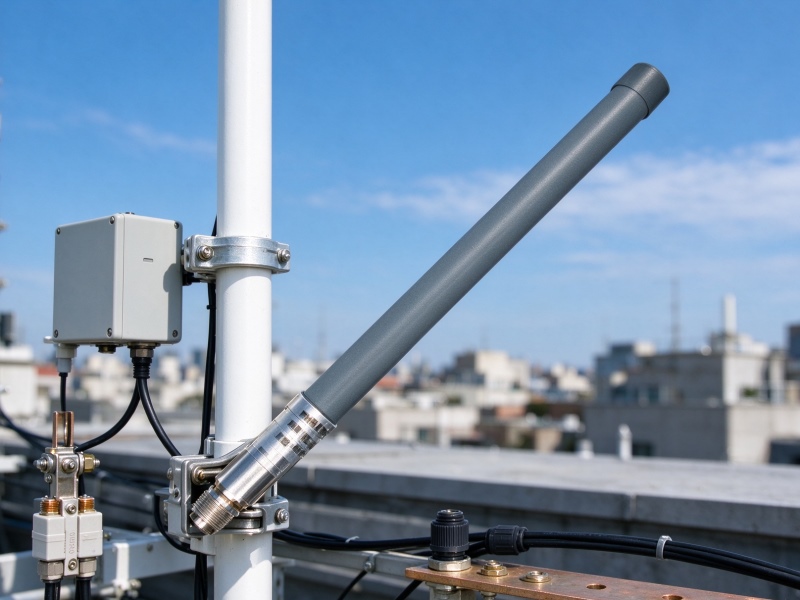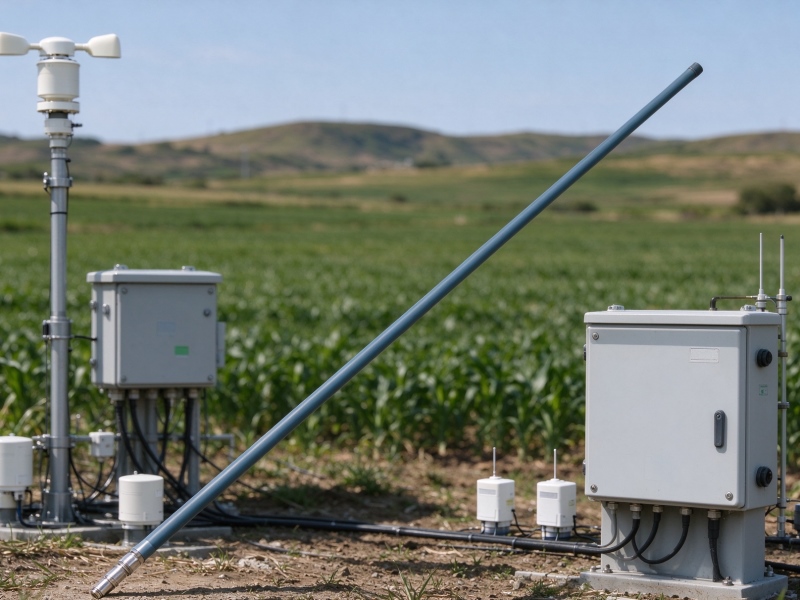
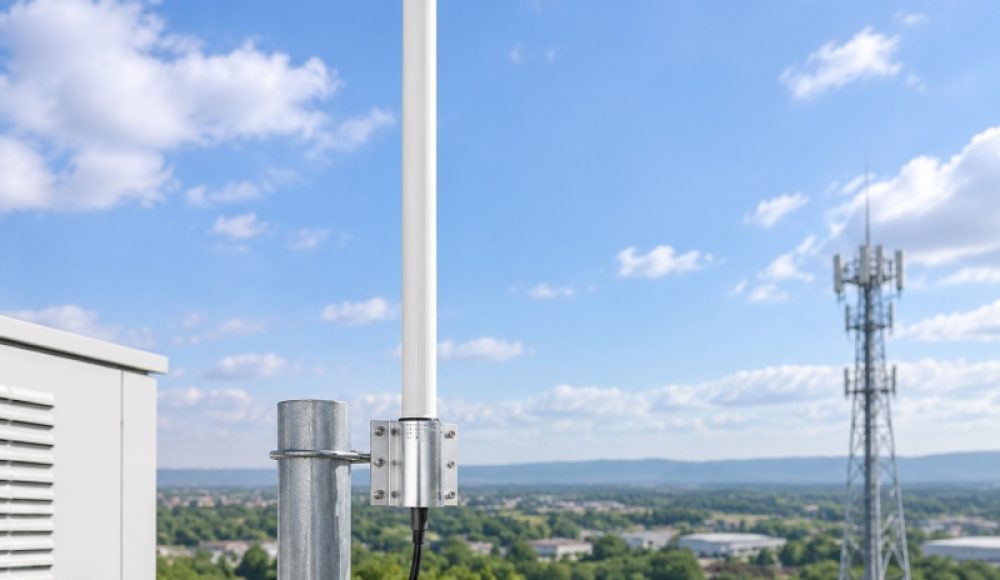
Renfeng’s 900MHz High Gain Fiberglass Antenna is an outdoor omnidirectional antenna designed for sub-GHz wireless communication. It operates across 860–940MHz, provides 13dBi gain, and features an N Female connector with 100W power handling. Its fiberglass radome supports outdoor deployment in fixed LoRa and IoT installations.
What Is a 900MHz High Gain Fiberglass Antenna?
A 900MHz High Gain Fiberglass Antenna is an outdoor antenna designed to transmit and receive radio signals within a sub-GHz frequency range. It typically uses an elongated radiating structure protected by a fiberglass radome, making it suitable for fixed wireless installations. The Renfeng model operates from 860–940MHz and provides 13dBi gain. Its N-type female connector supports connection to compatible RF cables and communication equipment. The 100W power rating defines its specified power-handling capacity, although system-level power limits must also consider the connected radio and cable.
The main specifications are:
| Parameter | Specification |
|---|---|
| Product type | Omnidirectional fiberglass antenna |
| Frequency range | 860–940MHz |
| Gain | 13dBi |
| Connector | N Female |
| Power handling | 100W |
| Radome material | Fiberglass |
| Typical application | Outdoor LoRa and IoT communication |
These values help engineers evaluate frequency compatibility, connection requirements, and deployment conditions. However, the supplied specifications do not include antenna length, wind-load rating, IP rating, VSWR, or radiation-pattern measurements.
How Does a High Gain Antenna Support Long-Range LoRa Communication?
A high-gain antenna can improve the radio link budget by concentrating transmitted or received energy in particular directions. This can help a LoRa system maintain communication over longer distances when the antenna pattern, installation height, and surrounding environment suit the deployment. An omnidirectional antenna generally distributes radiation around the vertical axis, which makes it useful for fixed gateways communicating with devices in different horizontal directions. However, higher gain often results in a narrower vertical radiation pattern. Therefore, antenna height and the relative elevation of remote devices become important design considerations.
A 13dBi gain rating does not guarantee a specific communication distance. Actual LoRa coverage also depends on:
- Transmitter output power and receiver sensitivity.
- Cable length, connector quality, and feedline loss.
- Antenna mounting height and orientation.
- Terrain, buildings, vegetation, and other obstructions.
- Radio interference and regional frequency regulations.
- LoRa parameters such as bandwidth, spreading factor, and coding rate.
Engineers should evaluate the complete radio link rather than using antenna gain as the only coverage indicator.
Where Can a Fiberglass Antenna Be Used?
A fiberglass antenna can support outdoor wireless communication in fixed installations that require a protected antenna structure and broad horizontal coverage.
Typical application scenarios include:
- LoRa gateways: Connecting gateway equipment with remote sensors across agricultural, industrial, or environmental monitoring areas.
- Smart agriculture: Supporting wireless links for soil monitoring, irrigation control, and distributed field sensors.
- Industrial IoT: Connecting monitoring devices and control equipment across outdoor facilities.
- Remote monitoring stations: Supporting communication between fixed stations and distributed wireless terminals.
- Wireless infrastructure: Serving as an external antenna option for compatible sub-GHz communication equipment.
Compared with traditional low-gain antennas, a 13dBi design can provide greater directional concentration in the horizontal coverage plane. However, it may not suit every terrain or device arrangement. A lower-gain antenna can sometimes provide better coverage for devices located at different elevations.
How Should You Choose an Outdoor LoRa Antenna?
Engineers should select an outdoor LoRa antenna by matching its frequency range, gain, connector, power rating, and installation requirements to the communication system.
Before deployment, review the following factors:
- Frequency compatibility: Confirm that the antenna covers the radio’s operating channels and complies with the target region’s frequency regulations.
- Gain and radiation pattern: Check whether the antenna’s horizontal coverage and vertical beamwidth suit the locations of remote devices.
- Connector compatibility: Confirm that the radio cable uses an N Male connector to mate with the antenna’s N Female interface.
- Power handling: Ensure that the antenna’s 100W rating is compatible with the intended RF system. The radio, cable, and connectors must also meet system requirements.
- Outdoor installation: Evaluate mounting hardware, grounding, lightning protection, cable sealing, and environmental exposure.
- Link testing: Measure actual communication performance at representative distances and installation heights.
The 860–940MHz operating range is broader than some regional LoRa frequency plans. As a result, engineers must verify the permitted channels and configure the radio accordingly.
How Does a Fiberglass Antenna Compare With Other Antenna Types?
Different antenna structures serve different installation and coverage requirements. The following comparison highlights common design differences.
| Antenna type | Typical characteristics | Main consideration |
|---|---|---|
| High-gain fiberglass antenna | Outdoor structure with concentrated coverage | Requires suitable mounting height and pattern alignment |
| Low-gain omnidirectional antenna | Broad horizontal coverage with a wider vertical pattern | May provide less link-budget gain |
| Directional antenna | Focuses energy toward a selected direction | Requires accurate alignment |
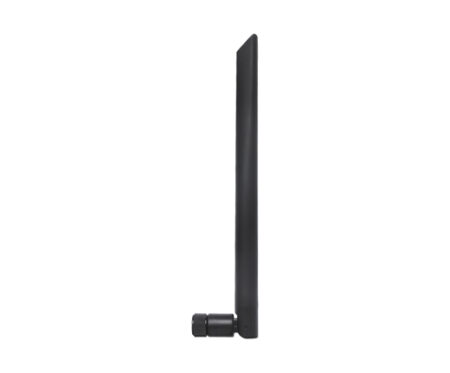
| Compact rubber duck antenna | Short external antenna for compact equipment | Often suited to shorter-range or space-limited applications |
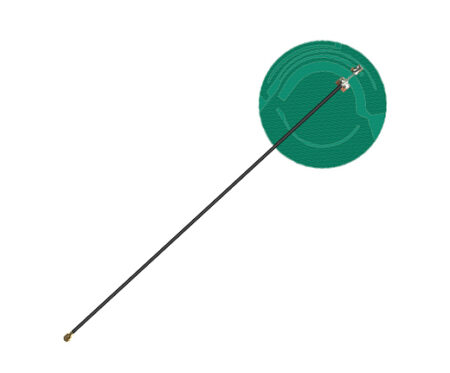
| PCB antenna | Integrated into electronic hardware | Performance depends on PCB layout and enclosure design |
A fiberglass omnidirectional antenna is worth considering when a fixed gateway needs to communicate with multiple devices distributed around its location. A directional antenna may be more suitable when the remote station lies in a known direction.
What Factors Affect Fiberglass Antenna Costs?
Fiberglass antenna costs depend on electrical specifications, mechanical construction, materials, and production requirements. Higher gain targets may require more specific antenna design and testing.
Other cost factors include:
- Operating frequency range and gain requirements.
- Radome material and mechanical dimensions.
- Connector type and mounting structure.
- Power-handling requirements.
- Environmental protection and validation requirements.
- Production quantity and customization needs.
For OEM and ODM projects, defining the operating environment and RF requirements early helps manufacturers evaluate the appropriate antenna structure and production process.
What Tests Should Be Completed Before Outdoor Deployment?
Engineers should test the antenna in its intended installation environment to verify RF performance and mechanical suitability.
Recommended validation items include:
- VSWR and return loss: Measure impedance matching across the intended 860–940MHz operating range.
- Gain and radiation pattern: Verify antenna gain and horizontal and vertical radiation characteristics using an appropriate measurement setup.
- Power handling: Confirm that the antenna meets the intended RF power requirements under specified test conditions.
- Environmental testing: Evaluate temperature, humidity, UV exposure, and water resistance according to the deployment environment.
- Mechanical testing: Check mounting strength, vibration resistance, and structural stability where applicable.
- System-level testing: Measure RSSI, SNR, packet delivery, and communication stability at representative distances.
Standards such as IEC 60068 may provide relevant environmental test methods, depending on the test objective. For radio equipment operating in Europe, applicable ETSI requirements should also be reviewed. These references are not evidence that this specific antenna holds any certification. No product certification or test report was provided in the supplied information.
FAQ: What Should You Know About High-Gain LoRa Antennas?
What is a 900MHz antenna used for?
A 900MHz antenna supports wireless communication in compatible sub-GHz frequency bands. Applications may include LoRa networks, industrial IoT, remote monitoring, and other regional radio systems that operate within the antenna’s supported range.
How to choose a high-gain antenna for long-range LoRa communication?
Compare the frequency range, gain, radiation pattern, connector, cable loss, and installation conditions. Also evaluate the radio’s output power and receiver sensitivity. Field testing helps determine whether the antenna meets the required link performance.
Why does antenna gain affect LoRa coverage?
Antenna gain changes how radio-frequency energy is distributed in different directions. Higher gain can improve signal strength in the intended coverage area, but it may narrow the vertical radiation pattern. Therefore, mounting height and device elevation can influence the final coverage.
How Does Renfeng Support Antenna Development?
Renfeng focuses on intelligent communication terminal antennas and customized antenna solutions. Established in 2012, the company provides antenna products for different frequency bands and wireless application scenarios.
Its RF engineers have an average of more than 10 years of industry experience. The company supports project development from RF design to mass production and delivery. This process allows equipment developers to discuss frequency requirements, antenna structures, connector configurations, and application-specific integration needs.
Renfeng serves customers involved in wireless communication equipment and IoT-related product development. For projects that require regulatory compliance or specific environmental performance, customers should confirm the applicable certification requirements and request supporting test documentation. No specific certification information was included in the product data supplied for this article.
Source & Expertise
This article is based on the supplied specifications for Renfeng’s 900MHz 13dBi Ultra High-Gain Omnidirectional Fiberglass Antenna and the company information provided for this content. Technical explanations reflect general RF antenna and LoRa deployment principles. Actual performance depends on the complete radio system, installation conditions, and regional frequency requirements.
Last Updated
October 30, 2026