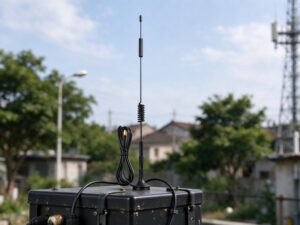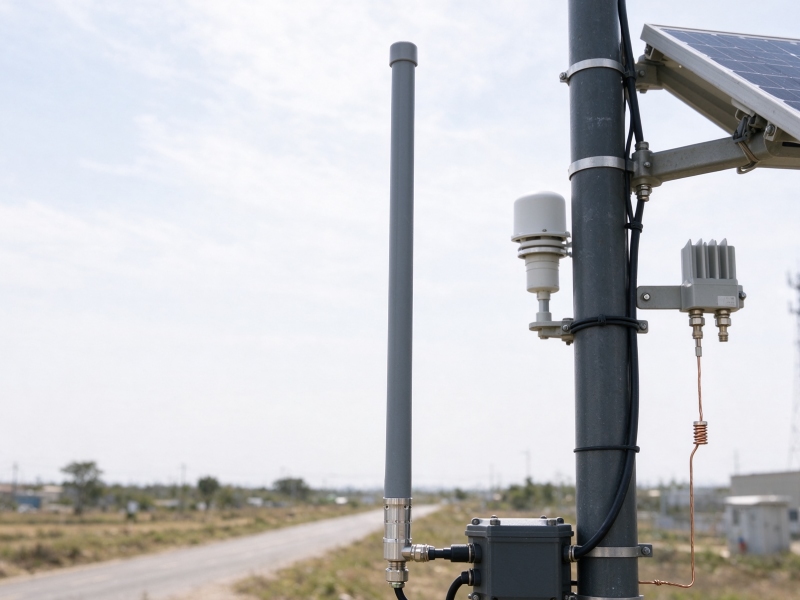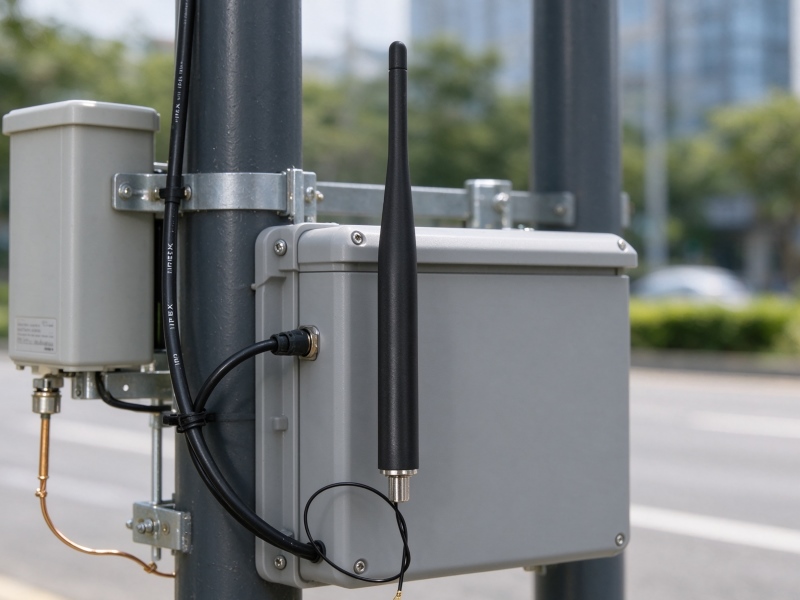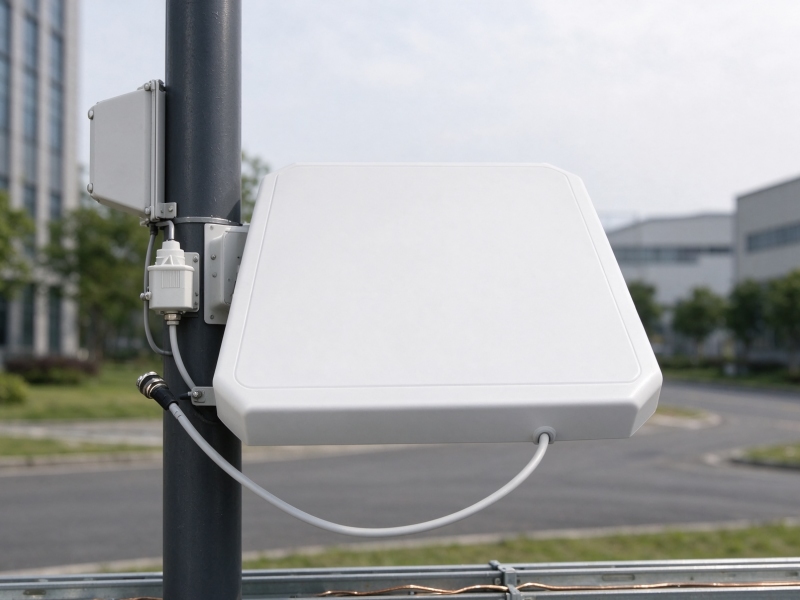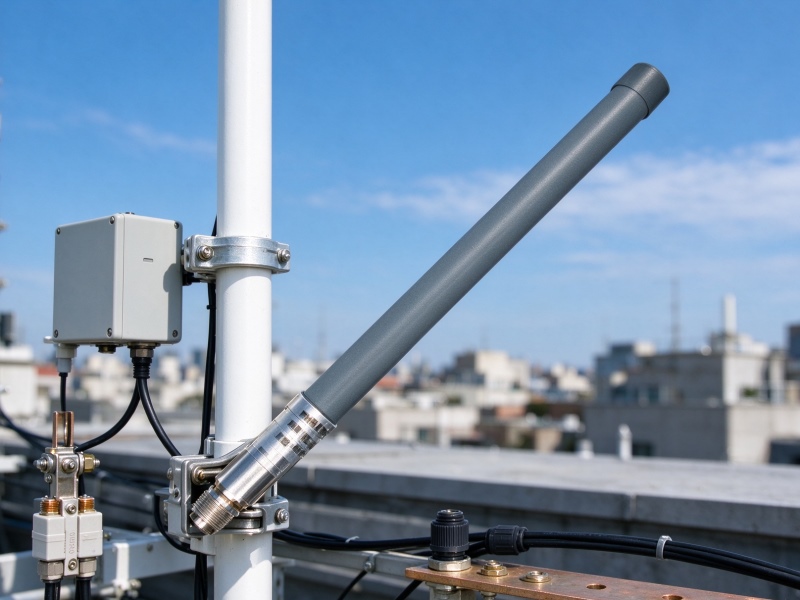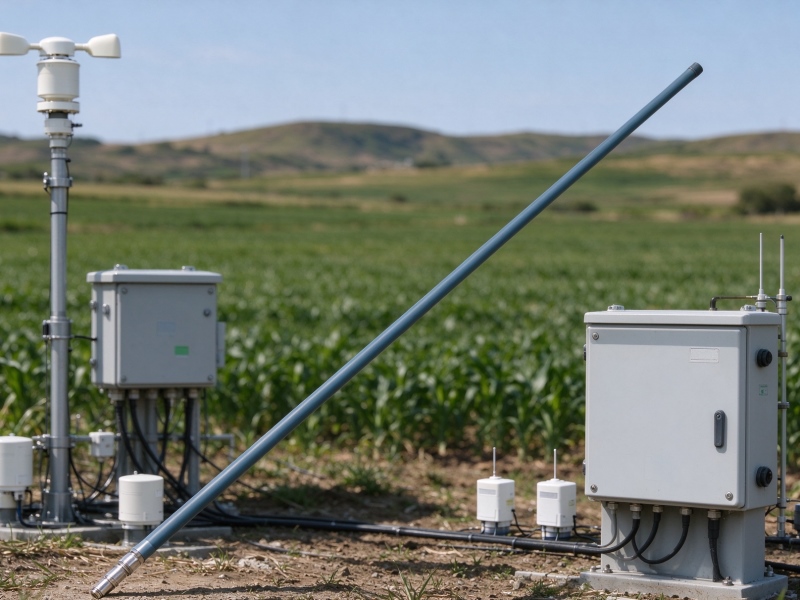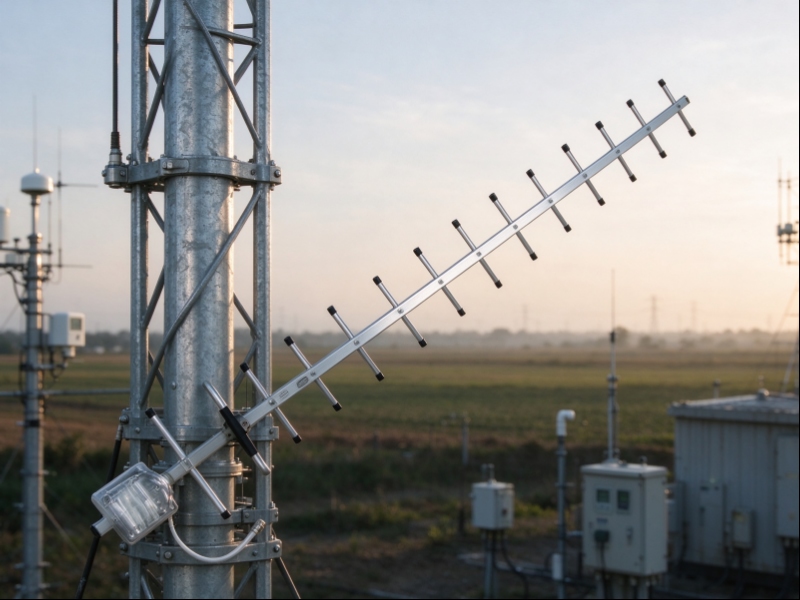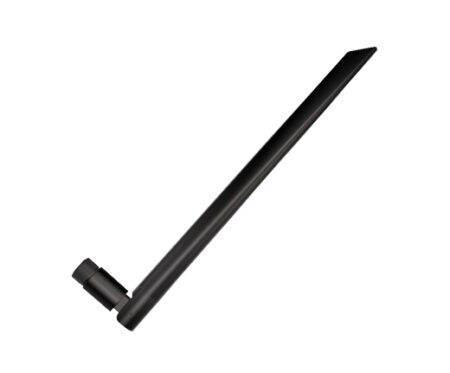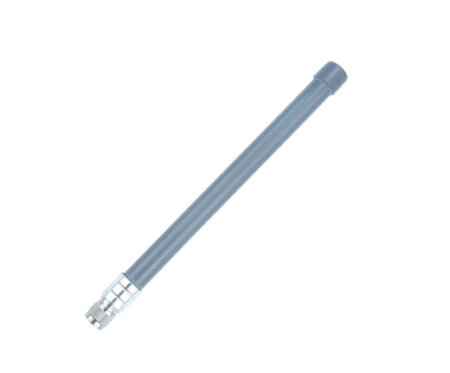
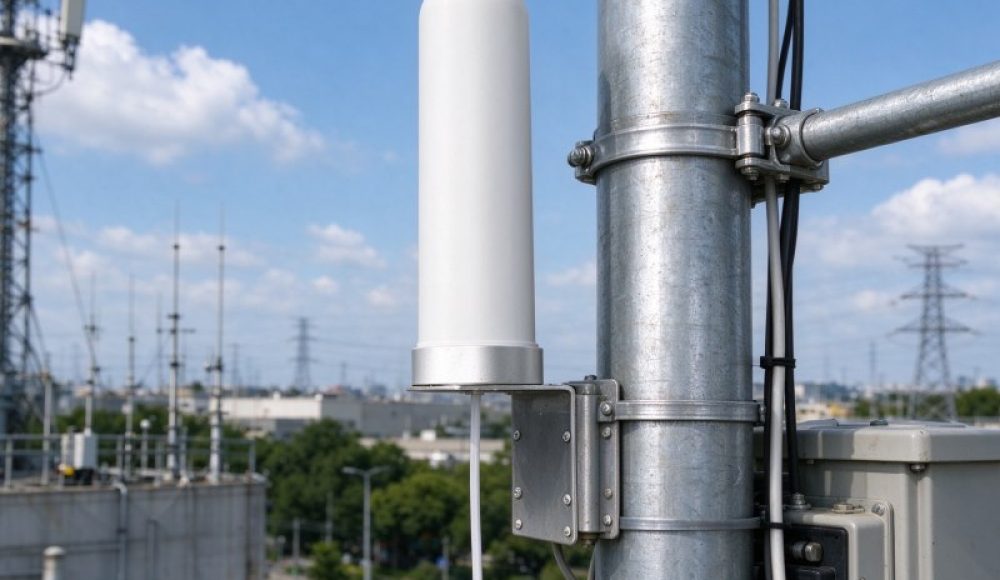
An antenna solution provider should support RF design, antenna selection, installation adaptation, and performance testing for outdoor wireless networks. Renfeng focuses on wireless communication antennas and offers a 600–6000MHz outdoor omnidirectional antenna with 6–10dBi gain, 50Ω impedance, VSWR of ≤2.0, vertical polarization, and omnidirectional radiation.
What Does an Antenna Solution Provider Do?
An antenna solution provider helps wireless equipment developers select, design, and integrate antennas according to network frequency, coverage, installation, and device requirements. Its role may include RF engineering, gain selection, connector matching, structural adaptation, and technical support during product development.
An outdoor antenna is designed for wireless communication equipment installed outside buildings or in exposed environments. Depending on the network architecture, it may use omnidirectional or directional radiation to provide the required coverage.
The main advantages include better alignment between antenna specifications and application requirements, improved integration planning, and fewer compatibility issues during deployment. However, antenna selection should consider the complete wireless system rather than gain or frequency range alone.
How Does an Outdoor Omnidirectional Antenna Work?
An outdoor omnidirectional antenna transmits and receives radio-frequency signals around its vertical axis, making it suitable for applications where wireless devices are distributed in different horizontal directions. Its vertical polarization defines the orientation of the electric field, while its radiation characteristics influence the coverage area.
The Renfeng 600–6000MHz 6–10dBi Outdoor Omnidirectional Antenna is specified for a broad frequency range and supports different wireless communication requirements. Its main technical parameters are listed below.
| Parameter | Specification |
|---|---|
| Frequency range | 600–6000MHz |
| Antenna gain | 6–10dBi |
| Impedance | 50Ω |
| VSWR | ≤2.0 |
| Polarization | Vertical |
| Radiation pattern | Omnidirectional |
| Product type | Outdoor omnidirectional antenna |
The 600–6000MHz range covers multiple frequency bands used in wireless communication, including some 4G/5G applications. Actual compatibility depends on the specific operating band and the radio equipment configuration.
The 6–10dBi gain range provides different antenna configuration options. Higher gain can concentrate radiated energy more strongly in certain directions, often resulting in a narrower vertical radiation pattern. Therefore, installation height, device elevation, and required coverage should be evaluated together.
Which Outdoor Wireless Networks Can Use This Antenna?
A wideband outdoor omnidirectional antenna can be considered for wireless systems whose operating frequencies fall within its supported range. Its suitability still depends on the network band, radio interface, installation environment, and required coverage.
Typical application scenarios include:
- 4G/5G wireless networks: A compatible 4G/5G antenna can support outdoor communication equipment when its operating bands match the network configuration.
- Industrial IoT: An industrial antenna can be integrated into monitoring equipment, remote data collection systems, and connected infrastructure.
- Outdoor wireless access: An omnidirectional antenna can serve installations where devices communicate from different horizontal directions.
- Wireless network infrastructure: A high gain antenna may be considered when the coverage design requires greater directional concentration, subject to the site’s elevation and signal distribution.
Before deployment, engineers should verify the antenna’s frequency coverage against the exact bands used by the network. A broad frequency specification does not automatically mean that every radio module or regional network can operate with the same performance.
How Should You Choose an Antenna for Outdoor Wireless Networks?
A suitable antenna should match the equipment’s frequency bands, coverage requirements, RF interface, and physical installation conditions. A qualified antenna solution provider should be able to explain how these factors affect the final configuration.
Consider the following selection criteria:
- Frequency range: Confirm that the antenna covers every required operating band. For multi-band equipment, check performance across the actual frequencies rather than relying only on the stated overall range.
- Gain: Select gain according to coverage direction, antenna height, and the location of wireless devices. Higher gain is not always better for every installation.
- Radiation pattern: Choose omnidirectional radiation when coverage is needed around the antenna, or consider a directional design when communication is concentrated toward a specific area.
- Impedance and VSWR: Check that the antenna and radio equipment use compatible RF interfaces. The specified 50Ω impedance and VSWR of ≤2.0 provide useful reference values for system integration.
- Connector and mounting structure: Confirm connector type, cable arrangement, mounting dimensions, and support structure before installation.
- Environmental requirements: Evaluate exposure to rain, wind, temperature changes, corrosion, and other site conditions. Request relevant environmental test information where necessary.
These checks help equipment manufacturers define a suitable antenna configuration before sample evaluation and network deployment.
How Do Omnidirectional and Directional Antennas Compare?
Omnidirectional and directional antennas differ mainly in how they distribute RF energy. The choice depends on whether the network needs coverage in multiple horizontal directions or a more concentrated signal toward a specific location.
| Comparison factor | Omnidirectional antenna | Directional antenna |
|---|---|---|
| Coverage | Around the vertical axis | Focused toward a selected direction |
| Typical use | Multi-directional wireless coverage | Point-to-point or targeted links |
| Installation | Requires suitable central positioning | Requires directional alignment |
| Gain selection | Higher gain may narrow vertical coverage | Gain is associated with directional concentration |
| Deployment consideration | Device distribution and antenna height | Link direction and alignment accuracy |
Compared with traditional solutions that use separate antennas for different frequency bands, a wideband design may simplify antenna selection for compatible multi-band systems. However, actual performance, matching, and coverage should be confirmed at the operating frequencies required by the project.
What Affects the Cost of an Outdoor Antenna Solution?
The cost of an outdoor antenna solution depends on its RF specifications, mechanical configuration, materials, testing scope, and production requirements. A standard antenna configuration may require less development work than a project involving custom connectors, mounting structures, or specific performance targets.
Common cost factors include:
- Frequency and gain requirements: Wider operating ranges or specific gain targets may affect antenna design and validation work.
- Mechanical structure: Radome materials, mounting brackets, dimensions, and connector arrangements influence component and assembly costs.
- RF testing: Measurements such as VSWR, impedance, and gain verification may require additional testing procedures.
- Environmental validation: Outdoor projects may require weather resistance, temperature, vibration, or corrosion testing based on the installation environment.
- Production quantity: Material sourcing, manufacturing setup, and batch size can influence unit cost.
For a more accurate quotation, buyers should provide the target frequency bands, gain requirements, connector type, installation method, expected quantity, and applicable testing standards.
How Does Renfeng Support Outdoor Antenna Projects?
Renfeng focuses on wireless communication terminal antennas and provides antenna design and configuration support for different wireless applications. The company was established in 2012, and its RF engineering team has an average of more than 10 years of industry experience.
Its technical support covers antenna design, gain selection, connector adaptation, and installation structure considerations. These capabilities help equipment manufacturers assess antenna requirements during product development and system integration.
For outdoor wireless networks, Renfeng offers the 600–6000MHz 6–10dBi Outdoor Omnidirectional Antenna. Its stated specifications include 50Ω impedance, VSWR of ≤2.0, vertical polarization, and omnidirectional radiation. This configuration can be evaluated for compatible outdoor wireless and industrial communication applications.
As an antenna solution provider, Renfeng supports discussions about antenna configuration and project requirements. For each application, customers should confirm the required frequency bands, installation conditions, and test criteria before finalizing the product specification.
Regarding certification standards, no specific certification details have been provided for this product. Buyers should identify the regulatory and environmental standards applicable to their target markets and request relevant supporting documents or test reports. Performance should also be verified under the intended operating conditions.
Frequently Asked Questions
What Is an Outdoor Omnidirectional Antenna?
An outdoor omnidirectional antenna transmits and receives signals around its vertical axis. It commonly serves wireless installations where connected devices operate in different horizontal directions.
How to Choose a High Gain Antenna for Outdoor Wireless Networks?
Choose a high-gain antenna based on frequency compatibility, required coverage, installation height, radiation pattern, and RF interface. Also check measured performance at the target operating frequencies before selecting the final configuration.
Why Is VSWR Important When Selecting a Wireless Antenna?
VSWR shows how well the antenna matches its transmission line at a given frequency. A lower VSWR generally indicates better impedance matching and less reflected power. The specified VSWR of ≤2.0 should be verified across the operating frequencies relevant to the application.
Source & Expertise
This article is based on the product specifications and company information provided for Renfeng’s 600–6000MHz 6–10dBi Outdoor Omnidirectional Antenna. The technical discussion covers frequency range, gain, impedance, VSWR, polarization, radiation pattern, antenna integration, and outdoor deployment considerations. Product-specific environmental ratings and certification details were not supplied and should be confirmed through official documentation.
Last Updated: November 4, 2026